

I was hunched over my laptop last Tuesday when I felt it—that familiar, sharp “hitch” right between my shoulder blades. It’s not just a dull ache; it’s that suffocating sensation where you feel like you can’t even take a full breath without hitting a wall of tension. I used to spend my afternoons squirming in my chair, trying to force a loud pop to get some relief. Honestly, I spent way too much time falling for the truth about cracking your own back for relief, only to find the “stuck” feeling came back ten times worse ten minutes later. Today, I’m going to give you the exact 30-second drill that actually works to unlock that thoracic cage.
That Mid-Back Hitch That Makes You Hold Your Breath
It’s a specific kind of misery when your spine feels like a rusted hinge. I remember one particular moment, trying to look over my shoulder while merging onto the highway, and my back just said “no.” It was scary and frustrating. Early on, I made the huge mistake of thinking I just needed to stretch my hamstrings or “sit up straighter.” But why your middle back burns after a day of gardening or a long day at the office often comes down to the rib cage losing its ability to glide. We’re going to fix that. [image_placeholder_1]
Is a 30-second move actually enough to fix this?
You’ve probably been told that posture takes months to correct, so I understand the side-eye. However, the goal here isn’t to rearrange your DNA; it’s to stop your rib cage from feeling stuck when you breathe by resetting the local muscle tension. Research published in the Journal of Manual & Manipulative Therapy suggests that targeted thoracic mobilization can provide immediate improvements in pain intensity and mobility by down-regulating the “threat” signal your brain sends to tight muscles. It’s about efficiency, not duration. Have you ever felt that sharp pinch that just won’t go away no matter how much you slouch or stretch? Let’s get into the mechanics of why this happens before we dive into the fix.To truly unlock that “hitch,” we have to stop treating the spine like a single rod and start treating it like a series of interconnected gears. When you feel that pinch, it’s usually because a few of those gears—specifically where your ribs meet your spine—have stopped spinning. To revolutionize your posture with targeted mobility exercises, you need to focus on extension and rotation simultaneously. Think of your rib cage like a bucket handle. When you breathe, those ribs should lift up and out. But when we spend hours hunched over, those “handles” get stuck in the down position. The muscles between them—the intercostals—shrink and tighten, creating a corset of tension that no amount of “sitting up straight” can fix.
Turn Your Office Chair Into a Mobility Tool
I remember sitting in a crowded Starbucks last November, my back screaming after three hours of typing. I knew I couldn’t just keep slouching. I used the edge of the wooden chair as a fulcrum. It was awkward, and I’m pretty sure the guy at the next table thought I was having a slow-motion seizure, but when that pressure finally dissipated, I could actually take a deep breath again. This is exactly how to set up your laptop in a coffee shop without ruining your back: you build mobility breaks into the work itself. #IMAGE_PLACE_HOLDER_B#
The 30-Second Sequence You Can Do Anywhere
First, sit tall and scoot your glutes to the very edge of your chair. Interlace your fingers behind your neck—not to pull on your head, but to support the weight of your skull. Now, lean back over the top edge of your chair. The goal isn’t to arch your lower back; it’s to hinge specifically at that spot between your shoulder blades. As you lean back, take a massive inhale. You should feel your ribs expanding like an accordion. Hold that for five seconds, then—this is the secret sauce—rotate your elbows slightly to the left and then the right while still in that extended position. This “wiggles” the rib joints back into place. Often, people confuse this localized stiffness with the difference between a sore muscle and a misaligned joint. If it’s a joint issue, static stretching won’t help; you need this active mobilization.
Why Your Breathing Pattern is Failing You
If you’re holding your breath while doing this, you’re essentially locking the cage from the inside. Your lungs act as internal balloons that push against the ribs. If you don’t use that internal pressure, you’re only working on the surface muscles. This is fundamentally why your breathing pattern determines your lower back stability and mid-back mobility. I remember a specific Tuesday afternoon where the “hitch” was so bad I felt a sharp zing every time I reached for my mouse. I realized I was trying to solve a three-dimensional problem with a one-dimensional solution. By using the chair-back method, I was attacking the joint restriction, the muscle tension, and the breathing mechanics all at once. When I first started doing this, I was too aggressive. I tried to force a “pop” and ended up with a dull ache for two days. The trick is to move like you’re moving through honey—slow, deliberate, and under control. This isn’t just about the back; you’ll likely notice the 30-second drill for better overhead shoulder mobility feels much easier once the thoracic spine isn’t acting as a literal physical block to your arm movement.I used to think that if I could just find the right ergonomic chair and lock myself into a perfect 90-degree angle, my mid-back problems would vanish. I spent hundreds of dollars chasing a ghost, thinking I needed to be a statue of productivity. But here is the contrarian truth that most posture experts won’t tell you: the best posture is actually your next posture. Everyone says you need to sit like a soldier, but in my experience, variability works ten times better than rigidity. When you force yourself into a static ‘perfect’ position, you are essentially asking your muscles to perform an isometric hold for eight hours straight. No wonder you feel like a coiled spring by 5:00 PM.
The Lie of the Perfect Sitting Position
The idea that there is one universal ‘correct’ way to sit is a massive oversimplification. Research published in the Journal of Biomechanics suggests that postural sway and frequent micro-movements are natural protective mechanisms for the spine. When we stop moving, we start aching because we are cutting off the ‘pump’ that brings nutrients to our spinal discs. This is exactly why the truth about perfect posture and why it doesnt exist is so liberating once you understand it. Your body isn’t a building; it is a river that needs to flow.
Stop Pulling on Muscles That Are Already Screaming
The biggest ‘oops’ factor I see with my clients—and a trap I fell into for years—is trying to stretch through a mechanical joint block. If you feel a sharp, localized catch between your shoulder blades, and you try to ‘stretch’ it out for twenty minutes, you are likely making it worse. If a rib or a thoracic vertebra is restricted, pulling on the surrounding muscles is like pulling a knot in a shoelace tighter. This is the primary reason why your gentle stretching is actually causing more inflammation rather than relief. You are irritating the soft tissue without addressing the ‘rusted hinge’ underneath. This is where how chiropractic adjustments enhance posture and mobility becomes a game-changer; it targets the joint restriction directly so the muscle can finally stop guarding. 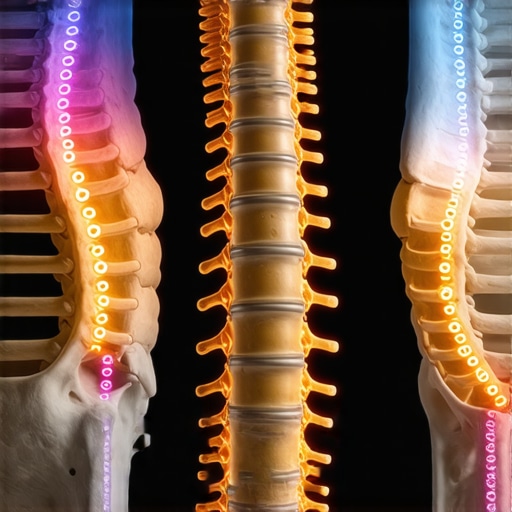
Why does my mid-back still hurt if my X-rays look totally normal?
This is the most common question from sophisticated patients who have ‘tried everything.’ X-rays are fantastic for ruling out fractures, but they are static images of a dynamic system. They don’t show how your ribs glide when you take a deep breath or how your nervous system is reflexively tightening a muscle to protect a sensitive joint. You can have a ‘perfect’ looking spine on paper and still be in agony because the function—the way those parts move together—is broken. To truly fix it, you have to look at the ultimate guide to improving mobility and posture in 2025, which focuses on restoring movement patterns rather than just looking for bone spurs. Have you ever fallen into the ‘sit up straight’ trap and found it made your pain worse? Let me know in the comments.
Stop Starting Over Every Monday Morning
Once you find that initial relief with the 30-second drill, the biggest challenge isn’t the pain itself—it’s the slow, creeping return of the stiffness. We often treat our bodies like a fire that needs to be put out, rather than a garden that needs to be tended. To maintain these gains, I’ve shifted my focus from ‘rehab’ to ‘maintenance habits.’ I don’t wait for the hitch to return to start moving. I personally use a ‘peanut’—which is just two lacrosse balls taped together—to pinpoint the specific segments of my thoracic spine that tend to lock up. Unlike a flat foam roller, the peanut allows the bony parts of your spine to sit in the groove while the balls apply pressure exactly where the ribs meet the vertebrae. This is a crucial part of mobility boosts for posture expert tips for daily adjustments because it targets the mechanical restriction rather than just rolling over the surface. 
The Two Tools I Actually Use Every Single Day
Aside from the peanut, I’ve become obsessed with using a lumbar roll even when I don’t think I need it. It’s not about comfort; it’s about maintaining the natural curve of the lower back to prevent the ‘domino effect’ that eventually rounds the shoulders and locks the mid-back. When your pelvis is positioned correctly, your thoracic spine has the freedom to stay upright without constant muscular effort. This is why why chiropractic care is your secret weapon for better posture; it ensures that your structural foundation is set so your daily mobility work actually sticks. A 2021 study published in the Journal of Bodywork and Movement Therapies found that consistent thoracic mobility work not only reduces localized pain but actually decreases the mechanical load on the cervical spine by up to 21% during seated tasks. That is a massive reduction in the ‘weight’ your neck has to carry just to look at a screen.
How can I maintain my mobility gains for the long haul?
Maintenance is less about 20-minute gym sessions and more about 20-second micro-breaks. I predict that in the next few years, we are going to see a massive shift toward wearable bio-feedback tech that doesn’t just track steps, but tracks the expansion of your rib cage. Imagine a sensor that vibrates the moment your breathing becomes shallow and your ribs stop gliding. Until then, you have to be your own sensor. I’ve found that improving posture through mobility practical chiropractor strategies works best when integrated into transitions—like every time you hang up a phone call or finish an email. If you want to scale these results, you need to look at the ultimate guide to improving mobility and posture in 2025 to see how lifestyle design outweighs any single exercise. My advanced tip for you today: try doing your thoracic extensions while standing against a wall with your heels, glutes, and head touching the surface. It’s significantly harder than using a chair, but it forces your nervous system to stabilize your entire ‘pillar’ at once. Give that a shot during your next coffee break and feel the difference in your breath immediately.
Lessons My Spine Taught Me the Hard Way
I spent years thinking my back was simply fragile when it was really just bored of the positions I forced it into. Here are the biggest shifts in my thinking that changed everything. First, the 10-minute rule is a lie. You don’t need a full gym session to find relief; most of my breakthroughs came from 30-second bursts of movement during the workday. Second, pain isn’t the enemy. When that hitch between my shoulder blades flared up, it was my body’s way of begging for air and motion. If I had listened sooner, I wouldn’t have spent weeks in a slump. Finally, hardware needs software updates. You can get chiropractic adjustments unlock a pain-free lifestyle today, but if you don’t update your movement software—how you breathe and sit—the hardware will eventually lock up again.
The Kit I Carry to Keep My Mid-Back Moving
I don’t leave my spinal health to chance anymore. These are the tools that live in my desk drawer or my laptop bag. I swear by the Lacrosse Ball Peanut for localized pressure. It is my go-to because it hugs the spine instead of flattening it, which is a core part of mobility hacks simple adjustments for a more active life. I also never sit without a firm Lumbar Roll. Once I learned how to use a lumbar roll correctly in an office chair, it saved my thoracic spine by supporting my pelvis and preventing the slump-domino effect. Lastly, I’ve mastered the Eye-Level Phone Habit. Learning how to use your phone at eye level to save your spine is the single most effective way to prevent that hitch from returning.
Your Body Is Ready for a Reset
The transition from a stiff, restricted back to one that moves freely doesn’t happen in a vacuum. It happens in the small moments between your meetings and during your morning coffee. By applying these mobility boosts for posture expert tips for daily adjustments, you are giving your nervous system the green light to let go of tension. You aren’t stuck with the back you have today; you are just one 30-second drill away from a completely different experience. Your spine is designed for movement, and once you give it the freedom it needs, your energy and comfort will follow. Have you ever felt that sharp hitch when taking a deep breath, and what is the one thing you tried that actually made it feel better? Let me know in the comments below!