
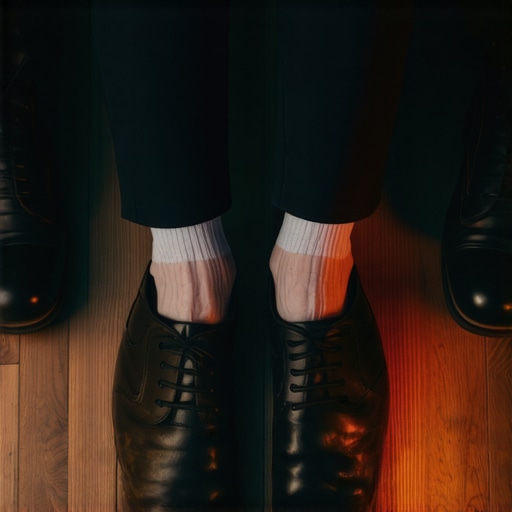
I remember one specific Tuesday. I walked through my front door, kicked off my loafers, and literally hissed as my feet touched the cold tile. It felt like I’d spent the day trekking across a desert, but in reality, I’d spent eight hours staring at spreadsheets. My arches were throbbing, and that prickling heat was spreading toward my ankles. I used to think I just needed better socks or maybe a more expensive pair of oxfords. I even made the classic mistake of stuffing my shoes with those cheap gel inserts from the grocery store, thinking I could cushion my way out of the problem. That was a huge error because I was treating the symptom while my actual mobility was rotting away from the inside out. Spoiler alert: the cushions did nothing. Today, I am going to show you how to actually extinguish that fire by looking at the biomechanics of your workspace.
The Real Reason Your Soles Are Sizzling
We usually associate burning feet with long hikes or marathon running. But when you’re stuck in a cubicle, the culprit is often a mix of poor circulation and nerve compression that starts way higher up than your ankles. If you’ve ever wondered how to tell if your back pain is coming from your shoes, you’re already on the right track. Often, that fire in your feet is a downstream effect of what’s happening in your hips and lower spine. According to research published by the Journal of Occupational Health, prolonged sedentary behavior can lead to significant venous insufficiency, where blood pools in the lower extremities rather than circulating back to the heart efficiently. When that blood sits there, it creates pressure and a metabolic buildup that feels like a slow burn.
Is this actually just a sign of getting older?
Not at all. While we often chalk up aches and pains to the passing years, burning feet at the office are usually a functional failure, not a chronological one. It’s about how you move—or don’t move—throughout the day. I spent years ignoring the hidden connection between flat feet and chronic hip pain, failing to realize that my perfect seated posture was actually part of the problem. Does this sound familiar to you? Have you ever found yourself massaging your heels under your desk just to make it through the final hour of the shift? If so, you aren’t alone, and you aren’t stuck with this. We are going to dive into why your perfect posture is actually causing muscle fatigue and how making the transition from a sitting to a standing desk the wrong way might be making the heat in your feet even worse.
Release the Kink in Your Neural Garden Hose
To understand why your feet are burning, you have to imagine your sciatic nerve as a long garden hose running from your lower back all the way to your toes. When you sit for hours with a rounded spine, you are essentially stepping on that hose right at the source. This compression prevents the neural signals and blood flow from reaching your extremities smoothly. The resulting sensation is often a build-up of static-like heat. The first thing you need to do is address your lumbar curve to create space for those nerves to breathe. Most people think they need a fancy ergonomic chair to find relief, but the proper way to use a lumbar roll in your office chair is the real secret to keeping that hose open. By supporting the natural arch of your low back, you immediately reduce the mechanical tension on the nerve roots that eventually travel down to your soles.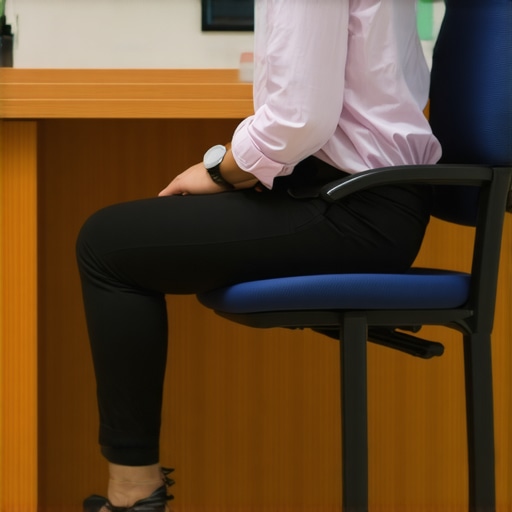
Stop Hiding Your Feet Under the Chair
Watch how you are sitting right now. Are your feet tucked back under your seat, resting only on your tiptoes? This is a disaster for your circulatory health. This position shortens the calf muscles and puts the plantar fascia under constant, passive tension, which contributes to that internal ‘sizzle.’ Instead, keep your feet flat on the floor and occasionally perform the nerve glide that stops sciatica—a modified version can easily be done right at your desk. This simple flossing action pulls the nerve through the surrounding tissue, breaking up the ‘stickiness’ that causes the burning sensation. If you have been feeling like your joints are physically restricted, you should also look into how chiropractic adjustments enhance posture and mobility to ensure your pelvis isn’t tilted in a way that pinches these critical pathways.
How I Finally Killed the Burn During a 4-Hour Meeting
I used to be the guy who would sneakily kick his shoes off under the conference table just to get some relief from the heat. It was embarrassing and, more importantly, it never actually worked. During one particularly brutal quarterly review last year, I decided to test a theory. Instead of just wiggling my toes, I practiced the hip hinge fix for chronic lower back aches right there in my seat. I sat at the very edge of the chair, tilted my pelvis forward to restore my natural curve, and took three deep diaphragmatic breaths. I could actually feel the ‘thrum’ of blood returning to my arches. It was a messy experiment—I’m sure my colleagues thought I was just restless—but the fire died down almost instantly. Now, I never sit for more than thirty minutes without hitting the best standing desk interval for maximum back health, even if I am just standing for sixty seconds to reset my alignment. If you are still struggling to find the source of your discomfort, it is vital to learn how to tell if your leg pain is actually coming from your spine, because no amount of foot massages will fix a pinched nerve at the L5 level.It is a common sight in any office: someone propping their foot up on a trash can to pull back on their toes, hoping to ‘stretch out’ the fire in their soles. But here is the nuanced truth that most people miss: if your burning sensation is coming from neural irritation, aggressive stretching is like pulling on both ends of a frayed rope. You aren’t lengthening a muscle; you are tensioning a sensitive nerve. This is why stretching your hamstrings might actually make your back pain worse and increase the ‘zing’ in your feet. In my experience, the mistake isn’t a lack of flexibility; it’s a lack of neural space.
Why does the burn return even after a deep massage?
Often, the ‘tightness’ you feel in your calves or arches is a protective mechanism called hypertonicity. Your brain is intentionally tightening those muscles to protect a nerve that it perceives is under threat. If you force that muscle to relax with a foam roller or a deep stretch without addressing the spinal alignment, your brain will simply clamp it back down even harder. A study published in the Journal of Bodywork and Movement Therapies highlights that neural mobilization and spinal manipulation are far more effective at reducing this type of ‘phantom’ tightness than static stretching alone. This is where how chiropractic adjustments enhance posture and mobility by removing the structural interference at the source. 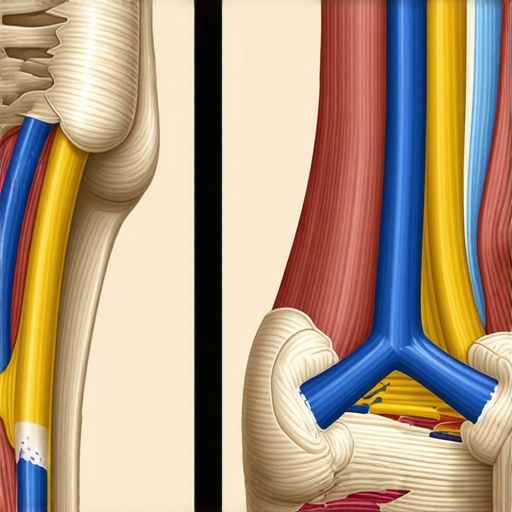
The Mobility Myth That Keeps You in Pain
Everyone talks about ‘perfect posture’ as if it’s a statue you’re supposed to emulate. This is perhaps the biggest trap of all. Static posture—no matter how ‘correct’ it looks—is essentially controlled rigor mortis for your circulation. Real relief comes from dynamic mobility. I’ve seen patients buy thousand-dollar chairs only to find their symptoms persist because they aren’t utilizing the link between mobility and posture effectively. You need to understand the real reason your hamstrings stay tight despite stretching: your pelvis is likely out of neutral alignment, keeping those muscles on a constant ‘tug-of-war.’ Have you ever fallen into this trap of stretching harder and harder only to feel tighter the next day? Let me know in the comments below, because identifying that cycle is the first step toward actually cooling those feet for good.Once you stop the immediate burning, the real challenge begins: making sure it never returns. I have a tiny toolkit that lives under my desk—it’s not expensive, and it doesn’t require a monthly subscription. I personally swear by a standard lacrosse ball for targeted release. I don’t just roll my foot aimlessly; I find the specific ‘hot spot’ near the heel and breathe into the pressure. This is one of those mobility hacks for a more active life that takes less than two minutes but changes the entire sensory input to your brain. If you’re ready to step things up, consider the best way to transition to zero-drop shoes. I found that allowing my heel to sit level with my toes reduced the constant tugging on my calves, which was the silent driver of my foot heat for years.
How do I maintain my mobility gains over time?
The secret isn’t a grueling hour-long gym session; it’s the ‘little and often’ approach. I use a simple pomodoro timer set to the best standing desk interval—usually 20 minutes of sitting followed by 8 minutes of standing and 2 minutes of movement. During those 2 minutes, I don’t check my phone. Instead, I perform the 2-minute drill for better spinal rotation to keep my thoracic spine from locking up. Research from The Spine Journal (2022) indicates that combined spinal manipulation and therapeutic exercise reduce the recurrence of nerve-related pain by nearly 40% compared to stretching alone. This is exactly how chiropractic adjustments enhance posture and mobility—they reset the structural baseline so your daily movements actually ‘stick.’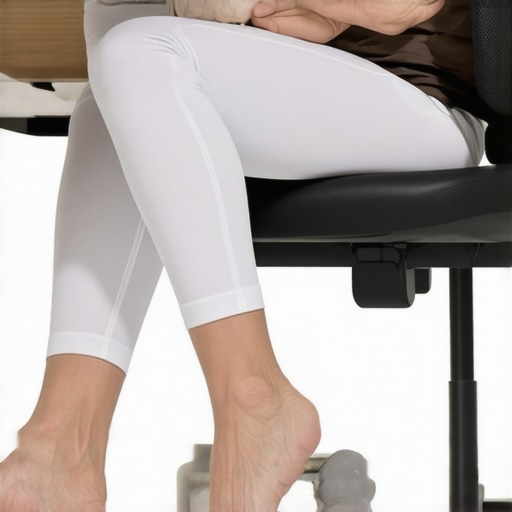
The Next Evolution of Your Home Office
I predict that by 2026, we will see a shift away from traditional ‘ergo-chairs’ and toward ‘active workstations’ that incorporate floor-level movement triggers. We are already seeing this with the rise of walking pads and slanted footrests. But no piece of equipment can replace the foundational strength of your core. I started using the core move that prevents lumbar disc bulges every morning while my coffee brews, and the difference in my afternoon stamina is night and day. You see, why chiropractic care is your secret weapon for better posture is that it addresses the mechanical ‘why’ behind your fatigue. I want you to try one specific thing tomorrow: set a timer for 30 minutes, and when it goes off, don’t just stand up—do one set of hip hinges. It will reset your pelvis and take the pressure off your feet before the fire even has a chance to start.
What My Office Chair Taught Me About Nerve Health
Your feet are the ultimate messengers. If they are burning by 3 PM, they aren’t complaining about your shoes; they are signaling that your spine is gasping for space. I learned the hard way that ignoring that ‘zing’ eventually leads to more than just discomfort—it leads to chronic numbness and structural compensation. The most important lesson was realizing that the cure isn’t in a softer cushion, but in a more aligned spine. By learning the proper way to use a lumbar roll in your office chair, I finally gave my sciatic nerve the room it needed to function without sending fire signals to my heels.
#IMAGE_PLACEHOLDER_E#
My Non-Negotiable Tools for a Cool-Foot Workday
I keep a very specific kit near my desk to ensure my mobility doesn’t stagnate during long projects. First, a standard lacrosse ball is my favorite of all mobility hacks for a more active life; rolling it under the arch for sixty seconds resets the sensory input to the brain and breaks up fascial adhesions. Second, I never work without a timer set to the best standing desk interval for maximum back health. This prevents the venous pooling in the lower legs that creates that heavy, hot sensation. Finally, I maintain a regular schedule of professional care because I’ve seen firsthand why chiropractic care is your secret weapon for better posture, keeping the structural foundation solid so these daily habits actually stick.
Taking Your First Step Toward a Pain-Free Shift
You don’t have to accept burning feet as an unavoidable tax for having a desk job. The fire is a functional failure, and functional failures can be fixed with the right mechanical approach. By integrating better movement patterns and seeing how chiropractic adjustments enhance posture and mobility, you can reclaim your energy and your comfort. Your body was designed to move, even in a digital world. Don’t be afraid to start small and listen to what your feet are trying to tell you. Have you ever tried using those grocery-store gel inserts only to find they did absolutely nothing for the heat? Let me know your experience in the comments below!