
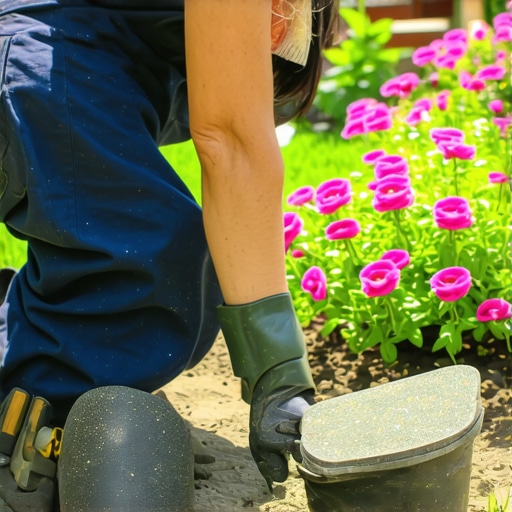
Last April, I spent four hours hunched over my raised beds, determined to win the war against the creeping crabgrass. I felt great—until I tried to stand up. My lower back let out a scream that I’m pretty sure the neighbors heard two houses down. I ended up spending the rest of my weekend face-down on the living room rug, clutching a heating pad and wondering why my favorite hobby felt like a medieval torture device. I’d made the classic mistake of thinking my body was invincible just because I was “only” gardening. It was a visceral reminder that the soil doesn’t care about your enthusiasm if your mechanics are a mess.
Stop treating your backyard like a chore and start treating it like a sport
We often forget that weeding, mulching, and hauling bags of soil are intense physical activities. My biggest blunder early on was ignoring the mechanics of my movement. I would bend at the waist for hours, putting incredible pressure on my lumbar spine, which is exactly why I now swear by the bracing technique that protects your spine during heavy yard work. According to Harvard Health Publishing, gardening can burn up to 300 calories an hour, which is roughly the same as a gym session. Yet, we don’t warm up for the mulch pile like we do for the treadmill. That lack of preparation is the main reason why your lower back hurts when you try to stand up straight after a morning in the dirt. I want to show you how to tweak your posture so you can actually enjoy your flowers without the Monday morning zombie walk.
Is it even possible to garden without a backache?
I used to be a total skeptic. I thought “gardener’s back” was just an inevitable tax we paid for fresh tomatoes. But the truth is, most of that pain comes from poor hip hinge habits and a total lack of mobility. When I finally started using a 15-minute flow to open up sticky hips before hitting the shed, the game changed. Have you ever found yourself stuck in a “crouch of no return” after planting bulbs? It’s a terrifying feeling, especially when you can’t tell the difference between a pulled muscle and a slipped disc. Today, we’re going to fix that. I’m going to share the specific mobility hacks and ergonomic shifts that kept me pain-free even after a massive landscaping project last month.The absolute foundation of pain-free gardening is the hip hinge. Think of your hips like a heavy-duty door hinge and your lower back as a solid, unmoving bridge. Most of us make the mistake of rounding the bridge to reach the ground, which is a recipe for a blown-out disc. When I moved forty bags of cedar mulch last month, I treated every bag like a barbell at the gym. By keeping my spine neutral and pushing my hips back, I let my glutes and hamstrings do the heavy lifting instead of my lumbar spine. This isn’t just about lifting; it applies to weeding, too. If you can’t get your hips into the right position, you’re likely falling into the deadlift mistake that leads to immediate disc pressure. 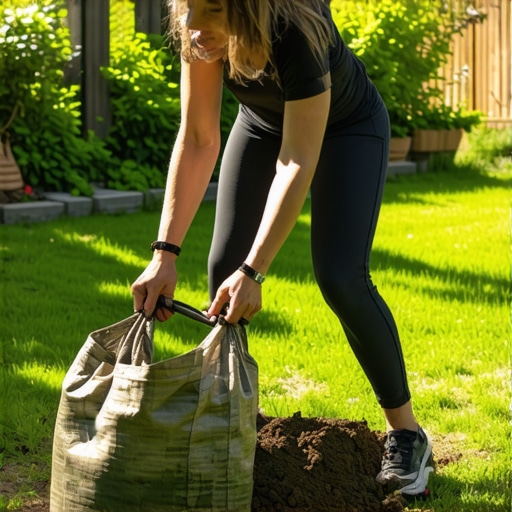
Master the Movement Patterns That Protect Your Spine
One of the most dangerous movements you can do in the yard is the ‘scoop and twist.’ This happens when you’re shoveling dirt or moving mulch and you rotate your upper body while your feet are planted. It puts massive shear force on your spine. To avoid this, I use a rule called ‘nose follows toes.’ If I need to dump a shovel of dirt to my left, my whole body turns, feet first. This simple shift in improving posture through mobility and practical chiropractor strategies ensures that your vertebrae aren’t grinding against each other.
The Hip Hinge is Your New Best Friend
Whenever you go to pull a stubborn weed, don’t just tug with your arms. Reach down by pushing your butt back, keep your chest up, and pull using your legs. This creates a stable base. Last weekend, I spent two hours clearing a patch of ivy using this method. While my legs felt like jelly afterward, my back felt completely normal. This is the power of using your body’s largest muscle groups for their intended purpose.
Why Your Nose Must Always Follow Your Toes
Imagine there is a rod connecting your nose to the center of your feet. If you are moving a pile of stones, your nose and toes should always be pointing in the same direction. When you violate this by twisting, you are essentially wringing out your spinal discs like a wet towel. By moving your feet instead of your waist, you maintain the structural integrity of your core.
Effective Ways to Reset Your Posture After Digging
Even with perfect form, spending hours reaching forward causes your chest muscles to shorten and your upper back to round. This ‘hunch’ is what leads to that nagging ache between your shoulder blades. After a long session, I always spend three minutes leaning against the shed or a doorway to open up my ribcage. Learning how to loosen your chest muscles after a day of hunching is the ‘ctrl+alt+delete’ for your posture. It resets your alignment and prevents the chronic tightness that usually sets in by Sunday evening.
Spotting the Difference Between Soreness and Injury
You need to be able to read your body’s signals. A little muscle soreness is fine—it means you worked hard. But a sharp, electric pain or numbness traveling down your leg is a red flag. Knowing the difference between a sore muscle and a slipped disc can save you from a months-long recovery. If you feel that ‘stuck’ sensation in your lower back, don’t try to power through it. That’s your body’s way of saying the mechanics have failed, and it is time to reassess your hip hinge habits.We need to talk about the ‘perfect posture’ trap that so many dedicated gardeners and office workers fall into. Most people believe that they need to maintain a military-grade, rigid upright position to be healthy. In reality, why your perfect posture is actually causing muscle fatigue is one of the most common complaints I address. Your body is designed to move, not to act as a statue. A study published in the Journal of Bodywork and Movement Therapies highlights that ‘postural variability’—the act of frequently changing positions—is a far better predictor of spinal health than any single ‘correct’ position. If you are freezing yourself in what you think is a perfect pose, you are simply trading one type of mechanical strain for another.
The stretching trap that makes your back pain worse
Here is a nuance that most beginners miss: when your lower back feels tight, your first instinct is likely to stretch your hamstrings. However, why stretching your hamstrings might actually make your back pain worse is a very real danger if your pain is rooted in disc issues or nerve tension. When you aggressively yank on those muscles, you are often increasing the tension on the sciatic nerve or pulling on a sensitized lumbar spine. Instead of forcing a stretch that doesn’t want to happen, you should focus on how chiropractic adjustments enhance posture and mobility by addressing the joint restrictions that are causing the protective muscle guarding in the first place.
Can you really ‘fix’ your alignment with just one visit?
I hear this question constantly from people who are tired of the ‘zombie walk’ after a day in the soil. While chiropractic adjustments unlock a pain-free lifestyle today by resetting your nervous system and improving joint glide, true mobility is a lifestyle, not an event. One adjustment can break the cycle of pain, but you have to understand the link between mobility and posture as an ongoing relationship. Another advanced mistake is relying on those ‘posture braces’ you see advertised everywhere. The hidden truth is why most posture braces actually make your back weaker; they do the work your core muscles should be doing, which eventually leads to muscle atrophy and even more instability.
What really happens during a spinal adjustment
Most people think the ‘popping’ sound is bones being forced back into a slot like a puzzle piece. That is a myth. That sound is a rapid gas release within the joint that triggers a powerful neurological reset. This reset reduces the ‘noise’ in your nervous system, allowing your muscles to finally let go of the tension they’ve been holding since you last moved those mulch bags. It is about clearing the communication lines between your brain and your back. If you only chase the ‘crack’ without looking at the bigger picture, you’re missing the point of long-term care. If you find yourself constantly leaning to one side, it is worth looking into the truth about why one shoulder sits higher than the other, as this often points to deep-seated pelvic imbalances or a locked si joint. Don’t forget that when an acute flare-up happens, your choice of recovery matters—understanding the truth about using heat versus ice for sudden lower back pain can mean the difference between a one-day recovery and a week on the couch. Have you ever fallen into the trap of over-stretching a sore spot only to have it feel worse the next morning? Let me know in the comments.That rebound tightness is your body’s way of sounding the alarm. To keep my spine from hitting that panic button, I’ve had to overhaul the actual gear I bring into the garden. It’s not just about how you move; it’s about the interface between you and the dirt. I stopped using those cheap, thin foam pads that compress to nothing in ten minutes. Now, I use a heavy-duty, elevated kneeling bench. This simple shift prevents me from having to fix the way I stand because it keeps my pelvis in a neutral position while I work. I also switched all my hand tools to those with ergonomic, ‘P-loop’ handles. According to the National Institute for Occupational Safety and Health (NIOSH), tools designed to keep the wrist in a neutral position can reduce the risk of musculoskeletal disorders by up to 25%. When your tools do the mechanical work, your joints don’t have to compensate.
The gear that keeps my lumbar spine from screaming
One of the most overlooked tools in my shed isn’t a shovel—it’s my footwear. I realized that my thick-heeled work boots were tilting my pelvis forward, creating a constant ‘shear’ on my lower back before I even started digging. I’ve found that transitioning to zero-drop shoes safely was the single biggest change for my chronic SI joint discomfort. These shoes allow your heel and forefoot to sit at the same distance from the ground, which naturally aligns your spine. If you combine this with mobility hacks and simple adjustments for a more active life, you’ll find that your recovery time drops from days to hours. 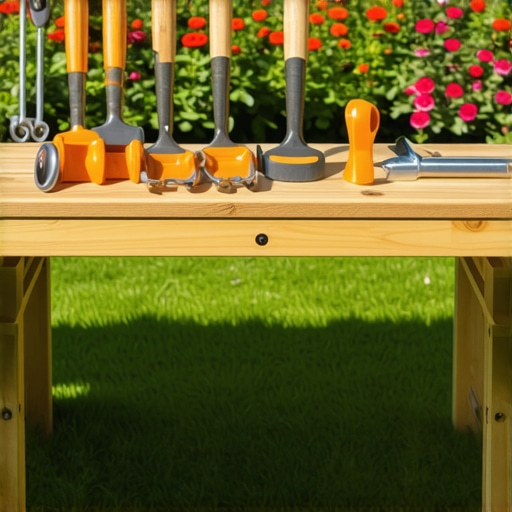
How do I maintain my spinal health during a massive landscaping project?
Maintenance is about micro-breaks, not just a big stretch at the end of the day. Every 20 minutes, I set a timer on my watch to stand up and perform a standing extension. This reverses the constant flexion of weeding. I also integrate the 2-minute drill for better spinal rotation every time I switch from one side of a flower bed to the other. This prevents the ‘one-sided’ stiffness that usually leads to a rib displacement. If you want to scale up your gardening without scaling up your pain, you have to look at the ultimate guide to improving mobility and posture in 2025. We are moving toward a future where ‘smart’ gardening apparel will likely include haptic sensors to vibrate when we lose our pelvic tilt, but until then, we have to be our own biofeedback machines.
Why your recovery starts before you even reach for the rake
I’ve learned the hard way that you can’t ‘exercise’ your way out of bad mechanics. You have to revolutionize your posture with targeted mobility exercises that specifically target the hip flexors and thoracic spine. When these areas are mobile, your lower back doesn’t have to move as much, which is exactly what we want. The goal is a ‘quiet’ spine and ‘loud’ hips. I predict that in the next few years, we’ll see a massive surge in ‘functional gardening’ classes that blend yoga with actual horticultural skills. To stay ahead of the curve, try the 2-minute rotation drill I mentioned above before you pick up a shovel today; it’s the fastest way to wake up the stabilizers that protect your discs.Over the years, I have come to realize that gardening is less about the strength of your hands and more about the integrity of your alignment. To truly thrive among your flower beds, you have to embrace mobility boosts for posture as a daily ritual. I used to think I could just power through the stiffness, but learning why chiropractic care is your secret weapon for better posture shifted my focus from merely treating pain to preventing it entirely. #IMAGE_PLACEHOLDER_E#
The Hardest Lessons My Soil Taught Me
After nearly a decade of trial and error in the dirt, these are the truths that stick with me:
- Hydration is for your discs too: We remember to water the hydrangeas, but we forget that our spinal discs are mostly water. If you are dehydrated, your spine loses its shock-absorbing capacity, making every shovel-turn more dangerous.
- Pain is a signal, not a badge of honor: I used to wear my Sunday soreness like a medal. Now I realize that sharp pain is a mechanical failure. If you feel a pinch, stop immediately and use the nerve glide that stops sciatica in the shower to reset your system.
- The 20-minute rule is non-negotiable: No matter how close I am to finishing a row, I stand up every twenty minutes. This prevents the ‘plastic deformation’ of ligaments that happens when you stay in one position too long.
The Gear That Changed Everything for My Back
You don’t need a shed full of gadgets, but a few specific tools make a world of difference. I personally trust my elevated kneeling bench more than my favorite rake; it keeps my pelvis from tilting into a dangerous ‘posterior’ position. I also recommend looking into how to enhance your posture with expert chiropractic techniques in 2025 to stay updated on the latest ergonomic standards. Finally, never underestimate the power of zero-drop gardening shoes to keep your foundation level.
Your Best Seasons are Still Ahead
Gardening should be a source of life and vitality, not a cause for a Monday morning doctor’s visit. By respecting your body’s mechanics and using these mobility hacks, you are ensuring that you will be planting bulbs for decades to come. Don’t let a temporary ache steal your joy for the soil. Your spine is the trunk of your personal tree—keep it strong, keep it flexible, and keep it healthy. What is the one gardening task that always leaves you feeling like a pretzel? Let me know in the comments below!