

I stood there at the squat rack with 135 pounds on my back, feeling like my ankles were encased in concrete. Every time I tried to descend, my heels popped off the floor like I was wearing invisible stilettos. It was embarrassing. I’d spent months hammering my quads and glutes, convinced I just wasn’t strong enough to stay upright. But no matter how much I strained, my torso would pitch forward, and my knees would scream for mercy. I even bought those fancy lifting shoes with the three-inch heels, thinking a piece of plastic would solve my problems. It didn’t. It just masked a fundamental flaw in how my body moved. I was stuck in a shallow squat purgatory, and I didn’t realize that my ankles were the gatekeepers holding me back. Today, I’m going to show you exactly how to break through that barrier and finally hit the depth you’ve been chasing without the pain.
Stop Blaming Your Quads for Your Shallow Squats
[image] We often look at the squat as a leg exercise, which it is, but it’s really a full-body coordination test. Early on, I made the classic mistake of thinking more stretching of my hamstrings would fix my tightness. I spent hours on the floor reaching for my toes, yet my squat stayed ugly. The reality was that my dorsiflexion—the ability of the foot to pull toward the shin—was practically non-existent. According to the Journal of Athletic Training, restricted ankle dorsiflexion is a primary contributor to poor squat mechanics and increased risk of knee injuries. When your ankles don’t budge, your body finds that range of motion elsewhere, often leading to a pinch in your hip when you squat deep or a rounded lower back. Have you ever felt that frustrating wall in your ankles when you try to sit deep into a chair or a squat?
Are Your Ankles Actually the Secret Culprit?
You might be thinking, “My ankles feel fine when I walk, so why would they matter now?” That’s the catch. You can walk 10,000 steps a day with stiff ankles and never notice. But the second you try to sit back into a deep squat, that lack of give in the joint acts like a doorstop. Have you ever felt like you were going to fall backward the moment your thighs hit parallel? That’s not a lack of balance; it’s your center of mass shifting because your shins can’t tilt forward enough. I used to think I was just built un-athletically, but it was really just a mechanical blockage that I eventually addressed using some simple mobility hacks for a more active life.
Why Your Knees Pay the Price for Ankle Stiffness
If your ankles aren’t doing their job, the next joint up the chain has to pick up the slack. For most of us, that’s the knee. When I was struggling with my squat depth, my patellar tendons felt like they were on fire after every session. It wasn’t because my knees were weak; it was because they were being shoved into positions they weren’t designed to handle. Integrating better mobility and posture into my routine changed everything. I stopped seeing the ankle as an isolated part of my foot and started seeing it as the foundation of my entire posture. If you’ve ever wondered about fixing knee pain through hip flexibility, you might be surprised to find that the journey actually starts at the floor. This is a key part of our guide to better mobility and posture in 2025. Fixing this doesn’t just improve your gym numbers; it changes how you move through the world, and we’re going to dive into the specific drills that finally worked for me.
Check Your Progress With the Five-Inch Wall Test
Before you start hacking away at your mobility, you need a baseline. The five-inch wall test is the gold standard for measuring functional dorsiflexion. Stand facing a wall, place your toes exactly five inches away, and try to touch your knee to the wall without your heel lifting even a millimeter. When I first did this, I couldn’t even get within three inches without my foot screaming. It was a massive wake-up call that my expensive lifting shoes were just hiding a total lack of joint movement. If you fail this, you’re likely dealing with a mechanical block in the talus bone, not just tight muscles. It’s a similar phenomenon to why your knee aches when you run on concrete; when the foundation doesn’t move, the joint directly above it absorbs the trauma.
Smash the Calves to Free Your Heel
Most people go straight to passive stretching, but the logic behind why your hamstring stretches arent fixing your tightness applies to your calves too. If the gastroc and soleus muscles are full of ‘knots’ or dense fascia, stretching them is like trying to pull a knot out of a silk tie—you just make the knot tighter and harder to undo. Instead, take a lacrosse ball or the handle of a heavy kettlebell and pin the muscle against it. Spend two minutes per side hunting for the tender spots. Once you find a ‘hot spot,’ stay there and slowly flex your foot up and down. I used to do this every evening, and within a week, the chronic ‘tight’ feeling in my Achilles began to vanish.
Clear the Joint Jam With Banded Distractions
Sometimes the issue isn’t the muscle; it’s the bones ‘jamming’ at the front of the ankle joint. Imagine a door hinge with a small pebble stuck in the corner. No matter how much you pull on the door, it won’t close until you move that pebble out of the way. A banded distraction uses a heavy resistance band to pull the talus bone backward as you drive the knee forward. You must place the band below the bony bumps of your ankle (the malleoli) to actually affect the joint. This is one of those highly effective mobility hacks for a more active life that provides instant feedback. 
Force Your Body to Accept the New Range
Mobility without stability is temporary. Once you’ve used the band to open the joint, you have to teach your nervous system that this new range of motion is safe to use under load. Grab a 25-pound kettlebell or dumbbell, sink into the deepest squat you can manage, and rest the weight directly on top of your knees. Shift your center of gravity from side to side, intentionally pushing each knee as far over the toes as possible while keeping the heel glued to the floor. If you still feel a ‘blocking’ sensation in the front of your leg, you might need to address how to fix a pinch in your hip when you squat deep, as ankle and hip mobility are two sides of the same coin. Consistent application of improving posture through mobility practical chiropractor strategies ensures your progress sticks long after you leave the gym floor.
I stood there at the squat rack with 135 pounds on my back, feeling like my ankles were encased in concrete. Every time I tried to descend, my heels popped off the floor like I was wearing invisible stilettos. It was embarrassing. I’d spent months hammering my quads and glutes, convinced I just wasn’t strong enough to stay upright. But no matter how much I strained, my torso would pitch forward, and my knees would scream for mercy. I even bought those fancy lifting shoes with the three-inch heels, thinking a piece of plastic would solve my problems. It didn’t. It just masked a fundamental flaw in how my body moved. I was stuck in a shallow squat purgatory, and I didn’t realize that my ankles were the gatekeepers holding me back. Today, I’m going to show you exactly how to break through that barrier and finally hit the depth you’ve been chasing without the pain.
Stop Blaming Your Quads for Your Shallow Squats
[image] We often look at the squat as a leg exercise, which it is, but it’s really a full-body coordination test. Early on, I made the classic mistake of thinking more stretching of my hamstrings would fix my tightness. I spent hours on the floor reaching for my toes, yet my squat stayed ugly. The reality was that my dorsiflexion—the ability of the foot to pull toward the shin—was practically non-existent. According to the Journal of Athletic Training, restricted ankle dorsiflexion is a primary contributor to poor squat mechanics and increased risk of knee injuries. When your ankles don’t budge, your body finds that range of motion elsewhere, often leading to a pinch in your hip when you squat deep or a rounded lower back. Have you ever felt that frustrating wall in your ankles when you try to sit deep into a chair or a squat?
Are Your Ankles Actually the Secret Culprit?
You might be thinking, “My ankles feel fine when I walk, so why would they matter now?” That’s the catch. You can walk 10,000 steps a day with stiff ankles and never notice. But the second you try to sit back into a deep squat, that lack of give in the joint acts like a doorstop. Have you ever felt like you were going to fall backward the moment your thighs hit parallel? That’s not a lack of balance; it’s your center of mass shifting because your shins can’t tilt forward enough. I used to think I was just built un-athletically, but it was really just a mechanical blockage that I eventually addressed using some simple mobility hacks for a more active life.
Why Your Knees Pay the Price for Ankle Stiffness
If your ankles aren’t doing their job, the next joint up the chain has to pick up the slack. For most of us, that’s the knee. When I was struggling with my squat depth, my patellar tendons felt like they were on fire after every session. It wasn’t because my knees were weak; it was because they were being shoved into positions they weren’t designed to handle. Integrating better mobility and posture into my routine changed everything. I stopped seeing the ankle as an isolated part of my foot and started seeing it as the foundation of my entire posture. If you’ve ever wondered about fixing knee pain through hip flexibility, you might be surprised to find that the journey actually starts at the floor. This is a key part of our guide to better mobility and posture in 2025. Fixing this doesn’t just improve your gym numbers; it changes how you move through the world, and we’re going to dive into the specific drills that finally worked for me.
Check Your Progress With the Five-Inch Wall Test
Before you start hacking away at your mobility, you need a baseline. The five-inch wall test is the gold standard for measuring functional dorsiflexion. Stand facing a wall, place your toes exactly five inches away, and try to touch your knee to the wall without your heel lifting even a millimeter. When I first did this, I couldn’t even get within three inches without my foot screaming. It was a massive wake-up call that my expensive lifting shoes were just hiding a total lack of joint movement. If you fail this, you’re likely dealing with a mechanical block in the talus bone, not just tight muscles. It’s a similar phenomenon to why your knee aches when you run on concrete; when the foundation doesn’t move, the joint directly above it absorbs the trauma.
Smash the Calves to Free Your Heel
Most people go straight to passive stretching, but the logic behind why your hamstring stretches arent fixing your tightness applies to your calves too. If the gastroc and soleus muscles are full of ‘knots’ or dense fascia, stretching them is like trying to pull a knot out of a silk tie—you just make the knot tighter and harder to undo. Instead, take a lacrosse ball or the handle of a heavy kettlebell and pin the muscle against it. Spend two minutes per side hunting for the tender spots. Once you find a ‘hot spot,’ stay there and slowly flex your foot up and down. I used to do this every evening, and within a week, the chronic ‘tight’ feeling in my Achilles began to vanish.
Clear the Joint Jam With Banded Distractions
Sometimes the issue isn’t the muscle; it’s the bones ‘jamming’ at the front of the ankle joint. Imagine a door hinge with a small pebble stuck in the corner. No matter how much you pull on the door, it won’t close until you move that pebble out of the way. A banded distraction uses a heavy resistance band to pull the talus bone backward as you drive the knee forward. You must place the band below the bony bumps of your ankle (the malleoli) to actually affect the joint. This is one of those highly effective mobility hacks for a more active life that provides instant feedback.
Force Your Body to Accept the New Range
Mobility without stability is temporary. Once you’ve used the band to open the joint, you have to teach your nervous system that this new range of motion is safe to use under load. Grab a 25-pound kettlebell or dumbbell, sink into the deepest squat you can manage, and rest the weight directly on top of your knees. Shift your center of gravity from side to side, intentionally pushing each knee as far over the toes as possible while keeping the heel glued to the floor. If you still feel a ‘blocking’ sensation in the front of your leg, you might need to address how to fix a pinch in your hip when you squat deep, as ankle and hip mobility are two sides of the same coin. Consistent application of improving posture through mobility practical chiropractor strategies ensures your progress sticks long after you leave the gym floor.
Stop Chasing the Stretch and Start Loading the Joint
Most people treat tightness as a length problem, assuming the muscle is physically too short. However, in my experience, tightness is frequently a neurological brake. If your brain perceives a lack of stability in the ankle, it will tighten the calves to create a biological cast. This is exactly why your hamstring stretches arent fixing your tightness; you are fighting your own nervous system. Instead of passive stretching, we need active inputs. Loading the joint in its end-range teaches the brain that the position is safe, which is a key principle in how chiropractic adjustments enhance posture and mobility. Have you ever fallen into this trap of stretching for months with zero results? Let me know in the comments.
Why Does That Block in the Front of Your Foot Never Go Away?
If you feel a sharp pinch or a hard stop at the front of your ankle when you squat, no amount of calf stretching will help. This is usually a bone-on-bone clearance issue. According to research in the Journal of Manual & Manipulative Therapy, posterior talar glide is essential for full dorsiflexion; without it, the talus bone essentially jams against the tibia. 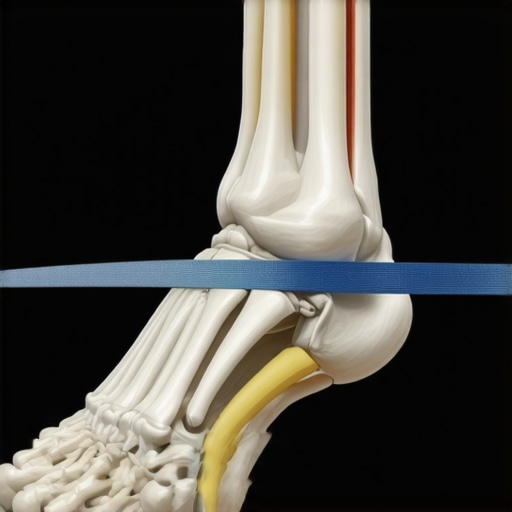 This mechanical blockage requires specific mobilization. A manual adjustment or a heavy banded distraction can unstick that bone, providing the mechanical room you need to descend comfortably. This whole-body approach is why chiropractic care is your secret weapon for better posture and functional movement.
The Lifting Shoe Trap You Need to Avoid
I will be the first to admit that a raised heel feels like a miracle for your squat depth, but there is a dangerous trap here. Relying on heeled lifting shoes 100% of the time is a mechanical band-aid. Over time, your body adapts to the crutch, and your natural dorsiflexion actually regresses. You might even find that how to tell if your back pain is coming from your shoes depends on how much you rely on these artificial lifts to bypass joint stiffness. Use them for your heavy sets, but perform your warm-ups barefoot to maintain true joint health.
Why Perfect Posture is a Squat Killer
We are often told to keep a perfectly vertical back, but forcing this can lead to massive tension and inefficient movement. In fact, why your perfect posture is actually causing muscle fatigue is often because you are fighting your natural anatomy rather than working with it. A slight forward lean is biologically necessary if you do not have world-class ankle mobility. By focusing on the link between mobility and posture, you can finally find a squat style that fits your unique frame instead of a rigid textbook diagram.
I’ve learned the hard way that mobility is a ‘use it or lose it’ property of the human body. Once you’ve cleared the ‘jam’ in the joint, the real work shifts to maintenance. I used to think I needed a whole hour of yoga every morning, but the truth is much simpler. I rely heavily on Voodoo Floss bands—a technique popularized by Dr. Kelly Starrett in ‘The Supple Leopard.’ This ‘tack and stretch’ method creates a shearing effect on the fascia that a standard stretch just can’t match. By wrapping the ankle tightly and moving through a squat range, you’re essentially forcing the tissues to slide past each other, breaking up the ‘fuzz’ that accumulates from sitting. This is a game-changer for anyone looking for mobility boosts for posture.
Tools That Actually Changed My Squat Game
Aside from the bands, the one tool I never skip is a high-density lacrosse ball. I don’t just use it on my calves; I use it on the bottom of my feet. The plantar fascia is the starting point of the posterior chain. If your feet are locked up, your ankles won’t move, and eventually, your back will take the hit. Integrating these mobility hacks for a more active life has kept me out of the ‘injury cycle’ for three years straight. I also recommend a heavy-duty resistance band for the distractions we talked about earlier. Don’t go cheap here—a snapping band is a quick way to lose your motivation.
How do I keep my ankles mobile for the long haul?
The secret isn’t more drills; it’s more varied movement. We are moving toward a future where wearable biomechanical sensors will alert us when our joint range starts to decrease during a workout. Until then, you have to be your own sensor. I check my ‘five-inch wall test’ every Sunday morning. If I’m losing range, I spend ten minutes on my ankle distraction drills. This proactive approach is exactly why chiropractic care is your secret weapon; it’s about catching the tiny misalignments before they become full-blown injuries. 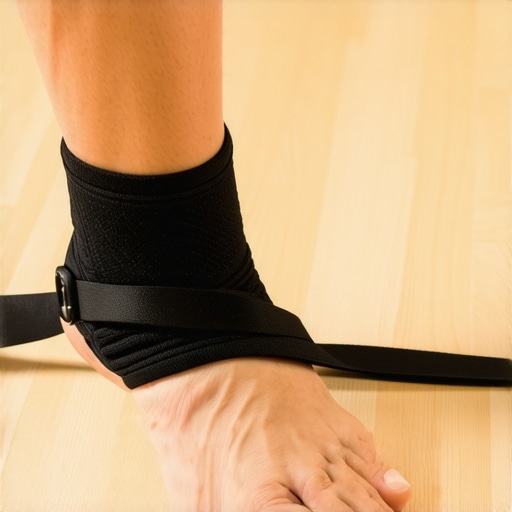
Stop Your Desk from Stealing Your Range
You can have the best squat in the world, but if you spend eight hours with your feet tucked under your chair, you are shortening your tissues every single day. This is where improving posture through mobility becomes a lifestyle rather than a gym task. I keep a golf ball under my desk to roll my feet while I’m on calls. It sounds trivial, but according to a study in the Journal of Bodywork and Movement Therapies, even short bouts of myofascial release can significantly improve joint ROM when performed consistently. This is a core pillar of our guide to better mobility and posture in 2025.
If you want to take this to the next level, try performing your first three warm-up sets of squats completely barefoot. It forces the small stabilizer muscles in your feet and ankles to wake up and creates an active feedback loop that is the ultimate way to revolutionize your posture. Trust me, your knees and lower back will thank you when the weights get heavy.
The Real Reason Your Ankles Stay Stiff
After years of struggling with my own squat depth, I realized that ankle mobility isn’t just about the joint; it’s about how your brain protects you. I used to think I could just stretch my way out of a mechanical block, but the real reason your hamstrings stay tight despite stretching applies to your ankles too. If the nervous system doesn’t feel stable, it will simply lock the joint down. Another hard truth? Stop thinking that a ten-minute session once a week will undo forty hours of sitting with your heels tucked under a desk chair. It is about the mobility boosts for posture you integrate into your daily life. Consistency in small doses is what finally convinced my body to let go of that protective tension.
Gear That Actually Earned a Spot in My Gym Bag
I don’t believe in buying every gadget on the market, but three things changed the game for my ankle health. First, Voodoo Floss bands are essential for tissue shearing and breaking up fascial restrictions. Second, a heavy-duty resistance band is non-negotiable for the banded distractions we discussed to clear joint jamming. Third, I highly recommend transitioning to minimalist footwear for your daily walks to rebuild the natural strength of your feet. If you are ready to ditch the crutch of high-heeled lifting shoes, read up on the best way to transition to minimalist footwear to avoid unnecessary strain. I also swear by the book Becoming a Supple Leopard by Dr. Kelly Starrett; it is the ultimate manual for anyone serious about movement.
Reclaim Your Squat Depth Today
Improving your ankle mobility isn’t just about hitting a personal best on the barbell; it is about the freedom to move through the world without hesitation or pain. When you fix the foundation, the rest of the kinetic chain—your knees, hips, and lower back—starts to function in harmony. This is why how chiropractic adjustments enhance posture and mobility is such a powerful concept; it’s all connected. Don’t wait for a major injury to start caring about your dorsiflexion. Start with just one drill tonight, perhaps the five-inch wall test, and see how your body responds. Have you ever felt that frustrating ‘pinched’ sensation in the front of your ankle when you try to squat deep? Let me know in the comments below!