

I remember sitting at my desk three years ago, desperately trying to rub a knot out of my left shoulder blade while my eyes watered from the constant, dull throb in my mid-back. I blamed my chair. I blamed my monitor height. I even blamed my lack of morning coffee. It wasn’t until I got home and practically ripped my bra off that I felt an immediate, literal wave of relief wash over my spine. That was my lightbulb moment. My wardrobe was working against my anatomy. We often talk about the link between mobility and posture, but we rarely discuss how a poorly fitted garment can act like a cage for your rib cage.
That Nagging Ache Between Your Shoulder Blades Isn’t Just Work Stress
If you are feeling a constant tightness in your thoracic spine, it is easy to assume you just need a massage or more ibuprofen. However, the mechanics of a bra strap—especially one that is too thin or a band that is too tight—can create a pivot point that forces your upper back to round forward. I spent most of my twenties making a massive mistake: I thought a tighter band meant better support. In reality, I was just compressing my nerves and preventing my ribs from expanding naturally. This led to that familiar feeling of being ‘stuck.’ When you can’t breathe deeply because your rib cage is restricted, your accessory muscles in the neck and back take over, leading to that sharp pinch in your shoulder blade that just won’t quit. According to research published by the British Journal of Sports Medicine, an estimated 80% of women are wearing the wrong bra size, which significantly alters spinal loading and can lead to chronic musculoskeletal pain.
Can a Simple Piece of Elastic Really Ruin Your Posture?
It sounds dramatic, doesn’t it? But think about the physics. If those straps are digging in, your body naturally tries to ‘escape’ the pressure by shrugging up or leaning forward. This subtle shift ruins your alignment over eight hours at a desk. Today, we are going to dive into how you can reclaim your comfort and stop your clothes from dictating your pain levels. Have you ever reached the end of the day and felt like you could finally breathe for the first time only after unhooking your bra? If so, you’re not alone, and we need to talk about it. Learning how to stop your rib cage from feeling stuck when you breathe is the first step toward a pain-free life. Let’s look at why this happens and how a few small adjustments to your daily mobility can fix the damage.
Stop the Squeeze and Start Breathing Properly
Think of your rib cage like a slinky. For it to work, every coil needs to be able to expand and contract freely. When you wear a bra band that is too tight or straps that dig into your trapezius muscles, you are essentially duct-taping three or four of those coils together. I learned this the hard way during a cross-country move three summers ago. I wore what I thought was a supportive underwire bra for fourteen hours of intense driving. By hour six, I had a burning sensation radiating down my leg. It sounds crazy, but I eventually realized why your sciatica feels worse when you drive often comes down to a lack of movement in the thoracic spine, which forces the lower back to take the heat. When I finally reached my destination and switched to a seamless bralette, the ‘sciatica’ vanished because my ribs could finally move with my breath again. You cannot expect your spine to be mobile if your external gear is pinning it in place.
The 10-Second Strap Test You Can Do Right Now
Reach back and try to slide two fingers under your bra band. If you have to struggle or if the skin is deeply indented, you are in a compression trap. That pressure isn’t just on your skin; it is on the intercostal nerves that exit your spine. If you feel a sharp jab in your chest, it is helpful to understand why your rib pain feels like a heart attack but isnt—it’s usually the intercostal muscles spasming because they are being squeezed like a tube of toothpaste. If your fingers cannot slide in easily, the band is too small, and your posture is paying the price by pulling your shoulders into a permanent, defensive shrug. This creates a feedback loop of tension that tells your brain you are under stress, further tightening your neck muscles.
Mobilize Your Spine Instead of Just Stretching Your Skin
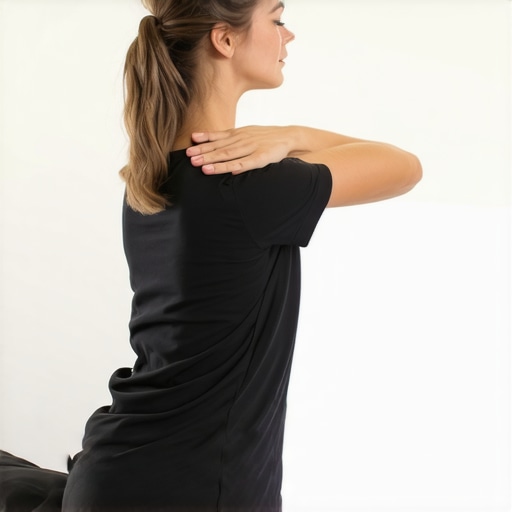
Static stretching won’t fix a joint that is being physically restricted by tight clothing or chronic poor habits. You need to focus on functional movement that actually opens the joints. Start by implementing mobility boosts for posture expert tips for daily adjustments into your lunch break. Instead of just pulling your arms across your chest, try a seated thoracic rotation. Keep your hips glued to the chair, cross your arms over your chest, and rotate your upper back only. This specifically targets the areas where a bra band usually sits. Many people try to fix this with the classic floor stretch, but they end up wondering why most people do the cat cow stretch wrong—it is usually because they dump all the movement into their lower back rather than the stiff mid-back area that actually needs the help.
Fix Your Alignment Without Leaving Your Desk
You don’t need a gym or fancy equipment to start reversing the damage of a restrictive wardrobe. If you feel that mid-afternoon slump where your chin starts to drift toward your chest, try the 10 second move to reset your shoulders at work. Interlace your fingers behind your head, gently push your elbows back, and look slightly upward while taking a deep breath into your belly. This ‘un-cages’ the rib cage and forces the lungs to expand against the resistance of your clothing. It’s a physical reminder to your brain that you aren’t stuck in a crouched, protective position. Small, consistent wins like this are the backbone of the ultimate guide to improving mobility and posture in 2025. By changing how you move during the day and being mindful of your gear, you stop the ‘cage’ from ever closing in the first place.
Most people assume that if a muscle feels tight, it needs to be elongated. In my experience, I have found the opposite is often true: tightness is frequently a protective tension your brain creates to guard a joint it perceives as unstable. If you keep pulling on that ‘tight’ muscle, you are essentially trying to disable your body’s alarm system without putting out the fire. This is exactly why stretching your hamstrings won’t fix your tight back if the underlying issue is actually a tilted pelvis or a misaligned lumbar segment. When the bone is out of place, the muscle locks down to keep you from further injury. Stretching it in that state is like trying to force a locked door open without a key.
The Stretching Myth That Actually Keeps You Stiff
We have been conditioned to believe that flexibility equals health, but mobility is a completely different animal. Flexibility is passive; mobility is active control. If you spend twenty minutes a day on a foam roller but your back still aches the moment you sit down, you are likely dealing with a stability gap. A study published in the International Journal of Sports Physical Therapy notes that static stretching alone does not address underlying neuro-motor control issues. This is why you need to understand the difference between a sore muscle and a misaligned joint. If the joint is ‘stuck,’ no amount of yoga will unstick it. You need a targeted intervention to restore the joint’s glide before the muscles can truly relax.
The Dangerous Trap of Over-Mobilizing Your Neck
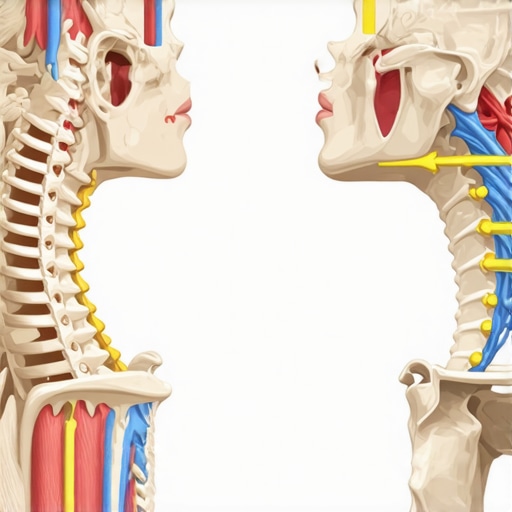
The ‘Oops’ factor often happens when people try to self-treat tension headaches. I see it constantly: someone feeling a pull in their upper traps will aggressively pull their ear toward their shoulder. However, why stretching your neck is making your headaches worse is usually due to the fact that those muscles are already over-lengthened from looking down at a phone. By stretching them more, you are irritating the nerves and making the ligaments even more lax. This creates a hyper-mobile segment that your brain then ‘fixes’ by creating even harder muscle knots the next day. It is a vicious cycle that only stops when you address the alignment of the cervical vertebrae themselves.
Why Does Your Body Revert to Poor Posture After an Adjustment?
This is a question I get from my most sophisticated patients. They feel great after a session, but three days later, they feel that familiar slump returning. This happens because your nervous system has a ‘set point’ for what it considers normal. Even if that ‘normal’ is a hunched back, your brain will fight to return to it. This is where chiropractic adjustments unlock a pain-free lifestyle today by essentially rebooting that set point. But the adjustment is only half the battle. You have to follow it up with improving posture through mobility practical chiropractor strategies that ‘lock in’ the new position. Think of the adjustment as the software update and your daily movement as the battery that keeps the system running. Have you ever felt tighter or more sore after a long stretching session? I would love to hear about your experience in the comments below. Let’s look at how we can stop chasing symptoms and start building a spine that actually supports you.
Building that support system starts with the physical objects we interact with every day. For years, I looked for a magic bullet—a fancy ergonomic chair or a vibrating posture sensor. But my most trusted tool is actually a simple taped-together set of lacrosse balls, often called a peanut. I use this specifically to target the segments of my thoracic spine that get locked down by a tight wardrobe or hours of typing. By placing the peanut between my shoulder blades and performing a few deep breaths, I can feel the individual vertebrae begin to glide again. This is exactly where most people fail; they try to roll their lower back, but I have learned that the lumbar spine needs stability, not more rolling. If you want to see a real difference, try the 30 second drill for better overhead shoulder mobility while using the peanut tool against a wall. It is a game-changer for that stuck feeling.
The $10 Tool That Beats My $500 Office Chair
Using a tool like the peanut allows for localized mobilization of the spine that a chair simply cannot provide. While a high-end chair might offer support, it is still a passive environment. To maintain movement, you need active engagement. I also swear by a firm lumbar roll for the times I am forced to sit for long stretches. Learning how to use a lumbar roll correctly in an office chair preserves the natural curve of your lower back, which in turn keeps your neck from drifting forward into a slump. It is not about the most expensive gear; it is about the gear that facilitates the best biomechanics. I keep these tools in my desk drawer and use them for two minutes every couple of hours. This prevents the cumulative stiffness that usually leads to a Friday afternoon migraine.

How do I maintain my mobility progress over the long haul?
Consistency is the boring answer no one wants to hear, but it is the only one that works. I follow a movement diet where I never stay in one position for more than 40 minutes. I even use a simple app that dims my screen to remind me it is time to move. It is about making mobility hacks simple adjustments for a more active life rather than a chore you do once a day. A study published in the Journal of Physical Therapy Science found that frequent, short durations of postural correction were significantly more effective at reducing musculoskeletal pain than infrequent, longer sessions. This is why I advocate for improving posture through mobility practical chiropractor strategies that you can do while your coffee is brewing. You have to treat your spine like a high-performance engine that requires regular idling and oil checks, not just a repair job when it breaks down.
Why Your Digital Environment Is the Next Frontier
I predict that by 2030, we won’t be talking about posture as a static thing at all. We will have wearable tech integrated into our clothing—not like a stiff brace, but subtle haptic sensors that vibrate when our respiratory rate drops due to a compressed rib cage. We are moving toward a world where our environment adjusts to our anatomy, rather than the other way around. Until then, you need to be your own architect. Integrating the ultimate guide to improving mobility and posture in 2025 into your daily routine ensures you stay ahead of the curve. This is also why chiropractic care is your secret weapon for better posture; it provides the structural baseline that makes these daily habits possible. Try this tonight: spend just two minutes with a peanut tool or a rolled-up towel between your shoulder blades while focusing on expanding your rib cage. You will be shocked at how much lighter your head feels tomorrow morning.
The Hardest Lesson I Learned About Rib Cage Freedom
For years, I treated my tight traps like the enemy. I massaged them, heat-padded them, and cursed them every afternoon. The lightbulb moment finally came when I realized they weren’t the villains; they were heroes. They were pulling double duty to stabilize a rib cage that was physically unable to expand because of my clothing and my sedentary habits. If your structure is locked down, your muscles have to work overtime just to keep you upright. This is exactly why the truth about cracking your own back for relief is so misunderstood. You might get a temporary pop, but if you don’t address the underlying rib restriction, the tension will return within minutes.
Another hard truth? Posture isn’t a destination; it’s a capacity. If you can’t breathe into your back because your intercostal muscles are glued shut, no amount of ‘sitting up straight’ will stick. You have to clear the path for your lungs first. I found that once I stopped forcing a military-style stance and started focused on rib mobility, my shoulders naturally dropped into place without me even thinking about it.
#IMAGE_PLACEHOLDER_E#
My Essential Toolkit for Lasting Spinal Health
I don’t believe in expensive gadgets, but I do believe in tools that facilitate active movement. My daily kit includes a simple peanut tool for thoracic mobility and a firm lumbar roll for my office chair. If you are struggling with a persistent slump, you can enhance your posture with expert chiropractic techniques in 2025 to ensure your joints are actually capable of the movement you’re asking of them. I also swear by a 3 minute evening routine for a less stiff morning to decompress the spine before sleep, which has been a game-changer for my recovery.
Take the First Breath Toward Better Alignment
You were never meant to live in a cage, whether that cage is made of restrictive undergarments or the invisible bars of a sedentary lifestyle. Reclaiming your comfort starts with the realization that your body is incredibly adaptable. By integrating these small shifts and understanding that chiropractic adjustments unlock a pain-free lifestyle today, you provide your nervous system with the reset it needs. Stop surviving your workday and start moving through it with ease. Your spine is the foundation of your vitality—treat it with the respect it deserves. Which part of your daily routine makes your back feel the most ‘caged’? Let me know in the comments below!