
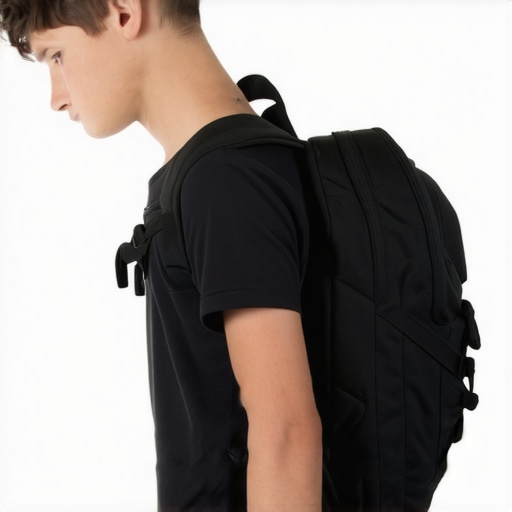
I’ll never forget the sound of my son’s backpack hitting the hardwood floor after school last Tuesday. It sounded like a bag of literal bricks. Thud. When he looked up at me, his shoulders were rounded forward, his chin was jutting out like a turtle’s, and he was immediately rubbing the base of his skull. It hit me then: we weren’t just carrying textbooks; we were remodeling his skeleton in real-time. He was only fourteen, but he already looked like he was carrying the weight of the world—and it was literally bending him out of shape.
Why Your Kid Looks Like a Human Question Mark
I made a massive mistake early on. I thought as long as the backpack had thick, padded straps, my kids were fine. I even bought those giant, oversized ‘adventure’ packs thinking they were better for ‘distribution.’ I was dead wrong. Padding doesn’t negate gravity. When a teenager leans forward to counteract a heavy load, they develop what we call a forward head posture. This isn’t just about looking slumped; it’s about the fact that long-term nerve damage can start with these seemingly small structural shifts. I noticed my daughter started complaining about headaches, and my son’s athletic performance dipped because his lungs couldn’t fully expand under that compressed rib cage. We often wonder why children complain about back pain so early these days, and the answer is literally strapped to their shoulders for seven hours a day.
Is a heavy backpack actually going to ruin my kid’s spine forever?
It’s a valid fear, and honestly, the answer is ‘yes’ if we don’t intervene. The American Chiropractic Association (ACA) suggests that a backpack should never weigh more than 10% of a child’s total body weight. Most teens I know are carrying double that. When the spine is still growing and calcifying, it is incredibly plastic. Constant downward pressure and forward shearing forces can lead to permanent changes in the spinal curves. If you’ve ever wondered how to tell if your child’s backpack is too heavy, just look at their ears—if their earlobes are way in front of their shoulders while wearing the bag, you’re in the danger zone. I had to learn the hard way that ‘toughing it out’ was just an invitation for a lifetime of chronic adjustments. We started looking into chiropractic adjustments to unlock a pain-free lifestyle for them before the damage became the new ‘normal.’ Have you noticed your teen struggling to stand up straight the second they get home from school? Drop a comment or reach out, because you aren’t the only parent staring at a slumped-over kid wondering where their posture went.
Stop the Slump Before the Spinal Curve Becomes Permanent
To fix the ‘question mark’ posture, we have to treat the backpack like a piece of precision equipment, not just a sack for junk. I remember the look on my son’s face when I finally forced him to empty his bag onto the kitchen floor last week. Out came three half-filled water bottles, a spare pair of sneakers he forgot he had, and two massive hardcover textbooks he didn’t even need for his Tuesday classes. By simply auditing the ‘inventory,’ we dropped five pounds instantly. This is the first step: The Scale Test. If you haven’t actually weighed the bag, you’re just guessing. We started a Sunday night ritual where we weigh the packed bag. If it’s over that 10-15% body weight threshold, something stays home. It sounds strict, but seeing him walk to the bus without his chin leading the way was proof enough that how to tell if your child’s backpack is too heavy is a skill every parent needs to master.
Pack the Heaviest Items Against the Spine
Think of the backpack as a lever. If you put a heavy math book in the outermost pocket, away from the body, it pulls the shoulders backward and forces the neck to jut forward to compensate. It’s basic physics. We rearranged my son’s bag so the heaviest items—the laptop and the thickest binders—were in the compartment closest to his back. This keeps the center of gravity stable and prevents the ‘pull-back’ effect that ruins alignment. 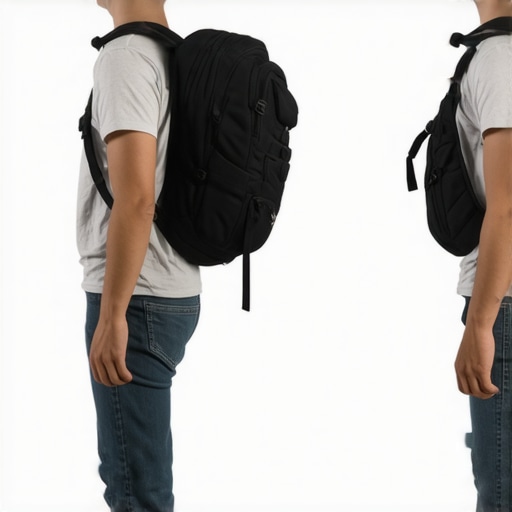
Adjust the Straps to Pull the Load High
A low-hanging backpack is a recipe for disaster. I see kids at the bus stop every morning with their bags bouncing against their lower backs. When the bag sits that low, it creates a massive amount of shearing force on the lumbar spine. I made my daughter tighten her straps until the bottom of the pack sat two inches above her waist. It took some complaining—apparently, it’s ‘not the vibe’—but it stopped her from leaning forward like she was walking into a windstorm. When the bag is snug, the weight is distributed across the thickest muscles of the back rather than hanging off the delicate joints of the neck. We also discussed how how your child’s desk height is impacting their growing spine, because the damage done at the desk is often compounded by the heavy carry to and from school.
Counteract the Carry with Daily Mobility
Even a perfectly fitted bag creates some compression. To fight back, we started doing Wall Angels for two minutes every afternoon. I’d have my kids stand with their backs against the hallway wall, trying to keep their heels, glutes, shoulders, and the back of their heads in contact with the surface while sliding their arms up and down. It was messy at first—my son couldn’t even get his wrists to touch the wall without arching his back. But after a week of focusing on mobility boosts for posture expert tips for daily adjustments, he started to ‘unstick’ those tight chest muscles. You can’t just expect a spine to bounce back after seven hours of compression without some active help. We found that the wall stretch that fixes slumped shoulders fast was the most effective way to reset their frames after a long day of classes and heavy lifting.Most people think the solution to a slumped teenager is simply telling them to “sit up straight.” But here’s the contrarian truth: forced posture is exhausting and usually counterproductive. When you force a ‘perfect’ upright position, you’re often just over-recruiting your superficial back muscles, leading to a different kind of fatigue. In fact, research published in the Journal of Manipulative and Physiological Therapeutics suggests that true postural improvement is more about neuromuscular retraining and joint mobility than just ‘trying harder’ or using more willpower. I fell into the trap of thinking my son just needed to stretch his neck more. But I eventually realized that why stretching your neck is making your headaches worse is a real phenomenon. If a muscle is ‘tight’ because it’s being stretched thin by a heavy bag, adding more stretching just irritates the nerves further. Instead, we need to focus on how chiropractic adjustments enhance posture and mobility by addressing the stuck joints that make movement impossible in the first place.#IMAGE_PLACE_HOLDER_C#One major ‘oops’ factor I see parents reach for is the posture brace. It seems like a quick fix, right? But why most posture braces actually make your back weaker is because they do the work for the muscles. The brain eventually ‘turns off’ the stabilizers, and the second the brace comes off, the slump returns—often worse than before.
Why does my back feel tight even when I’m not carrying anything?
This is where the hidden nuance of ’tissue creep’ comes in. If those spinal ligaments are stressed all day at school, they don’t just ‘snap back’ the moment the bag hits the floor. We need to look at the truth about perfect posture and why it doesn’t exist as a static goal. It’s a dynamic state. If your teen is constantly ‘self-adjusting,’ take note. Why you should stop cracking your own back every hour is because that habit usually targets the joints above or below the actual stuck segment, creating hypermobility where you don’t want it. We’ve started looking at mobility boosts for posture expert tips for daily adjustments to help the nervous system feel safe in a new position rather than just ‘straight.’ Have you ever fallen into the trap of buying a ‘posture corrector’ only to find it gathering dust in a drawer because it hurt to wear? Let me know in the comments—I’d love to hear your ‘quick fix’ horror stories.Sustain the Progress When Life Gets Busy. It’s one thing to fix a heavy backpack for a week; it’s another to make spinal health a permanent lifestyle. I started using a simple laser-line level I bought at a hardware store to do quick ‘posture checks’ in the hallway. It sounds obsessive, but seeing the red line deviate from their mid-back was the immediate visual feedback my kids needed to stop slouching. We’ve also integrated the ultimate guide to improving mobility and posture in 2025 into our Sunday family routine. Beyond the hardware, I’m a huge fan of biofeedback apps that use the phone’s camera to track head tilt during homework sessions. One tool that changed the game for me wasn’t a brace, but a simple interval timer for our home office. According to ergonomic expert Dr. Alan Hedge at Cornell University, the ’20-8-2′ rule is the gold standard for office health: 20 minutes of sitting, 8 minutes of standing, and 2 minutes of moving. If you aren’t following the best standing desk interval for maximum back health, you’re likely just trading one type of postural strain for another. I’ve noticed that when my kids stick to this rhythm during homework, they don’t have that ‘crusty’ feeling in their joints by dinner time. 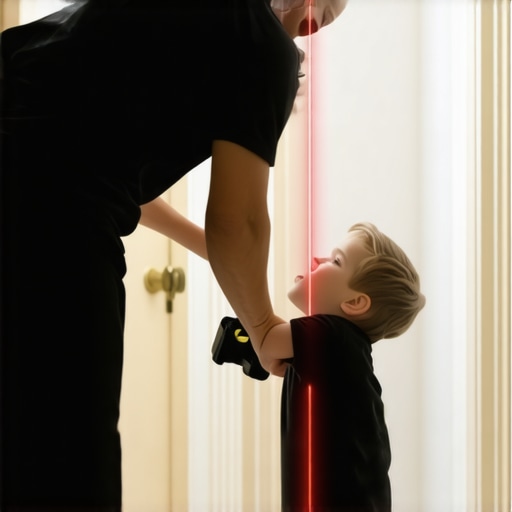
How can I keep my family’s spinal health on track for the long haul?
Maintenance isn’t about being perfect every second; it’s about checking the foundation consistently. Think of it like a car alignment. You can drive a car with a slight pull to the left, but eventually, you’re going to bald your tires and ruin the suspension. That’s why I view why chiropractic care is your secret weapon for better posture as a non-negotiable monthly check-up for the whole family. Looking forward, I suspect we’ll see a major shift toward ‘smart clothing’ that vibrates when you slouch—essentially a wearable coach built into your shirt. While that tech is exciting, nothing beats the internal awareness of how to improve your balance by adjusting your spine manually through consistent, mindful movement. We need to focus on proprioceptive training, teaching kids where their bodies are in space rather than just telling them to sit still. If you want to jumpstart this at home, I highly recommend trying the 2-minute drill for better spinal rotation before bed tonight. It’s the single most effective way I’ve found to ‘un-rotate’ the damage done by a lopsided carry or a long day at a desk. Give it a shot and see if you don’t feel an inch taller by morning.
The Hardest Realizations I Faced While Fixing My Son’s Slump
I used to believe that padding was the ultimate solution, but weight distribution matters infinitely more than extra foam. I also learned that nagging my kids to ‘sit up straight’ was often counterproductive, creating superficial muscle tension rather than true structural alignment. The biggest lightbulb moment was realizing that a heavy bag doesn’t just stress the back; it changes how they breathe. If you see your child taking shallow breaths while wearing their pack, their rib cage is likely compressed and struggling to expand. Finally, I realized that silence doesn’t mean ‘no pain’—many teenagers don’t complain until the nerve pressure is significant enough to cause a secondary issue like a tension headache.
The Gear and Guides That Actually Moved the Needle for Us
We now swear by our basic digital luggage scale; it is the only way to stay objective about the 10% body weight rule without guessing. I also highly recommend looking into how chiropractic adjustments enhance posture and mobility because sometimes the spinal joints are too locked for home exercise alone to be effective. For daily recovery, we have integrated the dead bug variation that actually protects your spine to wake up those deep core stabilizers that heavy bags tend to put to sleep. Just be careful with popular home tools; for instance, the truth about foam rolling your lower back is that it can often aggravate inflammation if you aren’t focusing on the mid-back and shoulders instead.
#IMAGE_PLACEHOLDER_E#
Building a Foundation for Your Child That Lasts a Lifetime
Spinal health is a marathon, not a sprint, and the habits formed in the teenage years dictate the chronic issues of adulthood. By making these small shifts now, you are preventing the ‘permanent question mark’ posture from defining your child’s physical future. Remember that why chiropractic care is your secret weapon for better posture lies in its ability to reset the foundation so your home mobility efforts actually stick. Start with a bag audit tonight and look into mobility hacks and simple adjustments to keep the progress going even on the busiest school days. Your teen’s future self will thank you for being the parent who cared enough to look at their spine as a dynamic, growing system. What is the heaviest or most surprising thing you found in your kid’s backpack this week? Let me know in the comments!