
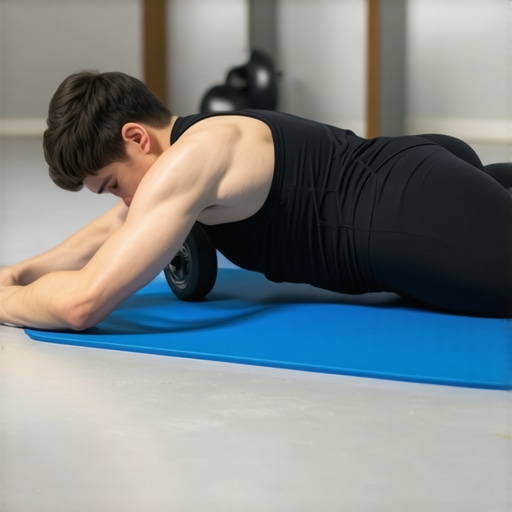
I remember the first time I tried to “fix” my nagging knee pain by jumping on a foam roller. I laid right on that tender side-leg area and rolled like I was trying to flatten pizza dough. I saw stars. It felt like I was grinding a deep bruise into the hardwood floor, and guess what? It didn’t help one bit. In fact, I woke up the next morning with a leg that felt like it had been hit by a truck and a knee that was angrier than before. I had made the classic mistake of treating my IT band like a tight muscle that just needed to be smashed into submission. Today, I’m going to show you how to actually find relief without the unnecessary torture, focusing on the muscles that actually control that tension.
Stop Treating Your IT Band Like a Piece of Pizza Dough
The reality is that the iliotibial (IT) band isn’t even a muscle. It is a thick, fibrous piece of connective tissue. Research suggests that it is incredibly strong and nearly impossible to “stretch” through manual pressure alone. In fact, some studies indicate it would take over 2,000 pounds of force to change the length of that tissue by just 1%. When I was rolling directly on it, I wasn’t fixing anything; I was just irritating the sensitive nerves and bursa underneath. This is often why your knees hurt when you sit for more than 30 minutes or why your run feels like a slog. We need to stop attacking the symptom and start looking at the neighbors. If the IT band is tight, it’s usually because the muscles it attaches to—like the glutes and the TFL—are pulling on it like an aggressive game of tug-of-war.
Is foam rolling actually worth the agony?
I get it. You’re skeptical. You’ve spent twenty minutes on the floor sweating and grimacing, only to stand up and feel just as stiff. You might wonder if you’re just wasting your time. Here is the honest truth: foam rolling is worth it, but only if you change your target. Early in my journey, I thought the goal was to “break up scar tissue.” That’s a total myth. The real goal is to signal your nervous system to let go of the tension in the surrounding muscles. By focusing on a move that opens up tight hips instead of just grinding the side of your thigh, you create slack in the whole system. Have you ever felt like you were just bruising yourself without getting any real relief? I would love to hear your “foam roller fail” stories—we have all been there!
The Secret Sauce is Hitting the Neighbors
Instead of the direct, painful approach, we want to address the tension in the hips and glutes. This is much like how stretching your hamstrings won’t fix your tight back if the issue is coming from elsewhere. We need to work on the TFL—that small muscle on the front-side of your hip—and the gluteus medius. When these muscles are happy, the IT band stops feeling like a guitar string tuned three octaves too high. We are aiming for improving posture through mobility rather than a search-and-destroy mission on the pain point itself. Let’s dive into the specific positions that will actually move the needle for your recovery.
Find Your Pocket Muscle to Release the Tension
The Tensor Fasciae Latae (TFL) is a tiny muscle with a massive job. Think of it as the primary anchor for your IT band. If the TFL is locked up, it pulls that fibrous band tight like a bowstring. To fix this, grab a foam roller or a lacrosse ball. Lie on your side, but instead of being directly on your leg, tilt your body about 45 degrees toward the floor. You want to be right on that meaty spot where your front pocket would be. When I first did this, I realized I had been missing the actual source of my pain for years. I spent three minutes breathing through the discomfort in my TFL, and for the first time, my knee didn’t feel like it was being squeezed by a vice. This is one of those mobility hacks that feels targeted rather than haphazard. It is about creating slack where the tension starts.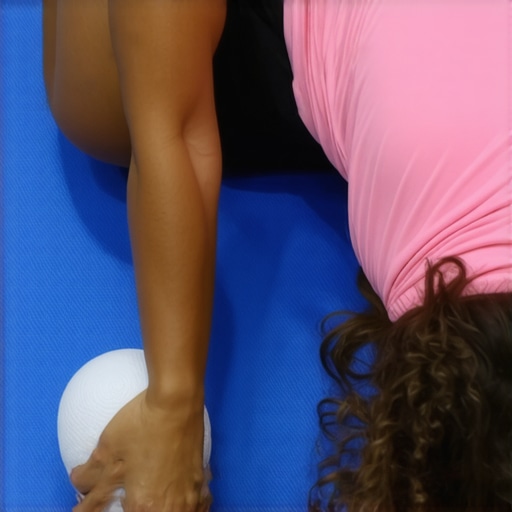
Give Your Glutes a Reason to Relax
The IT band is often a victim of lazy glutes. When your glutes aren’t doing their job of stabilizing your pelvis, the IT band tries to take over. It is like asking a receptionist to do the heavy lifting in a warehouse; they are not built for it, and they are going to get cranky fast. This is why your glutes fail to activate during lunges and other movements. You need to roll the gluteus medius—the muscle on the side of your hip, just above the bony part of your femur. Sit on your foam roller, cross one ankle over the opposite knee, and lean toward the side of the raised leg. Spend 60 seconds on each side. By calming these muscles, you allow the IT band to naturally slacken without ever touching the painful area itself.
Identify Your Pelvic Position
Your IT band tension is heavily influenced by how your pelvis sits. If you have an anterior pelvic tilt—where the front of your hips dips forward—you are putting the IT band on a constant stretch. I used to stand with my lower back arched, thinking I had good posture, when in reality I was just straining my connective tissue. You should learn how to spot a pelvic tilt in the mirror to see if your tightness is actually just a structural misalignment. If your pelvis is out of whack, no amount of rolling will provide permanent relief. This is where the 30-second move that opens up tight hips in seconds becomes a lifesaver, as it resets the bowl of your pelvis and takes the pressure off the lateral line of your leg.
Consistency Over Intensity
The biggest mistake I see is people trying to win at foam rolling by going as hard as possible. Your nervous system does not respond well to pain; it responds to safety. If you are tensing your whole body while rolling, your muscles will never let go. Think of it like trying to untie a knot in a shoelace by pulling both ends—it only makes it tighter. Move slowly, breathe deeply, and focus on those neighbor muscles. This approach is far more effective for revolutionizing your posture with targeted mobility exercises than just smashing your thigh until it bruises. I remember a client who rolled their IT band every day for a year with zero progress; once we shifted to this neighbor approach, their pain vanished in two weeks.Let’s dig deeper. Most people spend their lives chasing a ghost called ‘perfect posture.’ We are told to sit tall, pull our shoulders back, and tuck our chins. But here is the contrarian truth: the truth about perfect posture and why it doesn’t exist is that your body was designed for movement, not for holding a static, rigid shape. When you force yourself into a military-style stance, you aren’t fixing your alignment; you are just creating a new set of compensations.
Why Forcing a Straight Back Is Secretly Making You Stiff
The most common ‘oops’ factor I see is the ‘over-correction’ trap. People who are self-conscious about slouching often swing the pendulum too far the other way. They arch their lower backs excessively and lock their shoulder blades together. This actually causes your rib cage to flare, which shuts down your core and forces your neck muscles to work overtime. It is exactly why most people do the cat-cow stretch wrong—they focus on the extreme ranges rather than finding the fluid control in the middle. If you’ve been forcing yourself to stay ‘upright’ and noticed your breathing feels shallow, you’ve likely triggered this stiffness. 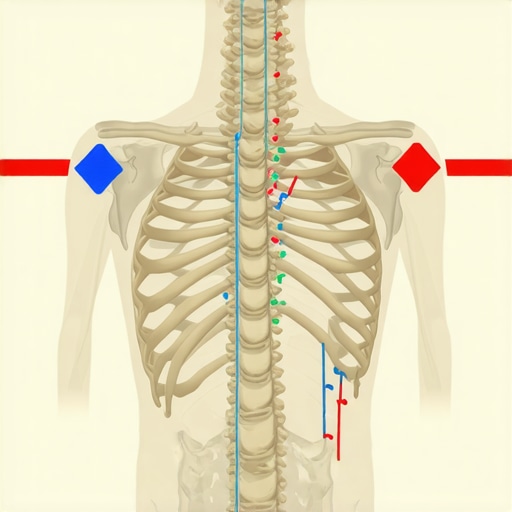
Can you really stretch your way out of a structural misalignment?
While mobility drills are fantastic, there is a nuance that many people miss: you cannot stretch a joint that is mechanically stuck. If your vertebrae aren’t moving correctly, your brain will keep the surrounding muscles tight as a protective mechanism. This is where how chiropractic adjustments enhance posture and mobility by restoring the actual joint play. Once the joint moves, the muscle no longer needs to act like a splint. A study published in the Journal of Bodywork and Movement Therapies suggests that movement variability—the ability to shift between positions easily—is far more important for long-term spinal health than maintaining a specific ‘correct’ angle.
The Hidden Trap of Over-Correction
When you over-correct, you often end up wondering how to stop your rib cage from feeling stuck when you breathe. This happens because the diaphragm cannot drop fully when the spine is held in a rigid, arched position. You’re effectively trading a slouch for a cage. Have you ever fallen into this trap of trying to stand perfectly straight only to end up with a mid-back ache? Let me know in the comments! The real goal isn’t to look like a statue; it’s to build a body that can move through its full range without restriction. This shift from ‘holding a pose’ to ‘restoring a function’ is the secret sauce to feeling light and mobile again.I have spent thousands of dollars on gadgets that promised to ‘fix’ my posture overnight, but most of them ended up gathering dust in my closet. After years of trial and error, I’ve realized that the most expensive tool isn’t always the best one.
Ditch the Giant Foam Roller for a Targeted Lacrosse Ball
While a foam roller is great for broad strokes, it is often too blunt an instrument for the deep, grumbly muscles like the gluteus medius or the deep hip rotators. I personally swear by a standard lacrosse ball—or even better, a mobility ball with a bit of grip. I use it to perform what Dr. Kelly Starrett, author of Becoming a Supple Leopard and founder of The Ready State, calls ‘smash and floss’ techniques. By pinning the muscle tissue down and then moving my joint through its range of motion, I am creating a localized stretch that a foam roller simply cannot reach. This is one of those mobility hacks that looks simple but fundamentally changes how your tissue slides and glides. If you’ve been struggling with why your knees hurt when you sit for more than 30 minutes, this localized pressure on the hip rotators is often the missing piece of the puzzle. 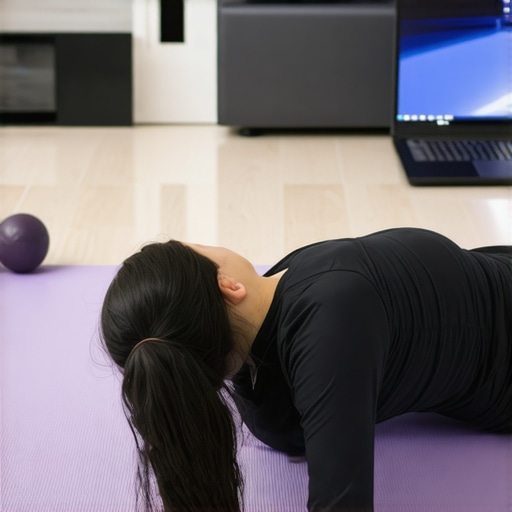
How do I keep my hips from tightening up every morning?
The secret isn’t a marathon session on the floor; it’s a commitment to micro-dosing your movement. I found that my progress skyrocketed when I stopped doing 45 minutes of stretching on Sundays and started doing the 3-minute evening routine for a less stiff morning every single night. This consistent input tells your nervous system that it is safe to maintain this new range of motion. When you pair this daily habit with regular check-ins with a professional, you create a fail-safe system. This is why chiropractic care is your secret weapon for better posture—it addresses the structural ‘stuckness’ that your lacrosse ball can’t reach, ensuring that your mobility work actually sticks.
The Future of Posture is Dynamic Movement
As we look toward 2025 and beyond, the fitness world is shifting away from the idea of ‘fixing’ posture and moving toward ‘expanding’ movement options. We are beginning to see that the ultimate guide to improving mobility and posture in 2025 isn’t about standing like a statue; it’s about having the freedom to move into any position without pain. How chiropractic adjustments enhance posture and mobility is by clearing the path so your body can actually use the strength you’ve been building. If you really want to level up, I challenge you to try this: the next time you use your lacrosse ball on your hip, don’t just sit there. Slowly move your knee out to the side and back (the ‘floss’) for two minutes. It’s an advanced tip that creates immediate, measurable change in how your IT band feels. You’ll likely notice it even helps with revolutionizing your posture with targeted mobility exercises because your foundation—your pelvis—is finally free to move.
What I Wish Someone Had Told Me Before I Bought My First Roller
Looking back at my years of struggle, there are a few lightbulb moments that changed everything for me. First, I learned that more pressure does not equal more progress; your nervous system needs to feel safe to let go of tension rather than being under attack. Second, chasing the pain point is usually a wild goose chase. If your knee hurts, you must look at the hip; if your back hurts, check the alignment of your pelvis. Finally, I realized that true mobility isn’t about being flexible like a gymnast, but about having the freedom to move through your daily life without your body constantly screaming for attention. Working with a professional to understand the mechanics of your joints is often the missing piece that makes all your stretching actually work.
The Simple Gear I Use to Stay Mobile Every Day
You don’t need a fancy home gym to see significant results. My toolkit is surprisingly basic. I rely heavily on a standard lacrosse ball for those deep hip smash and floss sessions because it gets into corners a foam roller just can’t reach. For long work days, knowing how to use a lumbar roll correctly in an office chair has been an absolute game-changer for my lower back health. I also recommend following the work of experts who focus on functional movement rather than just static stretching. These tools, combined with consistent mobility boosts for posture, provide a solid foundation for long-term physical health without the need for expensive gadgets.
#IMAGE_PLACEHOLDER_E#
Start Reclaiming Your Range of Motion Today
The journey to a pain-free life isn’t a sprint; it’s a series of small, intentional choices. Whether you are focusing on releasing your TFL or finally addressing a pelvic tilt, remember that your body is remarkably resilient. By integrating chiropractic adjustments to unlock a pain-free lifestyle with your daily movement practice, you are setting yourself up for success. Don’t let the fear of doing it wrong stop you from starting today. Your future, more mobile self will thank you for the effort you put in now. Have you ever tried to roll out a knot only to find it felt worse the next day? Let me know your stories in the comments!