

I was about three miles into my favorite trail loop, the sun barely hitting the dew on the grass, and then it happened again. My left foot just… disappeared. Not physically, of course, but that tingly, wooden sensation started in the toes and quickly crept up the arch. I stopped right there, shaking my leg out like a wet dog, feeling like a total failure. I had bought the $160 sneakers. I had done the calf stretches. Why was my body quitting on me before breakfast? I spent months thinking the problem was purely local, but the truth turned out to be much more complex than a tight shoe. [image]
Stop Blaming Your Shoelaces for Dead Toes
Most of us make the same mistake I did early on: we focus entirely on the sneakers. I actually spent a small fortune on high-end orthotics and extra-wide toe boxes, thinking I just had ‘difficult’ feet. While learning how to tell if your back pain is coming from your shoes is a solid starting point, the real culprit for that morning numbness often hides much higher up the kinetic chain. If your nerves are getting pinched at the hip or lower back, your feet are just the messengers of a deeper structural problem. Today, I’m going to show you how to trace that tingling back to its source so you can get back to your miles without the mid-run panic.
Is this just a normal part of getting older?
It is incredibly easy to shrug and say, ‘Well, I am over thirty, I guess this is just life now.’ But numbness is not a natural byproduct of aging; it is a signal. According to the Mayo Clinic, peripheral nerve issues can stem from repetitive stress and poor alignment rather than just simple wear and tear. Have you ever felt that weird, phantom tingling that seems to vanish the moment you stop moving? That is your body screaming for a postural reset.
The Chain Reaction from Your Spine to Your Sole
My biggest lightbulb moment came when I realized my flat feet and recurring back pain were actually two sides of the same coin. When your gait is off, your nerves pay the price. If you are not looking at the ultimate guide to improving mobility and posture in 2025, you are missing the forest for the trees. I spent months stretching my calves when the real issue was a lack of spinal mobility that was putting pressure on my sciatic nerve. By focusing on how my body moved as a whole, rather than just icing my heels, the numbness finally started to retreat. Have you found yourself stopping mid-run to shake out your feet more than once a week lately?To fix the numbness, you have to stop thinking about your feet as isolated units and start seeing them as the end of a very long, sensitive electrical wire. Imagine a garden hose running from your lower back down to your big toe. If someone steps on that hose at the hip or the lower back, it doesn’t matter how much you scrub the nozzle at the end—the water still won’t flow.
Check for Kinks in Your Neural Garden Hose
Before you even start your run, you need to determine if the ‘kink’ is local or central. A quick way to test this is by performing a seated slump test. Sit on a chair, slump your shoulders forward, and tuck your chin to your chest. Slowly straighten the leg that usually goes numb. If you feel that familiar tingle, it’s not a shoe issue; it’s a neural tension issue originating in your spine or hips. This is why the nerve glide that stops sciatica in the shower is often more effective than buying expensive new insoles that only mask the symptoms.
Floss Your Nerves Instead of Stretching Them
When a nerve is irritated, the last thing it wants is to be pulled tight from both ends like a piece of taut string. I learned this the hard way during a half-marathon training session. I kept trying to ‘stretch out’ the numbness by reaching for my toes, but I was actually aggravating the nerve. You should be ‘flossing’ the nerve—creating slack at one end while pulling at the other. While sitting, kick your leg out and point your toes away from you while looking up at the ceiling. Then, flex your foot toward your shin while tucking your chin to your chest. You are sliding the nerve through the tissues rather than yanking on it like a stubborn weed. 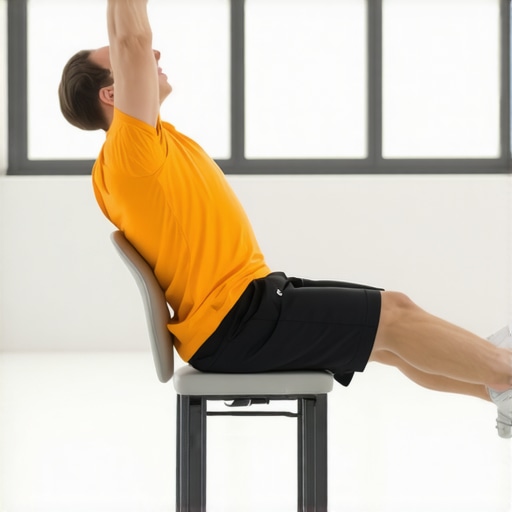
Unlock Your Hips to Free Your Feet
If your hips are locked up, your lower back has to overcompensate, which leads to the compression of the sciatic nerve. This is the primary reason why your hamstring stretch is actually irritating your sciatic nerve rather than helping it. To create space for those nerves to breathe, you need to master the hip hinge. Think of your pelvis as a bucket of water; if you tilt it too far forward or backward, you are putting a ‘pinch’ on the wires exiting your spine. Incorporating the hip hinge secret for pain-free deadlifts into your daily routine helps keep your pelvis neutral and your nerve pathways open.
Rotate Your Spine to Save Your Stride
Running is a rotational sport. If your mid-back is stiff, that rotation is forced down into your lumbar spine and hips, creating a ‘choke point’ for the nerves heading to your feet. I started doing the 2-minute drill for better spinal rotation every morning, and the results were immediate. I went from having ‘wooden’ feet at mile four to finishing ten-mile runs with full sensation. You can also try the 15-minute flow to open up sticky hips to ensure your entire lower body is moving in sync. When your joints move through their full range, the mechanical pressure on your nerves drops, and that tingly sensation finally stays away.I used to think a quick ‘crack’ was the finish line. I would walk out of an office feeling like a million bucks, only to have that same wooden sensation return to my toes by the time I hit the pavement for my afternoon run. The biggest mistake we make—and I made this for years—is treating a spinal adjustment like a mechanical reset button. In reality, how chiropractic adjustments enhance posture and mobility is much more about opening a temporary ‘neurological window’ than just shifting bones. If you do not use that window to reinforce new movement patterns, your body will revert to its old, pinched-nerve default within hours. Have you ever fallen into this trap of thinking the adjustment was the end of the work? Let me know in the comments.
The Adjustment Myth That Keeps You Stiff
Everyone says you just need to get ‘aligned’ to fix the tingling, but in my experience, alignment without activation is a recipe for frustration. If your glutes are not firing to support your pelvis, no amount of spinal clicking will keep your sciatic nerve from getting compressed again at mile four. You have to actively claim the space that the adjustment provides. This is why improving posture through mobility practical chiropractor strategies focuses on what you do in the twenty-three hours you are NOT on the treatment table.
Why does the tingling return even after a professional adjustment?
This is the question that keeps most runners and active adults up at night. Often, it is because your brain has developed a ‘protection map.’ Even when the physical pressure is removed from the nerve, your nervous system remains on high alert, anticipating pain. A study published in the Journal of Orthopaedic & Sports Physical Therapy (JOSPT) suggests that neurodynamic mobilization—the nerve flossing we discussed—is most effective when paired with motor control exercises that ‘re-educate’ the brain. Without teaching your brain that the ‘neural garden hose’ is no longer kinked, it will keep sending the signal that something is wrong, even when the structural path is clear. 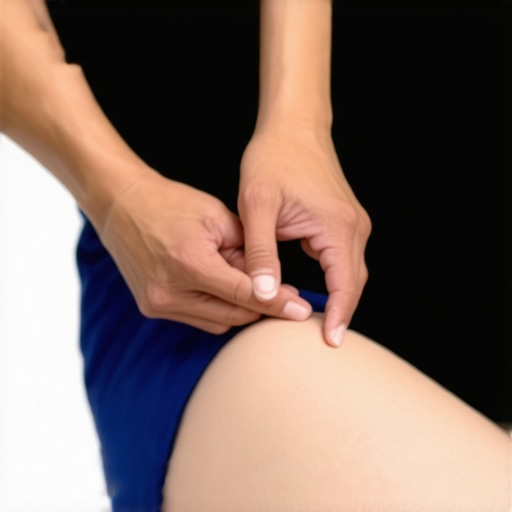
The Stretching Trap That Fries Your Nerves
Here is the ‘oops’ factor that ruins most recoveries: excessive passive stretching. When we feel a ‘tight’ hamstring or a ‘stiff’ calf, our instinct is to yank on it. But why your gentle stretching is actually causing more inflammation is a concept many of us learn too late. When a nerve is the source of that tightness, aggressive stretching acts like sandpaper on an already raw wire. You are not lengthening a muscle; you are irritating a delicate cable. If you have been stretching for weeks and the numbness is actually getting worse or moving further down your foot, stop immediately. You are likely aggravating the nerve sheath. Instead, focus on mobility hacks simple adjustments for a more active life that prioritize joint space over muscle length.
Movement is the Only Real Posture Fix
We also need to debunk the ‘military posture’ myth. The truth about perfect posture and why it doesn’t exist is that your best posture is your next posture. Staying in any one position—even a ‘perfectly straight’ one—creates a static load on your discs and nerves. If you are sitting at a desk and your feet are already starting to hum, it is not just because you are slouching; it is because you have been still for too long. Movement is the lubricant for your nerves. By using targeted mobility exercises to revolutionize your posture, you create a dynamic system where nerves can slide and glide freely, regardless of whether you are sitting, standing, or sprinting.Once I stopped chasing the ‘perfect’ adjustment and started looking at my body as a project that requires daily maintenance, everything changed. I realized that my expensive shoes weren’t the problem, but my lack of a consistent feedback loop was. To keep the tingling at bay, I’ve developed a ‘minimum effective dose’ of mobility that I perform every morning before I even touch my coffee. This isn’t about hour-long yoga sessions; it’s about using mobility boosts for posture expert tips for daily adjustments to ensure my nerves aren’t getting snagged on old scar tissue.
Stop Guessing and Start Testing Your Range
I don’t just ‘stretch’ anymore; I test. Every morning, I do a quick body scan to see where the ‘sticky’ spots are. If I can’t comfortably hit a full squat without my heels lifting, I know my ankles are the bottleneck, and I immediately use how to fix stiff ankles that limit your squat depth as my corrective. If my hip feels jammed, I know my sciatic nerve is about to have a bad day on the trail. By testing your range before you load it with a run, you prevent the ‘nerve pinch’ before it even starts. This proactive approach is the core of enhancing your posture with expert chiropractic techniques in 2025.
My Go-To Tools for Nerve Freedom
I’ve tried every gadget on the market, from vibrating foam rollers to expensive percussion guns. What I’ve found is that the simplest tools are often the most effective for nerve-related numbness. My daily kit includes a standard lacrosse ball and a firm yoga wedge. The lacrosse ball is for targeted release in the glute medius—the ‘choke point’ for many runners. Dr. Stuart McGill, a world-renowned expert in spine biomechanics, emphasizes in his book Back Mechanic that maintaining hip mobility is non-negotiable for preserving lumbar health. I use the ball to gently release tension around the piriformis, which often mimics disc issues by compressing the sciatic nerve. If you’re feeling tight, try the 30-second move that opens up tight hips in seconds to see if your ‘nerve hose’ is kinked at the pelvis. 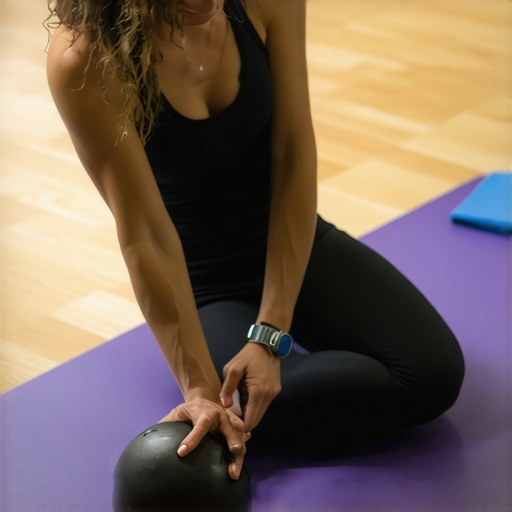
The Future of Wearables in Your Spinal Health
Looking ahead, I predict we are going to see a massive shift toward bio-feedback wearables that monitor spinal shear in real-time. We already have watches that track heart rate and pace, but soon, we’ll have sensors integrated into our shirts or waistbands that vibrate the second our lumbar spine enters a ‘danger zone’ for nerve compression. This technology will take the guesswork out of maintenance, allowing us to make micro-adjustments during a run rather than waiting for the numbness to set in. Until then, we have to rely on chiropractic adjustments to unlock a pain-free lifestyle today and our own internal awareness.
How do I maintain these mobility gains over time?
Consistency beats intensity every single time. You don’t need a massive overhaul; you need a ritual. I keep my mobility tools right next to my running shoes. If I see the lacrosse ball, I’m 90% more likely to use it. I also schedule a ‘tune-up’ with my chiropractor once a month, not because I’m in pain, but because I want to ensure my joints are moving through their full range before I ramp up my mileage. This preventative mindset is what separates people who run for a season from people who run for a lifetime. If you’ve been struggling with that persistent wooden feeling in your toes, I challenge you to try the seated slump test every morning for the next seven days. Note the difference in sensation before and after you do a quick hip opening drill. Don’t wait for the pain to become a permanent guest—take control of your neural health today.
The Hard Truth About Chasing Symptoms Instead of Systems
When I first started this journey, I thought I was broken, but I was just misinformed. After years of trial and error, here are the real lightbulb moments that changed everything:
- Nerves have a memory. Even after you clear the physical pressure, your nervous system might stay on high alert. Be patient; the ‘static’ in your feet might take a few weeks of consistent work to fully fade.
- The ‘Thaw’ Effect is real. Sometimes, as a nerve starts to heal and regain its path, the tingling might briefly feel more intense or ‘warm.’ Don’t panic—this is often a sign that the signal is finally getting through.
- Environment matters more than effort. You can do all the drills in the world, but if you go back to sitting on your wallet for eight hours, you are undoing your progress.
Tools That Actually Earned a Spot in My Gym Bag
I have wasted a lot of money on gimmicks, so I want to save you the trouble. If you are serious about long-term relief, these are the only resources you truly need:
First, pick up a copy of Back Mechanic by Dr. Stuart McGill. It is the definitive guide to understanding how your spine moves and how to protect those precious nerve roots. Second, keep a firm lacrosse ball in your car or at your desk. It is the most effective tool I have found for releasing the piriformis muscle, which is a major gatekeeper for the sciatic nerve. Finally, if you find that your ankles are the culprit, how to fix stiff ankles that limit your squat depth provides the exact roadmap for opening up that joint space so your gait doesn’t compromise your back.
Take the First Step Toward a Numb-Free Mile
You don’t have to accept numbness as your new running partner. By shifting your focus from the sole of your foot to the health of your spine, you are addressing the root cause rather than just masking the symptoms. When you chiropractic adjustments unlock a pain-free lifestyle today, you create the structural freedom your body needs to heal. Pair that professional guidance with the intent to revolutionize your posture with targeted mobility exercises, and you will find that those miles start feeling light again. Remember, the link between mobility and posture a chiropractors guide is the foundation of every pain-free athlete. Go slow, listen to your body, and reclaim your stride. Have you ever felt that ‘wooden’ sensation in your feet during a long workout, and what did you try first to fix it? Let me know in the comments below!