
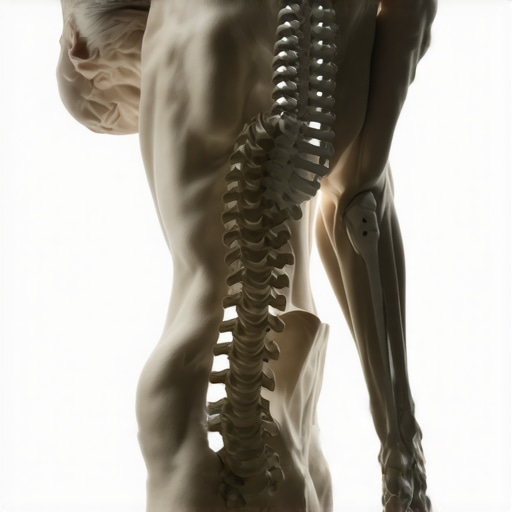
I remember the day I almost took a header into my own coffee table while just standing there. I wasn’t dizzy, I hadn’t been drinking, and the floor was perfectly level. I simply turned my head to answer the phone, and the entire room did a sickening little tilt-a-whirl. I laughed it off as a ‘clumsy moment,’ but it kept happening. My morning walks started feeling less like a stroll and more like a balancing act on a tightrope. It turns out, my ‘clumsiness’ wasn’t an aging issue; it was a mechanical one. I spent years ignoring how my head was slowly drifting forward like a wilted tulip, and my nervous system was paying the price. Today, we are going to dive into why that slouch is stealing your stability and how you can reclaim your footing before you find yourself staring at the floor from the wrong angle.
Have you ever felt that weird, momentary ‘whoosh’ in your head when you stand up or turn too quickly? I’d love to hear if you’ve experienced that strange loss of footing in the comments below.
Your Neck Is the Steering Wheel for Your Entire Body
I’ll be honest, I made the classic rookie mistake of thinking balance was strictly a ‘foot and ear’ problem. I bought expensive stability sneakers, thinking that [how your footwear choices are affecting your neck alignment](https://quackersneck.com/how-your-footwear-choices-are-affecting-your-neck-alignment) was some far-off theory that didn’t apply to me. I was wrong. Your brain relies on three systems to keep you upright: your eyes, your inner ear, and the tiny sensors in your neck muscles called proprioceptors. When you develop what we call ‘text neck,’ those sensors get stretched and distorted. It’s like trying to navigate a dark room while someone is spinning you around. Specifically, [why your balance decreases as your head slumps forward](https://quackersneck.com/why-your-balance-decreases-as-your-head-slumps-forward) is because your center of gravity shifts, forcing your brain to work overtime just to keep you from toppling over. According to research from the Journal of Physical Therapy Science, forward head posture significantly increases postural sway, meaning you’re constantly wobbling on a microscopic level, even when you think you’re standing still.
Can a simple adjustment really stop me from feeling dizzy?
It sounds almost too easy to be true, right? I was a total skeptic myself. I figured once you lost your balance, it was just a slow slide into old age. But the truth is that your spine is the highway for every signal traveling from your brain to your limbs. If that highway is buckled and twisted, the signals get delayed. By [learning how to improve your balance by adjusting your spine](https://quackersneck.com/how-to-improve-your-balance-by-adjusting-your-spine), you are essentially clearing the traffic jam. I learned the hard way that [the truth about text neck and long-term nerve damage](https://quackersneck.com/the-truth-about-text-neck-and-long-term-nerve-damage) is that it doesn’t just cause a dull ache—it actively confuses your body’s internal GPS. If you’ve been wondering [how to tell if your dizziness is coming from your neck](https://quackersneck.com/how-to-tell-if-your-dizziness-is-coming-from-your-neck-2), the answer usually lies in how your head sits on your shoulders during those quiet moments at your desk.
Look in the Mirror to Find Your True Center
The first thing I had to do was stop guessing where my head was in space. I remember the first time I tried a ‘wall reset’ in my hallway. I stood with my heels, glutes, and shoulder blades against the trim, thinking I was perfectly straight. When I tried to pull the back of my head to the wall, I felt a strain so sharp it was embarrassing—I was nearly three inches forward of where I thought I was. That moment of clarity is where your recovery starts. Much like how to spot a pelvic tilt in the mirror, you need to visually confirm your misalignment. Stand sideways to a mirror and look for your earlobe; it should be directly over the center of your shoulder. If it’s floating over your chest, your brain is receiving skewed data about where ‘up’ actually is.
The Chin Tuck That Resets Your Internal GPS
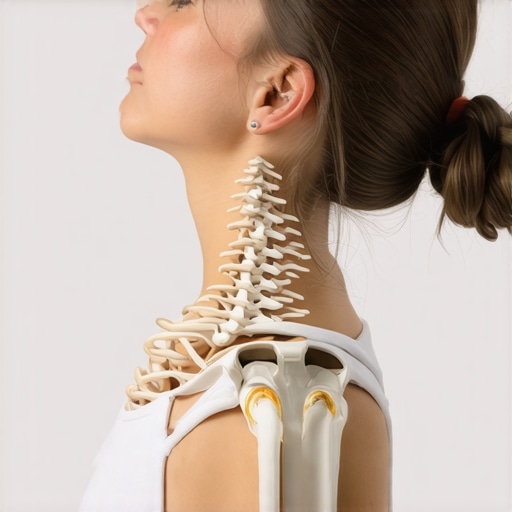
Think of your neck like a dresser drawer that has been pulled out too far. To fix it, you don’t just push the top; you have to slide the whole unit back into the tracks. This is the ‘chin tuck.’ I started doing these while waiting at red lights. You simply pull your chin straight back—not down toward your chest, but back toward your spine—creating a temporary and very attractive ‘double chin.’ This motion stretches the suboccipital muscles at the base of your skull, which are usually the primary culprits behind that dizzy, floating feeling. By improving posture through mobility, you are literally decompressing the nerves that tell your brain how to balance. I found that doing ten of these every hour at my desk stopped that 3:00 PM ‘brain fog’ and the wobbles I used to get when I stood up too fast.
Elevate Your Screens to Save Your Stability
You can do all the exercises in the world, but if you spend six hours a day staring into your lap, you are fighting a losing battle. Your head weighs about as much as a bowling ball. When you tilt it forward 45 degrees, that weight effectively quadruples, putting 50 pounds of pressure on your cervical spine. I finally had to adjust my monitor to stop reaching with my chin and commit to a new rule: the top third of my screen must be at eye level. This forces your neck into a neutral position where those proprioceptors can function without being crushed. If you’re on a phone, learning how to use your phone at eye level to save your spine is the single most important habit for maintaining your long-term coordination.
Why Your Spine Needs Professional Recalibration
Sometimes the ‘hinge’ of your neck is so stuck that a simple stretch won’t budge it. It’s like a door with a rusted pin; no matter how hard you pull, the alignment is off. This is where how chiropractic adjustments enhance posture and mobility becomes the game changer. A targeted adjustment acts as a mechanical reset, breaking up the restrictive scar tissue and allowing the joints to glide properly again. For me, the first time a chiropractor adjusted my upper cervical spine, it felt like someone had finally turned the lights on in a dim room. The ‘whoosh’ in my head vanished because the signals from my neck were finally matching the signals from my eyes. Integrating this with a 3-minute evening routine for a less stiff morning ensures that the progress you make during the day isn’t lost while you sleep.
I see it every day: someone realizes they have ‘text neck’ and they immediately transform into a frozen statue. They pin their shoulders back, stiffen their spine, and hold their breath, thinking they’ve finally fixed the problem. But here is the contrarian truth that most posture gurus won’t tell you: the truth about perfect posture and why it doesnt exist is that your body was never meant to be static. Rigidity isn’t stability; it’s just tension in disguise. When you force your body into a ‘perfect’ shape, you’re actually cutting off the natural micro-movements your nervous system needs to stay calibrated. Have you ever fallen into this trap of trying to hold yourself perfectly still only to end up in more pain? Let me know in the comments.
Why does your neck feel even tighter after you try to ‘fix’ your posture?
This is the ‘Oops’ factor most people stumble into. If you aggressively pull your head back or stretch your neck to ‘undo’ the slouch, you might actually be triggering a protective stretch reflex. Research published in the Journal of Biomechanics suggests that it isn’t necessarily a specific ‘bad’ position that causes damage, but rather the lack of postural variety. Static loading—even in a ‘straight’ position—leads to tissue fatigue. If you’re over-correcting, why stretching your neck is making your headaches worse becomes clear: you’re irritating already sensitized nerves. Real progress comes from mobility boosts for posture, which emphasize movement over maintenance of a single pose.
The Real Difference Between Mobility and Just Being Flexible
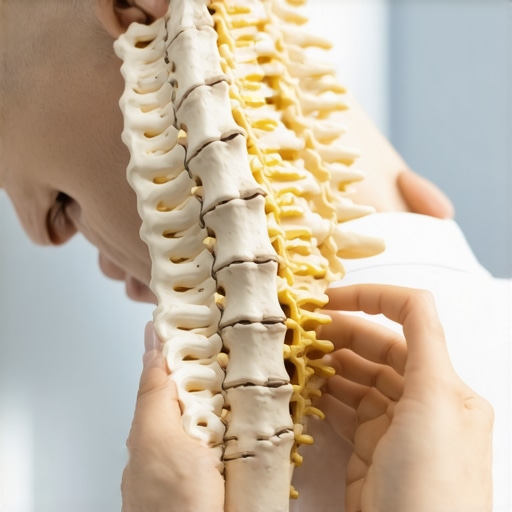
Many people mistake flexibility for spinal health. They think if they can touch their toes, their spine is fine. However, you can be incredibly flexible and still have a ‘stuck’ joint that is feeding your brain bad data. This is where the nuance of why chiropractic care is your secret weapon for better posture comes in. An adjustment isn’t just about ‘cracking’ a bone; it’s about restoring the specific segment-to-segment communication that your brain uses to keep you balanced. If one vertebra isn’t moving, the muscles around it will spasm to protect it, leading to a confusing mix of symptoms. Understanding the difference between nerve pain and muscle soreness is vital here; if your ‘soreness’ feels like a deep, toothache-like throb that makes you feel dizzy, it’s likely a mechanical joint issue, not just a tight muscle. By utilizing expert chiropractic techniques, you can unlock those stuck segments, allowing your ‘steering wheel’ to finally point straight again without you having to think about it every second of the day.
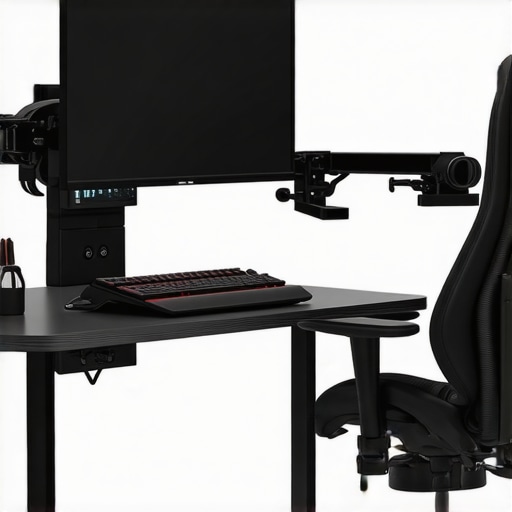
I’ve spent way too much money on gadgets that promised to fix my back, but most of them ended up in a dusty drawer. However, a few items actually changed the game for me by addressing the mechanical physics of my workday. First, let’s talk about the desk. Most people just slap two monitors on their desk and call it a day, but why your dual monitor setup is twisting your neck is almost always due to asymmetrical loading. I switched to a heavy-duty gas-spring monitor arm that allows me to center my primary work at eye level instantly. I also realized that where to place your mouse to stop wrist tingling isn’t just about the hand; it’s about keeping the shoulder from ‘hunting’ forward. If your mouse is more than six inches from your keyboard, you’re essentially holding a low-grade isometric stretch that pulls your entire cervical spine out of alignment. I personally use a split mechanical keyboard to keep my chest open. Most standard keyboards force your hands together, which rounds your shoulders. By widening the gap between the halves, I keep my collarbones broad and my neck neutral. This mechanical advantage is a cornerstone of why chiropractic care is your secret weapon for better posture because it prevents the adjustment from ‘washing out’ the moment you sit back down.
How do I maintain my spinal health over the long haul?
Maintenance isn’t about being perfect; it’s about being consistent with micro-adjustments. I treat my spine like a high-performance vehicle that needs regular alignment checks. This is where the link between mobility and posture a chiropractors guide becomes your roadmap. According to the ISO 9241-5 technical standards for workstation ergonomics, the goal is ‘dynamic sitting’—the ability to change positions frequently without losing support. I maintain this by using mobility hacks simple adjustments for a more active life, like performing a ‘seated pelvic tilt’ every thirty minutes to keep the lumbar spine from locking up.
Wearables Are the Next Frontier for Spinal Health
I honestly believe the future of this field is in bio-wearables. Within five years, we won’t be guessing our head position; we’ll have AI-integrated sensors in our clothing that provide haptic nudges before a muscle even has a chance to cramp. This will take the cognitive load off of us. For now, you need to check out the ultimate guide to improving mobility and posture in 2025 to stay ahead of the curve. If you’re ready to level up your results, I highly recommend you revolutionize your posture with targeted mobility exercises specifically focusing on the thoracic spine and rib cage. My advanced tip for the week? Try a ‘Wall Slide’ with a foam roller between your shoulder blades for 60 seconds after your workday ends; it’s the fastest way to reverse a day of slouching and reset those sensors that keep you upright.
What Most Posture Experts Never Mention About Staying Upright
After years of trial and error, I realized that progress isn’t a straight line—it’s a series of small, intentional pivots. First, I had to accept that my body isn’t a statue; it’s a living, breathing feedback loop. If I ignored the signals, the ‘whoosh’ would return. I also learned that chiropractic adjustments unlock a pain-free lifestyle today by resetting the neural pathways, but I had to do the daily work to keep those pathways open. The biggest lightbulb moment? Realizing that balance is a skill you maintain, not a box you check once and forget. It is about how the nerves communicate, not just how the bones look.
My Personal Roadmap for Keeping the Wobbles Away
If you’re ready to stop the room from spinning, you need a reliable toolkit. I don’t go a day without my gas-spring monitor arm, which keeps my eyes level and my chin tucked naturally. I also swear by the ultimate guide to improving mobility and posture in 2025 for staying updated on the best ergonomic practices that actually work in the real world. For those times when the stiffness feels like it’s winning, I lean on expert chiropractic techniques to get my alignment back on track before my balance suffers. These aren’t just ‘nice-to-haves’; they are the infrastructure of a body that moves without fear of a sudden stumble.
#IMAGE_PLACEHOLDER_E#
Reclaim the Ground Beneath Your Feet
You don’t have to live with the constant worry of a clumsy moment or a sudden dizzy spell every time you turn your head. By addressing the mechanical health of your neck, you are finally giving your brain the clear, undistorted data it needs to keep you stable. It starts with one chin tuck, one screen adjustment, and perhaps one visit to a professional who can help recalibrate your internal GPS. Your spine is your foundation—treat it with the respect it deserves, and it will carry you through the years with steady confidence. Remember, the ultimate goal of chiropractic care isn’t just to stand straight; it’s to move through your life with absolute freedom and stability.
Have you ever felt like your dizziness was actually a neck problem rather than just a ‘clumsy’ moment? Let me know in the comments below.