

I remember sitting at my desk about three years ago, staring at a spreadsheet, when I suddenly felt like I was suffocating. I wasn’t running a marathon or having a medical emergency, but I realized I hadn’t taken a full, deep breath in hours. My chest felt tight, my shoulders were up around my ears, and every time I tried to inhale deeply, I hit a physical wall. It was a terrifying realization that my workspace had slowly turned into a cage for my lungs. Most of us think posture is just about looking ‘professional’ or avoiding a sore neck, but it’s actually the silent thief of your oxygen. Have you ever caught yourself taking tiny, shallow sips of air while you’re deep in a project?
That “Stuck” Feeling in Your Chest Is Not Just Stress
When you slouch over a laptop, your rib cage collapses and your diaphragm—the primary muscle for breathing—gets squashed. It’s like trying to expand a balloon inside a cardboard box; there’s just no room. I used to make the mistake of thinking I could fix this by forcing myself into a rigid, upright position for eight hours a day, but I quickly learned that the truth about perfect posture is that rigidity is just as bad as slouching. In fact, by bracing my core too hard, I was actually making it harder for my ribs to move. If you’ve ever felt like your rib cage is stuck, you know exactly how frustrating this physical limitation feels. This is more than a comfort issue; according to Harvard Health Publishing, shallow breathing can actually trap your body in a cycle of stress by triggering the sympathetic nervous system, making you feel anxious even when your workload is light.
Can a simple desk chair really mess with my lungs?
It absolutely can, and the fix isn’t just buying a fancy chair. We need to look at the link between mobility and posture to understand how to unlock those restricted joints in your mid-back. Today, I’m going to show you exactly how your current setup is sabotaging your breath and the specific moves I used to regain my lung capacity. You don’t need a standing desk or a million-dollar ergonomic setup; you just need to understand how your breathing pattern determines your lower back stability and how to let your ribs move freely again. Does your chest feel tight right now as you read this? Let me know in the comments if you’ve felt that ‘air hunger’ during your workday, because you aren’t alone.
Stop Squashing Your Diaphragm
To get your breath back, you have to stop treating your torso like a rigid pillar. Think of your rib cage as an umbrella; it needs to open outward in all directions, not just push forward. When we sit for hours, that umbrella gets rusted shut. I remember a particularly stressful afternoon where I was trying to ‘sit up straight’ to look more attentive, but my heart was racing and I felt lightheaded. I was essentially holding myself in a state of high-tension bracing. It wasn’t until I realized that the truth about perfect posture is fluidity, not stiffness, that I finally caught my breath.
Open the Rib Cage First
Before you can breathe well, you need to address the mechanical blockages in your mid-back. If your thoracic spine is locked into a curve, your ribs physically cannot pivot. This is where mobility drills become non-negotiable. One of the most effective ways to start is by addressing the link between mobility and posture through active rotation. If you feel a catch in your mid-back, you might be experiencing why your rib cage feels stuck. Instead of forcing it, try a gentle side-bend while seated. Imagine reaching your ribs toward the ceiling rather than just leaning over. 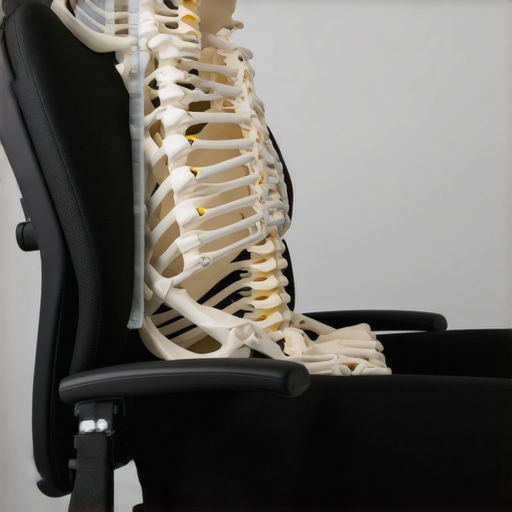
Why Your Core Is Not a Suit of Armor
We’ve been told for decades to ‘engage your core’ at all times, but over-gripping your abdominal muscles actually prevents the diaphragm from dropping down. When the diaphragm can’t move down, the air can’t come in. This creates a reliance on the small muscles in your neck and shoulders to pull the ribs up, leading to that chronic tension we all hate. This is why your breathing pattern determines your lower back stability. If you are a chest-breather, your lower back is likely taking the brunt of the work because it’s not being supported by internal pressure from a functional diaphragm.
The 360-Degree Expansion Trick
The goal is to breathe into your back and sides, not just your belly. Try this right now: wrap your hands around your lower rib cage with your thumbs pointing toward your spine. As you inhale, try to push your hands away from each other. If only your chest moves up toward your chin, you’re missing out on 50% of your lung capacity. I used to fail at this constantly until I realized my mid-back was so tight it was like a frozen hinge. Integrating how chiropractic adjustments enhance posture and mobility was the turning point for me; it provided the ‘reset’ my joints needed so the exercises actually worked.
Small Shifts for Your Desk Setup
You don’t need a total office renovation, but you do need to adjust your monitor to stop reaching with your chin. Every inch your head moves forward adds ten pounds of pressure to those breathing muscles in your neck. If you’re constantly leaning in to read fine print, your ribs are collapsing by default. Also, be wary of why most people do the cat-cow stretch wrong; if you’re just dumping into your lower back, you aren’t helping your breathing. Focus the movement in that space between your shoulder blades to unlock the oxygen you’ve been missing.
Stop Yanking on Your Tight Muscles
Most people think that if a muscle feels tight, the only solution is to stretch it until it gives up. I used to be a ‘stretch addict,’ spending twenty minutes every morning pulling at my neck and shoulders, only to feel just as stiff by lunchtime. Here is the contrarian truth: tightness is often a protective mechanism, not a lack of flexibility. If your brain senses that a joint is unstable or misaligned, it will ‘lock’ the surrounding muscles to prevent injury. When you force a stretch on a muscle that is trying to protect a jammed joint, you are essentially pulling a rope with a knot in the middle. You aren’t loosening the knot; you are just fraying the rope. This is where many go wrong by assuming the difference between a sore muscle and a misaligned joint doesn’t matter. In reality, stretching a muscle that is protecting a misaligned joint can actually lead to more inflammation and instability. Have you ever fallen into this trap where you stretch and stretch but the pain never actually leaves? Let me know in the comments.
The Trap of the Self-Crack
We’ve all seen it: the person who twists their neck or back until it makes a loud ‘pop’ to get a moment of relief. I’ll admit, I used to be that person too. It feels like a release of pressure, but it’s actually a dangerous cycle. When you crack your own back, you are usually hitting the segments that are already too mobile—the ones above or below the actual problem area. This creates a temporary hit of endorphins, but it leaves the stuck joint untouched while making the healthy ones hypermobile. Over time, this makes your posture even more unstable. Instead of DIY ‘adjustments,’ understanding the truth about cracking your own back for relief is vital. Real progress comes from targeted movements that address the specific restriction, often requiring a professional to find the segment that *isn’t* moving rather than just popping the ones that are. According to the Journal of Manipulative and Physiological Therapeutics, precise spinal manipulation is significantly more effective at restoring functional range of motion than generalized self-mobilization. 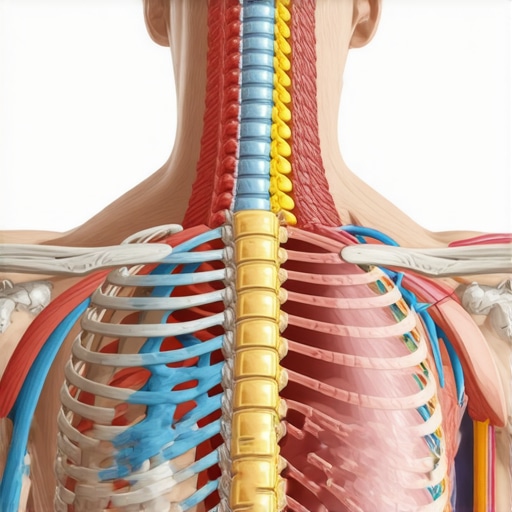
Is Your Rib Pain Actually a Heart Scare?
One of the most common ‘advanced’ mistakes I see is the panic that sets in when a rib gets stuck. Because your ribs wrap around to your sternum, a restriction in the back can cause sharp, stabbing pain in the front of the chest that feels suspiciously like a cardiac event. While you should always rule out heart issues first, if you find that the pain gets worse when you take a deep breath or rotate your torso, it’s likely mechanical. This is a classic case of why your rib pain feels like a heart attack but isnt. It’s an incredibly scary feeling, but it’s often just a sign that your thoracic mobility has hit a breaking point.
Why Stretching Your Neck Might Be a Mistake
If you suffer from chronic headaches, your first instinct is probably to tilt your head side-to-side to ‘loosen up.’ However, if your upper cervical vertebrae are misaligned, this constant pulling can actually irritate the nerves that trigger your migraines. I’ve seen dozens of clients who were actually making their condition worse by following generic ‘desk stretch’ videos. This is a prime example of why stretching your neck is making your headaches worse. The fix isn’t more pulling; it’s restoring the proper pivot point of the joint. By focusing on how chiropractic adjustments enhance posture and mobility, you can address the root structural cause rather than just chasing the symptoms. When the joint moves correctly, the muscle no longer feels the need to ‘guard,’ and that chronic tension finally evaporates on its own. It’s about working with your body’s nervous system, not fighting against it.Once you stop the self-cracking cycle and start breathing into your ribs again, the real challenge begins: keeping those joints moving. I used to think that a single session of mobility work would ‘fix’ me forever, but the body is like a finely tuned instrument that constantly goes out of tune. To stay ahead of the stiffness, I’ve curated a small kit of non-negotiable tools. My favorite is a simple D-shaped lumbar roll. Most people just jam it behind their back, but learning how to use a lumbar roll correctly in an office chair was a game-changer for me. I place it exactly at the level of my belt line, which forces my pelvis into a neutral position and prevents that ‘C-shape’ slump that kills my lung capacity.
Stop Guessing Where Your Monitor Goes
We talk a lot about ‘eye level,’ but I’ve found that the specific gaze angle is what truly saves my neck. If you are using a laptop without a riser, you are losing the battle before it starts. I personally use a stack of heavy books or a dedicated aluminum stand to ensure I am looking straight ahead. If you don’t do this, you’ll find yourself reaching with your chin to see the top of the screen, which immediately re-tightens those neck muscles we worked so hard to loosen. 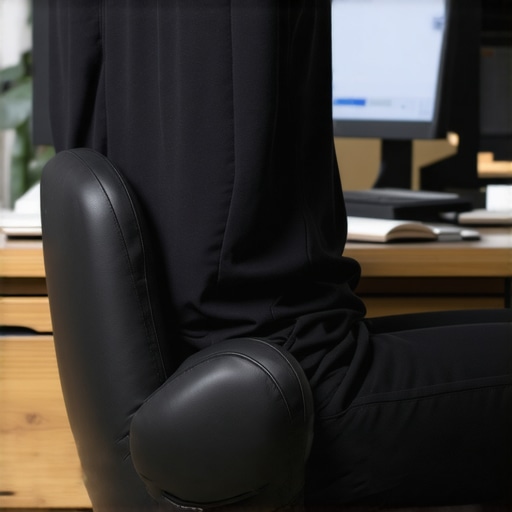
How do I maintain these postural gains over the long haul?
Maintenance is less about ‘fixing’ things when they break and more about ‘spine hygiene.’ Dr. Stuart McGill, a world-renowned expert in spine biomechanics, emphasizes that the way you move during mundane tasks—brushing your teeth, picking up a pen, or sitting for a meal—determines your long-term success more than any single exercise. This is why I swear by the 3-minute evening routine for a less stiff morning. It’s not a workout; it’s a nervous system reset that tells my brain it’s safe to let go of the day’s tension. I also make sure to check in with my chiropractor regularly, even when I feel ‘fine.’ I’ve realized that why chiropractic care is your secret weapon for better posture isn’t about the pop; it’s about catching those tiny joint restrictions before they turn into full-blown rib pain or headaches. Looking ahead, I predict we will see a massive shift toward biofeedback wearables that don’t just vibrate when you slouch, but actually track your respiratory rate and rib expansion in real-time. We are moving toward a future where our tech helps us stay ‘fluid’ rather than just ‘straight.’ If you want to dive deeper into where this is all heading, check out the ultimate guide to improving mobility and posture in 2025 for a look at the upcoming trends. Your homework today is simple: find one way to raise your screen by just two inches and see how much easier it is to take that 360-degree breath.
The Hardest Lesson I Learned About Fixing My Frame
After years of trying every ‘perfect posture’ trick in the book, I realized that the biggest barrier wasn’t my chair—it was my own expectation of a quick fix. First, I had to accept that pain is often a messenger rather than just a nuisance. When my back hurt, it wasn’t just bad luck; it was my body asking for a change in how I move and breathe. Second, I learned that small, frequent movements are vastly superior to one heavy gym session followed by eight hours of total stillness. You simply cannot out-train a sedentary lifestyle in just 45 minutes a day. Lastly, I discovered that knowing the difference between a sore muscle and a misaligned joint is the secret to knowing whether to stretch or seek a professional adjustment.
My Essential Toolkit for a Resilient Spine
I don’t believe in buying every expensive gadget, but these specific items are always in my workspace for a reason. I swear by a simple D-shaped lumbar roll because knowing how to use a lumbar roll correctly in an office chair keeps my pelvis from tucking under and collapsing my lungs. I also use a dedicated monitor riser to ensure I am not reaching with my chin throughout the long workday. #IMAGE_PLACEHOLDER_E# Finally, I make room for a weekly reset using mobility hacks that target my specific sticking points, rather than following a generic video routine. These small tools help me maintain the long-term gains I’ve made through consistent chiropractic care.
The Future of Your Movement Starts Now
Improving your mobility and posture isn’t about achieving a rigid, military-style stance; it is about regaining the freedom to move without thinking about it. You deserve to finish your workday with enough energy and physical comfort to actually enjoy your life outside of the office. As we look toward the future, checking out the ultimate guide to improving mobility and posture in 2025 can give you a clear roadmap for the years ahead. Take it one 360-degree breath at a time, and do not be afraid to adjust your setup as your body evolves. Have you ever felt the secret to calming a sharp pinch in your shoulder blade was just one correct movement away? Let me know in the comments what your biggest struggle is with staying comfortable at your desk!