
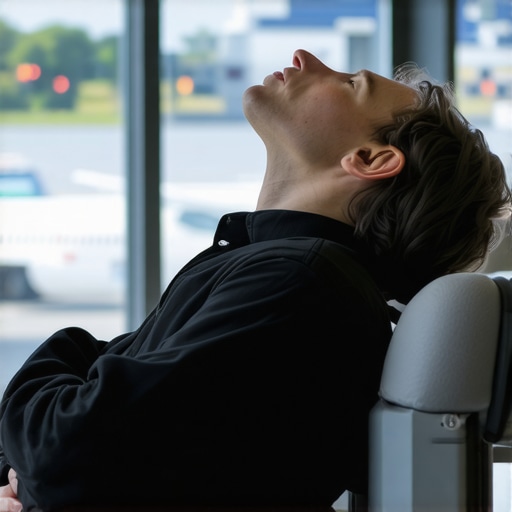
I stepped off the plane in London after an eleven-hour stint in seat 34B, and my head felt like it was bolted onto my shoulders at a permanent 45-degree angle. You know that feeling. It is a dull, throbbing ache that makes you want to reach up and just snap something back into place. Back then, I did not know any better. I stood right there by the baggage carousel and yanked my head to the left, hoping for that satisfying pop. Instead, I got a sharp zing of pain and a neck that stayed stiff for three days. It was a classic rookie error, and honestly, it is exactly what most of us do when the travel kink sets in. We try to force mobility back into a spine that has been compressed by cabin pressure and the world’s least ergonomic headrests for hours on end. Today, I am going to show you how to avoid that trap and reset your posture without the self-inflicted trauma. [IMAGE_PLACEHOLDER]
Stop Wrenching Your Neck the Moment You Land
The problem is not just the stiffness; it is the inflammation we create by being too aggressive too soon. When you have been stuck in a cramped seat, your muscles are not just tight—they are guarded. They are literally holding on for dear life to protect your cervical spine. If you immediately stop rolling your neck in circles and do this instead, you will find that the relief lasts much longer than the three seconds of a satisfying crack. I used to think more force meant more relief, but that is a fast track to chronic instability. Your head actually feels heavier because your deep neck flexors have turned off during that nap against the window. When this happens, your head feels heavy because your larger trap muscles are doing work they were not designed for. A much better approach is to focus on gentle, neurological resets rather than brute force. Have you ever landed and immediately felt that desperate urge to crack the stiffness away?
Is aggressive self-stretching actually worth the risk?
The short answer is no. According to research from Harvard Health Publishing, forceful, rapid neck movements can actually cause small tears in the lining of the vertebral artery, which is a serious risk most people ignore. We think we are helping our mobility, but we are often just irritating the nerves further. I learned this the hard way after a trip to Tokyo left me with a stuck neck that would not budge regardless of how many stretches I did to prepare for the flight. The real secret lies in addressing the rib cage and the upper back first. Without that foundation, you are just tugging on a knot that is already pulled tight. You might even find that a simple trick with your pillow height once you get to the hotel does more for your recovery than an hour of straining in the airport terminal.
Focus on Your Ribs to Unlock Your Neck
Think of your spine like a mast on a ship. If the base of that mast—your rib cage and mid-back—is tilted or stuck, the top is going to wobble no matter how many times you tighten the ropes. When I landed in Paris a few years ago after a grueling ten-hour flight, my neck felt like it was in a vice. Instead of reaching for my chin to twist and pop it, I focused on the way my breath was hitting my back. You can how to fix a rib that feels out of place by using targeted exhalations to pull your rib cage down and back into a neutral position. This isn’t just about breathing; it’s about mechanical leverage. If you feel a sharp catch when you inhale deep in the terminal, the move that instantly relieves tension in your lower ribs involves a slow, controlled side-bend that creates space where the cabin pressure and poor seat ergonomics compressed you. This creates a stable platform so your neck muscles don’t have to stay in “protection mode” for the rest of your trip.
Reactivate Your Deep Neck Flexors
After hours of your chin drifting toward your chest while watching in-flight movies or scrolling through your phone, your deep neck flexors—the muscles that actually hold your head up—simply quit. This is exactly why your head feels heavy after staring at a monitor or a seatback screen for too long. To fix this, stop stretching the back of your neck and start “turning on” the muscles in the front. Imagine there is a string at the very base of your skull pulling you toward the ceiling while you gently tuck your chin—not into your chest, but straight back like you’re making a double chin. I did this in the taxi on the way to my hotel, and I could actually feel the burning in my traps start to subside. It’s a neurological reset that tells your brain the structural muscles are back on duty, allowing the tight, overactive muscles on the surface to finally let go.
Why Your Hips Dictate Your Neck’s Freedom
It sounds counterintuitive, but your neck and your pelvis are tethered by the same dural sheath and neurological pathways. If you’ve been sitting for eight hours, your psoas is tight and your pelvis is likely tilted forward, which drags your entire spine out of alignment. If you struggle with how to fix the feeling of a locked si joint, that tension will travel upward until it hits your cervical spine. Performing the simple hip reset for people who sit for 8 hours immediately after you check into your hotel room is often more effective for neck mobility than any neck-specific exercise. When I finally started combining hip openers with rib-cage resets, my recovery time from long-haul flights dropped from three days of stiffness to about twenty minutes of targeted movement. By addressing the bottom of the chain, you give the top of the chain permission to relax and move through its full range without the grinding and popping we’ve all come to fear.Most of the advice you hear about standing up straight is actually counterproductive. We have been conditioned to believe that a rigid, military-style posture is the gold standard for spinal health. In reality, why your perfect posture is actually causing muscle fatigue boils down to the fact that static holding patterns restrict blood flow and oxygen to the muscles. Your body is designed for variability, not a fixed position. When you force yourself into what you think is a correct posture, you are often just creating a new set of compensations that lead to more tension. It is much better to adopt a dynamic approach where you shift your weight and change positions every twenty minutes.
Does the sound of a ‘pop’ actually mean you fixed the problem?
The ‘crack’ or cavitation we often seek is just the release of nitrogen gas from the joint capsule. While it feels great, the sound is not a measurement of a successful adjustment. An advanced study published in the Journal of Manipulative and Physiological Therapeutics highlights that the therapeutic benefit of a chiropractic adjustment comes from the high-velocity, low-amplitude thrust that resets the nervous system, not the audible sound itself. If you are constantly twisting in your chair to get that sound, you might be creating hypermobility in segments that are already moving too much. This is a common trap: stretching a joint that is loose because the joint above or below it is locked.  Before you dive into another round of self-adjustment, it is vital to know the difference between a sore muscle and a slipped disc. Applying force to a disc injury thinking it is just a tight knot can escalate a minor issue into a week-long recovery ordeal. This is what a chiropractor actually looks for during your first exam—they are looking for the root cause, not just the loudest symptom. For example, why chiropractic care is your secret weapon for better posture is because it restores the proper slide and glide of the vertebrae, allowing your nervous system to naturally find center without you having to fight for it. Have you ever fallen into the trap of over-stretching a spot that never seems to loosen up? Let me know in the comments.Falling into that trap usually means you’re treating the smoke, not the fire. To move from temporary relief to permanent change, you need a strategy that doesn’t require you to live on a yoga mat. I’ve found that the real magic happens in the 23 hours a day you aren’t ‘exercising.’ It’s about the tools you use to reinforce the work done during a session. One of the biggest mistakes I see people make is over-using a foam roller on the wrong areas; for instance, the truth about foam rolling your lower back is that it often does more harm than good by putting excessive pressure on the lumbar vertebrae without the protection of the rib cage. Instead, I personally swear by a simple lacrosse ball for pinpointing the glutes and psoas. It’s dense enough to actually change the tone of the muscle tissue without the clunky footprint of a roller.
Invest in Tools That Actually Change Your Alignment
When I’m traveling or working long hours, I rely on a few ‘non-negotiables.’ First is a lumbar roll. Most office chairs are designed for aesthetics, not anatomy, which is why your back pops every time you twist in your office chair—it’s gasping for support. I also use a specific silicone wedge for my car seat to keep my pelvis from tucking under. This small shift keeps the hamstrings from pulling on the sit-bones, solving the mystery of the real reason your hamstrings stay tight despite stretching. If you can’t change your environment, you have to change how you interact with it. 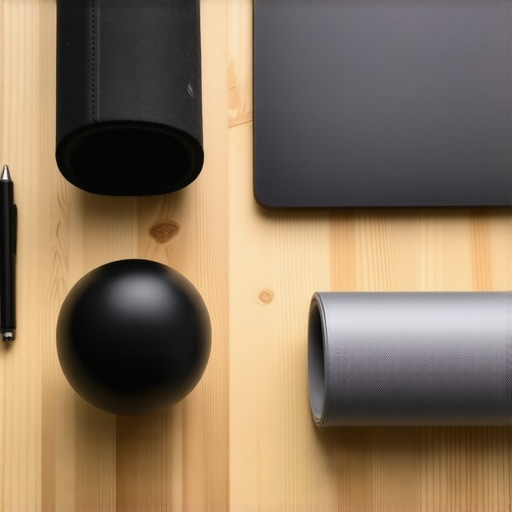
How do I maintain my mobility gains over time?
The secret to long-term success is consistency over intensity. You don’t need a two-hour routine; you need a the 15-minute flow to open up sticky hips that you actually do every morning. I also recommend checking in with a professional periodically. Even with the best tools, we all develop blind spots. This is why chiropractic care is your secret weapon for better posture; it provides a ‘reset’ that allows your daily habits to actually take root. Dr. Stuart McGill, a leading expert in spine biomechanics, emphasizes the ‘Big Three’ exercises—the bird-dog, side plank, and modified curl-up—as the gold standard for creating the core stiffness necessary to protect the spine during movement. I’ve integrated these into my own life because they focus on endurance rather than raw strength, which is what the spine needs to stay upright during a ten-hour workday.
The Future of Your Spine is Tech-Driven
Looking ahead, I predict we are moving away from passive furniture and toward active biofeedback. We’re already seeing the rise of wearable sensors that vibrate when your shoulders rounded forward, but the next step is AI-integrated desks that micro-adjust their height and tilt based on your real-time fatigue levels. This will take the cognitive load off ‘remembering’ to sit straight. In the meantime, you can get ahead of the curve by mastering the best monitor height for preventing tension headaches. My challenge for you this week: try the ‘double chin’ neurological reset I mentioned earlier every time you open a new browser tab. It’s a small, advanced move that re-engages the deep neck flexors and breaks the cycle of tech-neck before it starts.
What Years of Stiffness Finally Taught Me About My Own Body
I used to believe that if my neck didn’t “crack,” the adjustment hadn’t worked. I was chasing a sound rather than a feeling of space. I’ve realized that the most important thing to remember is that pain is a conversation your nervous system is having with your brain. If you ignore the root causes—like how you sit or breathe—you’ll just keep repeating the cycle. I also learned that the secret to fixing tech neck without quitting your phone isn’t about giving up technology, but about changing how your body moves around it. When you stop fighting your anatomy and start working with it, the tension begins to dissipate on its own.
Another hard-won realization was that the site of the pain is rarely the source of the problem. My neck was screaming because my hips were locked and my ribs were flared. Once I started treating the body as an interconnected system, my long-haul flights became much less daunting. It turns out that mobility hacks and simple adjustments for a more active life are far more effective than any single ‘miracle’ stretch.
The Essentials for Maintaining a Bulletproof Back
If you want to dive deeper into the science of how we move, I highly recommend checking out the ultimate guide to improving mobility and posture in 2025. For physical tools, I never travel without a dense lacrosse ball to work on my hips and glutes. I also swear by the proper way to use a lumbar roll in your office chair to keep my lower back from flattening out during long editing sessions. These tools provide the tactile feedback your brain needs to maintain a neutral spine when you’re distracted by work or travel.
I also trust the work of Dr. Stuart McGill, specifically his book Back Mechanic, which transformed how I view spinal stability. Between professional sessions, these resources serve as a compass to keep my alignment on track. Remember, the best tool is the one you actually use consistently.
Commit to Moving Better Today
Reclaiming your health isn’t a destination; it’s a series of small, intentional choices. Whether you are seeking chiropractic adjustments to unlock a pain-free lifestyle today or just trying to breathe a little deeper at your desk, you are already ahead of the game. Don’t wait for a crisis to start listening to your body. Your future self will thank you for the extra twenty minutes you spent resetting your rib cage instead of wrenching on your neck. You have the power to change how you feel, one movement at a time. Have you ever tried a specific movement after a long flight that actually made your stiffness worse? Let me know in the comments below.