

I’ll never forget the first time I felt the ‘growth spurt.’ I walked into the clinic feeling like a crumpled-up piece of notebook paper. My shoulders were practically touching my earlobes, and my lower back felt like it had been compressed by a hydraulic press. Then, the adjustment happened. Pop. Crack. Breath. I stood up, and the world looked… different. I felt lighter, sure, but I also felt physically taller. When I got into my car afterward, I had to tilt my rearview mirror up by nearly an inch just to see out the back window. It’s a wild sensation that almost every new patient mentions, but for the longest time, I thought I was just imagining the extra height. I’ve spent years figuring out the mechanics of this, and today, I want to show you exactly why that taller feeling isn’t a fluke—and why it’s the key to chiropractic adjustments unlocking a pain-free lifestyle. [image-placeholder]
Your Spine Finally Stopped Fighting Gravity
For years, I made the rookie mistake of thinking my height was a fixed number. I’d sit at my desk, slumping more every hour, and eventually, I just accepted that my natural state was a bit of a hunch. I even tried cracking my own back every hour to find some relief, which only made things worse by creating hyper-mobility in the wrong spots. The truth is, gravity is constantly trying to accordion your spine. Between gravity and poor habits, your vertebrae can lose their optimal spacing. When a chiropractor performs an adjustment, they aren’t actually lengthening your bones—they are restoring the natural, healthy curves of your spine. By clearing up joint restrictions, your body can finally occupy its full, intended vertical space. According to the American Chiropractic Association, maintaining spinal health is essential for reducing the structural stress that leads to height loss over time. It’s less about growing and more about enhancing your posture with expert techniques that allow you to stand as tall as you were meant to be.
Is This Height Boost Actually Worth the Hype?
You might be wondering if this is just a temporary high or if you’re actually seeing real changes in your physical stature. It’s a fair question! Early in my journey, I was skeptical too. I thought the feeling would vanish the moment I sat back down at my computer. While it’s true that you need to be proactive about improving posture through mobility to keep those results, the immediate height gain is a sign that your nervous system is no longer forcing your muscles to guard or cringe against pain. Have you ever noticed yourself standing a little taller after a session, or did you think it was just all in your head? I’d love to hear about your experience in the comments. We’re about to dive into the specific mechanics of joint decompression, but first, you need to understand that feeling taller is your body’s way of saying it finally has room to breathe. Using adjustments to enhance posture and mobility is about reclaiming the inches you’ve lost to the daily grind.
How Decompressing Your Joints Reclaims Lost Inches
Think of your spine as a high-tension spring. When you are stressed, sedentary, or poorly aligned, that spring is clamped down by the weight of your own body and the pull of gravity. An adjustment acts as the ultimate release valve. The primary mechanism here is joint cavitation—that signature ‘pop’—which involves a rapid pressure change within the joint capsule. This release immediately reduces the internal ‘clamping’ force that your nervous system exerts on your spinal column. If you’ve ever wondered how to fix the feeling of a locked SI joint, you’ve experienced this first-hand; once that joint moves freely, the surrounding muscles stop pulling your pelvis into a defensive, shortened tilt. By resetting the joint’s position, we allow the intervertebral discs to sit more naturally, effectively expanding the total height of the spinal column.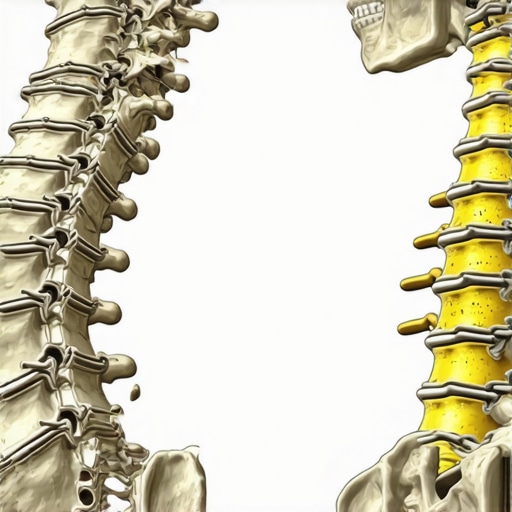
Stop Your Muscles from Squishing Your Spine
Your muscles are incredibly protective and sometimes a bit overzealous. If a joint isn’t moving right, the brain sends an emergency signal to the surrounding muscles to ‘brace’ or ‘splint’ the area. This is why your traps are always tight even after a massage. This constant state of bracing actually pulls your vertebrae closer together, effectively shortening your stature over weeks and months of tension. When we perform a targeted adjustment, we are essentially breaking that neurological feedback loop. The brain realizes the ‘threat’ of the stuck joint is gone, the muscles relax, and you literally unfold. I saw this clearly with a client who worked 60 hours a week at a laptop; her mid-back was so compressed and hunched that she had lost nearly an inch in her yearly physical. After three weeks of focusing on the link between mobility and posture, she ‘grew’ back to her original height because her muscles finally stopped acting like a hydraulic vise.
The Day I Finally Fixed My Own Locked Rib
Years ago, I struggled with a sharp, stabbing pain under my left shoulder blade every time I took a deep breath. I was convinced it was a torn muscle or something permanent. It turns out, it was a rib that had shifted slightly and ‘locked’ the entire left side of my thoracic spine. I was walking around tilted slightly to the right to compensate for the pain, which made me look and feel significantly shorter. I finally had a colleague perform a specific thoracic adjustment. The relief was instantaneous, but more importantly, I could suddenly stand upright without effort. This is a prime example of how a single rib adjustment can stop that sharp pain and reset your entire vertical alignment. If you are struggling with a similar ‘stuck’ feeling, your body is likely losing height to hidden compensation patterns that you don’t even realize you are doing.
Keep the Space You Just Won
The adjustment creates the physical space, but your daily movement patterns determine if you actually get to keep it. If you walk out of the clinic and immediately slump into a bucket seat in your car, you’re just re-compressing the spring you just released. This is where you need to revolutionize your posture with targeted mobility exercises. Focus on movements that emphasize spinal extension and opening the chest. The goal is to remind your nervous system that this new, taller position is the safe and efficient one. Pay attention to those moments why your posture collapses when you get tired at the gym; that’s the critical window where you either reinforce your verticality or let gravity win again. You have to be the active architect of your own alignment between sessions by practicing functional movement every single day.
Stop Trying to Hold Your Posture Like a Statue
Most of my clients arrive with the same misconception: they believe that ‘good posture’ means pulling their shoulders back and holding their breath until they look like a military recruit on parade. In reality, this rigid approach is one of the biggest mistakes you can make. When you force a static position, your perfect posture is actually causing muscle fatigue because you are asking your phasic muscles to do the job of your postural stabilizers. True mobility isn’t about being stiff; it is about being fluid. I often see people trying to ‘hack’ their way to a taller frame by using external supports, but the truth is that most posture braces actually make your back weaker. They act as a crutch that tells your core and spinal muscles they can take a permanent vacation. If you want to maintain that post-adjustment height, you have to let your body do the work, not a piece of elastic.
The Hidden Danger of Over-Correcting Your Curves
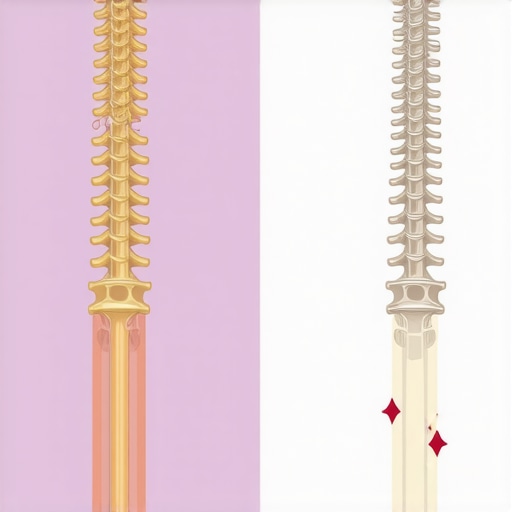
There is a specific ‘oops’ factor I see with patients who are desperate to fix their ‘tech neck’ or slumped shoulders. They start aggressively cracking their own joints or stretching into painful ranges of motion. This is a dangerous trap. For instance, you should stop rolling your neck in circles to get rid of cracks. Those audible pops you induce yourself are often just hyper-mobile segments moving even more, while the truly ‘stuck’ joints—the ones causing the height loss and compression—remain jammed. A professional adjustment is surgical in its precision; it targets the specific vertebrae that aren’t moving, rather than just stretching everything in sight. By focusing on improving posture through mobility that is targeted, we avoid the inflammatory cycle that self-manipulation often triggers.
Why Does My Height Seem to Reset Every Morning?
It is a sophisticated question: if the adjustment ‘fixed’ the spacing, why do you feel shorter or stiffer when you first wake up? This involves the nuance of intervertebral disc hydration. During the day, gravity squeezes fluid out of your discs; at night, they soak it back up like a sponge. However, if your spine is misaligned, that rehydration is uneven. According to a study published in the Journal of Manipulative and Physiological Therapeutics, spinal manipulation can improve the mechanical environment of the disc, allowing for better nutrient exchange. To combat that morning ‘shrinkage,’ I recommend the morning routine that stops your back from clicking. This keeps the joints lubricated and ensures that the vertical gains from adjustments that enhance posture and mobility don’t evaporate the moment you hit the floor. Have you ever fallen into this trap of trying to force your posture into a rigid position? Let me know in the comments. We need to shift the focus from ‘holding’ a position to ‘owning’ your movement. When you understand that the link between mobility and posture is dynamic, you stop fighting gravity and start working with it.
I used to be a sucker for every ‘posture fixer’ advertised on my social media feed. I bought the vibrating straps, the magnetic shirts, and even those weird plastic arches that promise to ‘re-align’ you in five minutes. Most of it ended up in a junk drawer. Why? Because you can’t outsource your spinal health to a piece of elastic. Once you’ve had that initial release where chiropractic adjustments unlock a pain-free lifestyle, the real work starts at home. You need a toolkit that supports your nervous system instead of just forcing your muscles into submission.
Stop buying fancy gadgets and fix your screen height
The most effective ‘tool’ I own is actually just a stack of three thick coffee table books. Most people have their laptops sitting way too low, which forces the cervical spine into a perpetual forward shear. This doesn’t just hurt your neck; it literally ‘shortens’ you by collapsing your upper cage. Making the simple change to your monitor height is the fastest way to stop the daily compression. If you aren’t looking directly at the top third of your screen while sitting upright, you’re losing the vertical gains we just fought for in the clinic. I tell my patients that if they can’t afford a monitor riser, use books, shoeboxes, or a stack of paper. It isn’t about the aesthetics of the desk; it’s about the physics of your eye line.
How do I keep my spine from compressing between visits?
The secret isn’t a 90-minute yoga session; it’s the concept of ‘spinal hygiene.’ Dr. Stuart McGill, a world-renowned expert in spine biomechanics at the University of Waterloo, emphasizes that the way you move during mundane tasks—like picking up a toothbrush or sitting in a chair—dictates the long-term health of your discs. To maintain that ‘tall’ feeling, you have to master the best standing desk interval. I personally use a 20-8-2 rule: 20 minutes of sitting, 8 minutes of standing, and 2 minutes of moving. This prevents the ‘creep’—a phenomenon where your ligaments literally stretch out and lose their ability to support your spine under constant load.

Your car seat is a hidden spine-shortening trap
I realized a few years ago that my commute was undoing three weeks of rehab in just forty minutes. Most car seats are designed for ‘safety’ in a crash, which usually means a bucket shape that rounds your lower back and thrusts your head forward. To fight this, I started using the proper way to use a lumbar roll even while driving. It forces your pelvis into a slight anterior tilt, which preserves the natural curve of your low back. When you maintain that curve, you avoid the ‘slump’ that makes you feel two inches shorter by the time you reach the office. Understanding the specific way to sit in a car changed my life, and it’s a tool I recommend to every patient who spends more than thirty minutes behind the wheel.
The tech that will change how we stand in 2030
Looking ahead, I predict we are going to see a massive shift toward biofeedback wearables that don’t just ‘pull’ your shoulders back, but actually measure the electrical activity in your postural muscles. We’re moving toward a future where your smart-watch might vibrate not because you haven’t walked enough, but because it detects that your intervertebral discs are under too much static pressure. Until that tech is mainstream, you have to be your own biofeedback loop. Use targeted mobility exercises to keep the joints lubricated. I want you to try one thing today: set a timer for every 30 minutes and do three deep ‘back breaths’ into your lower ribs. It’s the simplest way to decompress without a single piece of equipment. If you’re ready to really commit to this vertical lifestyle, check out the ultimate guide to improving mobility and posture in 2025 to see the full roadmap.
The Hardest Lesson I Learned About Staying Vertical
For a long time, I treated my sessions like a car wash: I’d go in for a quick scrub and then drive right back into the mud of my old habits. The hardest lesson I had to learn was that the link between mobility and posture is a 24-hour commitment. I realized that my body was stuck in a defensive ‘crouch’ because I wasn’t giving it a reason to stay open. Another massive lightbulb moment was when I realized you should stop cracking your own back every hour; I was essentially creating micro-instability in my neck while the real problem joints stayed jammed. Real, lasting height comes from stability, not just the temporary relief of a self-induced ‘pop.’ Finally, I stopped looking at my height as a static number and started seeing it as a reflection of my daily movement quality.
The Minimalist Tools That Actually Support My Alignment
I don’t believe in expensive gadgets that promise to ‘fix’ you while you sleep. I rely on three things that respect human physics. First, I use a lumbar roll in my office chair which prevents the low-back collapse that makes me feel two inches shorter by lunchtime. Second, I prioritize the simple change to your monitor height—keeping my eyes at the top third of the screen is a non-negotiable for my neck health. Lastly, I recommend a 15-minute flow to open up sticky hips at least three times a week. These aren’t just exercises; they are the anchors that ensure adjustments that enhance posture and mobility actually stick for the long haul.
You Deserve to Occupy Your Full Height
Reclaiming your vertical space isn’t about vanity—it’s about giving your internal organs, your nerves, and your breath the room they need to function. When chiropractic adjustments unlock a pain-free lifestyle, the ‘extra height’ is simply your body returning to its natural, uncompressed state. Don’t let the daily grind shrink your potential. Take small steps, adjust your environment, and stand as tall as you were designed to be. If you’re ready for the full roadmap, dive into the ultimate guide to improving mobility and posture in 2025. Did you notice an immediate height difference after your first adjustment, or did it take a few sessions before you felt the ‘unfolding’ happen? Let me know below!