
I spent years thinking my core was bulletproof because I could crank out a hundred “dead bugs” without breaking a sweat. Then, I tried to pick up a lukewarm cup of coffee and felt that sickening *twinge* in my lumbar spine that every desk worker fears. It was a wake-up call. I realized my “perfect” form was actually a series of micro-cheats—arching my back just a hair and letting my hip flexors do the heavy lifting while my deep stabilizers took a nap. If you’ve ever felt your back clicking or pinching during floor exercises, you’re likely making the same mistakes I did. Have you ever felt more back pain *after* a core workout than before?
Stop Hurting Your Back While Trying to Help It
Most of us are taught the standard dead bug as the “gold standard” for spinal health. But here’s the kicker: if your ribs flare up or your lower back loses contact with the floor for even a millisecond, you’re not building a core; you’re just irritating your sciatic nerve. I had to learn the hard way that the truth about perfect posture isn’t about looking stiff—it’s about internal stability. Early in my journey, I made the mistake of thinking limb movement was the goal. I was wrong. The goal is the *resistance* of movement in your spine. Today, we are going to master the “Wall-Press Dead Bug,” which is arguably the core move that prevents lumbar disc bulges better than anything else in your routine.
Is this variation actually worth the extra effort?
I get the skepticism. We’ve all seen “the one move to fix your back” advertised by every guru on the internet. But this variation relies on reflexive stabilization. According to research published by the Journal of Bodywork and Movement Therapies, activating the diaphragm and the transverse abdominis simultaneously through isometric tension—which is exactly what this move does—is the most effective way to stabilize the lumbar spine. This isn’t just about getting a six-pack; it’s about why your breathing pattern determines your lower back stability. If you find that your traps are always tight even after a massage, it might be because your core isn’t doing its job, forcing your neck to overcompensate. Let’s look at how to actually lock your spine into a “safe zone” before you even move a single leg.
Set Up Your Foundation for Total Lumbar Control
To get started, find a sturdy wall and lie on your back with your head just a few inches away from the baseboard. Reach your arms overhead and place your palms flat against the wall, with your elbows slightly bent. This isn’t just a resting position; it’s an active engagement. The first time I tried this in a cramped hotel gym, I realized I’d been doing it wrong for years. I pressed my palms into the wall as if I were trying to push the building over, and suddenly, my entire abdominal wall lit up before I even moved a leg. This tension is what creates reflexive stability. By engaging your lats and serratus, you force your rib cage to drop into a neutral position, which is the absolute requirement for the core move that prevents lumbar disc bulges. 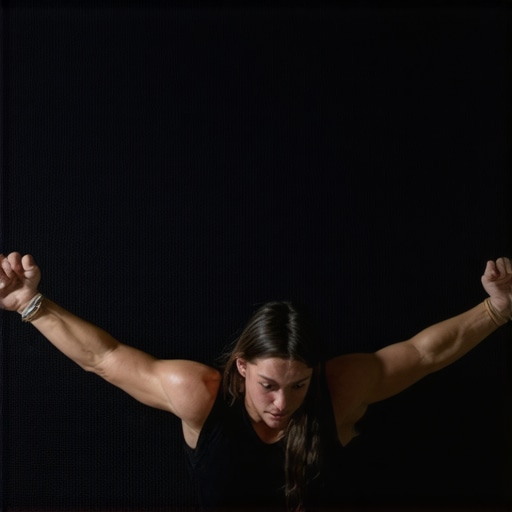
Press Against the Wall Like Your Back Depends on It
The magic happens when you maintain that overhead pressure. As you push into the wall, you should feel your lower back melt into the floor. If you can slide a hand under your lumbar spine, you’ve already lost the battle. You need to close that gap. This isometric press creates a ‘top-down’ tension that anchors your mid-section. Most people fail because they treat their arms as anchors, but you should treat them as active drivers of stability. This is similar to how mobility boosts for posture work by using one part of the body to stabilize another.
Master the Breath to Protect Your Disc
Once your arms are pressing and your back is flat, focus on your inhale. Don’t breathe into your chest; instead, you must learn how to breathe into your back to relieve rib tension. When you inhale, imagine your lower ribs expanding out like an umbrella into the floor. This intra-abdominal pressure is your spine’s natural weight belt. If you feel your ribs flare up toward the ceiling, your core has disengaged, and you’re putting your discs at risk. I remember a specific session where I ignored my breath and felt that familiar ‘pop’ in my hip; it was a sign that my hip flexors were taking over because my diaphragm wasn’t doing its job. This is exactly why your breathing pattern determines your lower back stability.
Control the Descent Without Losing Your Arch
Now, lift your legs into a ‘tabletop’ position—knees bent at 90 degrees directly over your hips. Slowly exhale as you lower one heel toward the floor. The key here is slow. It should take a full five seconds to reach the bottom. If your back lifts even a millimeter, stop and bring the leg back up. You are training your brain to keep the spine still while the limbs move, which is the foundation of revolutionizing your posture with targeted mobility exercises. This controlled movement prevents the micro-shearing forces that lead to chronic aches. If you find your neck straining during this, it’s often a sign that your traps are always tight because they are trying to help a weak core. Focus on keeping your chin tucked and your wall-press strong to keep the work in your midsection.I’ve spent years watching people in the gym try to “fix” their back pain by stretching their hamstrings into oblivion. But here is the truth that most trainers won’t tell you: that tightness you feel isn’t usually a lack of flexibility; it’s a protective tension. Your brain is literally locking down your legs because your spine feels vulnerable. If you keep pulling on those tissues, you’re often just irritating your sciatic nerve. The wall-press dead bug works because it satisfies the brain’s need for stability, allowing the “tight” muscles to finally let go without a single stretch. This is why the real reason your hamstrings stay tight despite stretching is almost always a core control issue.
Does your hip click every time you lower your leg?
This is the most common complaint from those who start taking their core seriously. That audible “click” or “pop” is usually the psoas tendon snapping over the hip bone because the pelvis is tilting forward ever so slightly. If you aren’t using targeted pelvic tilt adjustments to maintain a dead-flat spine, your hip flexors will “cheat” to provide the stability your deep abs are failing to provide. It’s a classic compensation pattern that explains why your glutes fail to activate during lunges later in your workout. You’ve replaced true core engagement with a mechanical shortcut. 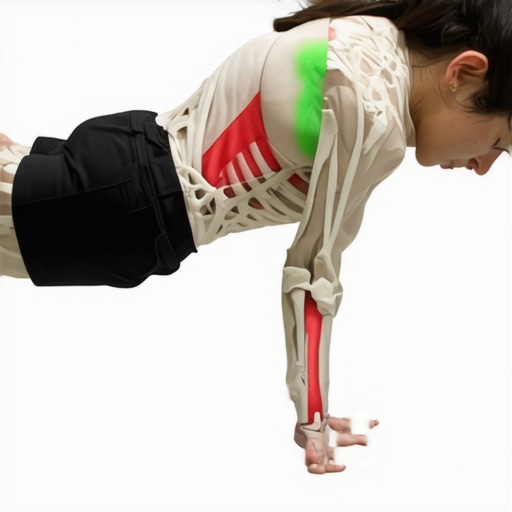
The Bracing Mistake That Increases Disc Pressure
A common myth in the fitness world is that you should “suck your belly button to your spine.” In my experience, and according to research by spine biomechanics experts like Dr. Stuart McGill, this actually makes the spine less stable under load. McGill’s work suggests that “bracing”—contracting all the muscles of the abdominal wall as if someone is about to punch you—is far superior for protecting the discs. When you perform the wall-press, you aren’t sucking your stomach in; you are pushing it out laterally. This is the core move that prevents lumbar disc bulges because it creates a 360-degree “hoop tension” around the vertebrae. If you find yourself holding your breath to maintain this, you’re falling into a dangerous trap. Real-world stability requires breathing behind the shield. If you can’t maintain the wall-press while taking a controlled breath, you aren’t actually stable yet. This disconnect is often why your breathing pattern determines your lower back stability.
Should you stop if you feel a twinge in your neck?
Absolutely. When the deep core fails, the body searches for stability elsewhere. This often manifests as “hitching” the shoulders or straining the neck muscles. If your neck feels heavy or strained during a dead bug, it’s a sign that your traps are always tight because they are trying to act as secondary spinal stabilizers. Instead of pushing through, reset and adjust your tension. This is how chiropractic adjustments enhance posture—by clearing the path for the right muscles to fire at the right time. Have you ever fallen into the trap of thinking you just needed to “stretch more” only to find your back felt worse the next day? Let me know in the comments.I’ve realized that the wall-press dead bug is just the ‘lab’ work. The real test happens when you’re six hours into a shift or a long drive. To bridge the gap between exercises and real life, I’ve become obsessed with a few specific tools. I don’t care about $1,000 ergonomic chairs. Instead, I use a high-density foam roller and a simple McKenzie Lumbar Roll. These aren’t just props; they are tactile cues. If you want to know the best way to sit in a car for a 4-hour trip, it’s about maintaining that natural lumbar curve so your core doesn’t have to fight gravity while you’re focused on the road. This is how chiropractic adjustments enhance posture over the long haul—by giving you the tools to support the adjustment.
How do I maintain my spinal stability when I’m not in the gym?
The secret is the ‘bracing sequence.’ Dr. Kelly Starrett, the physical therapist behind Becoming a Supple Leopard, teaches a method where you squeeze your glutes, set your rib cage, and create a baseline 20% tension in your abs before you do anything. Whether I’m reaching for a grocery bag or typing this, I’m constantly doing a ‘micro-version’ of the wall-press. This is one of the most effective mobility hacks for a more active life because it turns every movement into a mini-workout for your stabilizers. 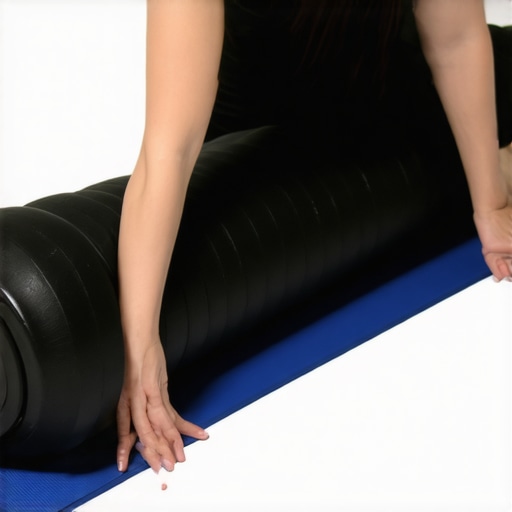 Over time, this becomes reflexive. You won’t need to think about it because the ultimate guide to improving mobility and posture in 2025 is all about these small, consistent wins. I predict that within the next few years, we’ll stop relying on mirrors for feedback. We’re already seeing the rise of AI-powered wearable sensors that give haptic feedback the moment your lumbar spine shears or your ribs flare. Imagine a small patch on your lower back that vibrates to tell you your core just ‘took a nap.’ This tech will make revolutionizing your posture with targeted mobility exercises much easier for the average person. But for now, you have to be your own sensor. I want you to try this right now: Next time you’re sitting at your desk, perform a 10-second wall-press without the wall. Just reach overhead, imagine the resistance, and feel your ribs drop. It’s a game-changer for your focus and your back.
The Hardest Lessons I Learned About True Spinal Integrity
After years of trial and error, I’ve realized that the quality of your movement matters infinitely more than the quantity of reps. One of the biggest ‘aha’ moments was discovering that my core isn’t just a set of muscles to be flexed; it’s a pressure system that needs to be managed. If you aren’t shaking within ten seconds of a wall-press, you aren’t engaging your lats and serratus hard enough. Another hard truth is that an audible hip click is often a cry for help from your nervous system. If your hip pops as you lower your leg, it’s a signal that you’ve lost your pelvic tilt alignment and your hip flexors are desperately trying to stabilize your spine. Finally, I learned that the floor is your most honest coach. If you can feel air between your lumbar spine and the mat, you’ve stopped performing the core move that prevents lumbar disc bulges and started simply moving your legs through space.
The Gear That Actually Protects Your Lower Back
I don’t believe in gadgets for the sake of gadgets, but these three items have been instrumental in my personal maintenance routine:
- The McKenzie Lumbar Roll: I never leave for a trip without this. It is the only way I’ve found to maintain the best way to sit in a car for a 4-hour trip without my core fatiguing.
- ‘Becoming a Supple Leopard’ by Dr. Kelly Starrett: This is the bible of movement mechanics. It taught me how mobility hacks for a more active life can be applied to every lift and reach.
- A High-Density Foam Roller: Instead of rolling my back, I use this as a ‘feedback block’ between my knees or hands to ensure my ribs stay down during exercises. #IMAGE_PLACEHOLDER_E#
Why You Should Start Your Bracing Journey Today
You don’t need a perfect hour-long routine to see a difference in your quality of life. The path to a resilient, pain-free spine is paved with these tiny, intentional moments of awareness. Whether you are using the wall-press to supplement your chiropractic adjustments to enhance posture or just to survive a long day at the desk, the goal is consistent, mindful engagement. You have the tools and the technique; now it’s just about the practice. Revolutionizing your posture is a daily choice that pays dividends for decades. Have you noticed your lower back lifting off the floor during core work, or do you struggle more with keeping your ribs from flaring? Let me know in the comments below!