
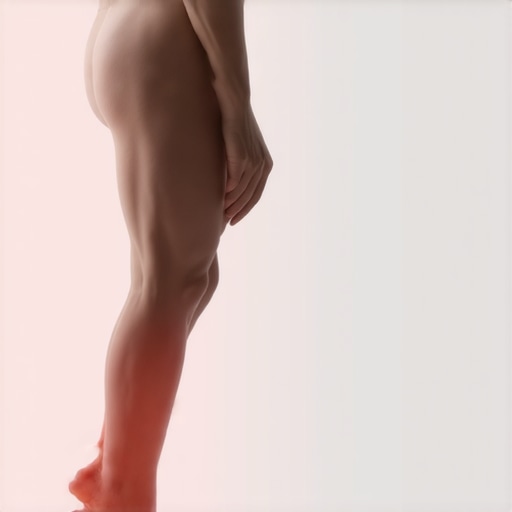
I remember standing in the checkout line at the grocery store about three years ago, shifting my weight from one foot to the other like a restless toddler. My lower back wasn’t just aching; it felt like a rusted hinge ready to snap. I was thirty-two, relatively fit, and yet a fifteen-minute walk on a flat sidewalk felt like I’d just hauled a piano up a flight of stairs. I blamed my mattress. I blamed my desk chair. I even blamed my genetics. It wasn’t until I looked down at my worn-out sneakers and realized the inner edges were practically touching the floor that the lightbulb finally flickered on. My feet weren’t just flat; they were pancake-level collapsed, and my spine was paying the price for every step I took.
Your Feet Are the Architects of Your Posture
If you’ve been struggling with recurring lumbar stiffness, you might be looking for answers in all the wrong places. We often treat the back like a standalone pillar, but in reality, it’s the top of a kinetic chain that starts at your big toe. When your arches collapse, your ankles roll inward—a process called overpronation. This forces your shins and thighs to rotate internally, which tilts your pelvis forward. Suddenly, your lower back is arched like a bow just to keep you upright. I spent years trying to fix my chronic lower back aches with heat pads and Ibuprofen, never realizing that my foundation was crumbling. Today, we are going to bridge that gap and show you how stabilizing your base can finally silence that nagging back scream.
Is it actually worth the hassle to fix your arches?
I know what you’re thinking because I thought it too: ‘They’re just feet, can’t I just buy some generic insoles and call it a day?’ Here is the hard truth I learned the expensive way: I once spent $200 on the most cushioned, pillow-like running shoes I could find, thinking softness was the solution. I was dead wrong. In fact, too much cushion without structural support can actually make your stability worse. Research published in the Journal of Foot and Ankle Research indicates that foot posture significantly influences the mechanical load on the lumbar spine, meaning your flat feet are literally changing the way your vertebrae rub together. It’s a mechanical problem that requires a mechanical solution, not just a softer shoe. If you don’t address the root, you’re just putting a fresh coat of paint on a house with a cracked foundation. You need to tell if your back pain is coming from your shoes before you spend another dime on fancy gadgets. Have you ever noticed your shoes wearing out unevenly on the inside heel? Drop a comment below—I’m curious how many of us are walking around on ‘pancake feet’ without realizing it. We are going to dig into how you can restore your natural arch without expensive orthotics and finally get your alignment back on track.
Wake Up Those Dormant Arch Muscles
I remember the first time I tried ‘short footing’ on my kitchen floor. I felt like a total amateur, staring at my own toes and willing them to move without curling into a claw shape. It took me nearly three weeks of daily, frustrating practice just to see a tiny flicker of movement in my medial arch. But then, one morning, it clicked. I noticed I could stand at the counter for twenty minutes without that familiar, nagging throb in my sacrum. That tiny muscular activation was the first domino to fall in a long line of spinal relief. To get results, you must restore your natural arch without expensive orthotics by training the brain to find those ‘lost’ muscles.
Think of your foot as a tripod. You have three primary points of contact: the center of your heel, the base of your big toe, and the base of your pinky toe. For most of us with collapsed arches, the middle of that tripod has effectively melted into the floor. The ‘short foot’ exercise isn’t about toe strength; it’s about shortening the distance between the ball of your foot and your heel. It’s a subtle ‘doming’ effect. When you master this, you create a rigid lever for walking instead of a floppy, energy-sapping pancake.
Stop Fighting Your Stiff Ankles
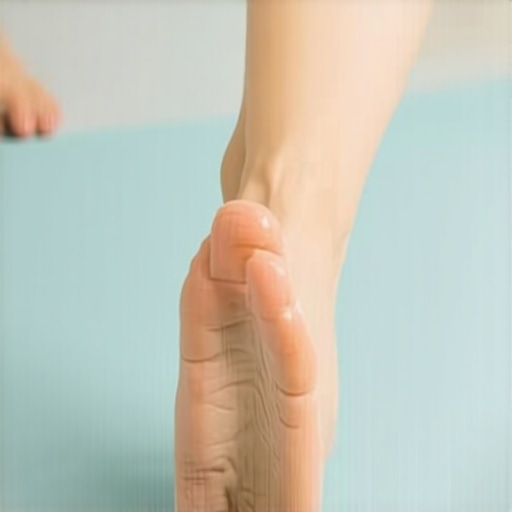
If your ankles are locked up like a rusted gate hinge, your body will inevitably find that missing range of motion somewhere else—usually by over-arching your lower back. I realized that every time I tried to squat or even walk up a steep driveway, my lower back was ‘cheating’ to compensate for my lack of ankle flex. You can fix stiff ankles that limit your squat depth by incorporating daily dorsiflexion drills. When the ankle moves freely, the pelvis can stay neutral, and the muscles of your lumbar spine can finally stop acting like emergency brake cables.
Realign Your Pelvis from the Ground Up
When your arches collapse and your ankles roll in, your knees follow suit, rotating inward. This creates a chain reaction that dumps your pelvis forward into an anterior tilt. You might feel like your hamstrings are constantly tight, but the real reason your hamstrings stay tight despite stretching is often because they are being pulled taut by a tilted pelvis. They aren’t ‘short’; they are overstretched and screaming for stability. Instead of reaching for your toes, you need to reach for better alignment starting at the floor.
The Glute Connection You Can’t Ignore
Your glutes are the powerful engines of your hips, but they simply won’t fire correctly if your feet are acting like wet noodles. When I started combining my arch work with targeted hip stability, the change in my daily comfort was night and day. This synergy is exactly why chiropractic care is your secret weapon for better posture; an adjustment clears the joint interference, while your exercises build the structural ‘armor’ to hold that alignment in place. Think of the chiropractor as the mechanic who aligns the wheels, while your foot exercises ensure the tires actually have some tread. Without both, you’re just spinning your wheels and wearing out your engine—your spine.
Ditch the Military Posture
We’ve all heard the nagging voice of a parent or teacher: ‘Sit up straight! Pull your shoulders back!’ I used to do this religiously, puffing my chest out like a drill sergeant until my mid-back felt like it was on fire. Here is the contrarian truth that most beginners miss: posture is not a static position you hold. In fact, research in the Journal of Biomechanics suggests that healthy individuals actually exhibit higher levels of movement variability. Trying to force a rigid ‘perfect’ position is a recipe for joint decay because you are essentially locking your muscles into a state of chronic tension. I’ve found that the more you try to ‘hold’ yourself upright, the more you’re likely to suffer from the very tension you’re trying to avoid. True spinal health comes from the ability to move through various positions, which is why the ultimate guide to improving mobility and posture in 2025 focuses on movement, not just standing still.
The Stretching Trap You’re Likely Falling Into
One of the biggest ‘oops’ moments I see is the person who feels neck tension and immediately starts aggressive stretching. If your head is already shifted forward, those muscles in the back of your neck are already overstretched and weak—they are ‘taut’ like a guitar string under tension. When you stretch them further, you’re just making the instability worse. This is exactly why stretching your neck is making your headaches worse; you are irritating nerves that are already screaming for help. The same goes for the lower back. If you’ve been aggressively rolling out your lumbar spine, stop. The truth about foam rolling your lower back is that you’re often just smashing the vertebrae and soft tissue into a sensitive, inflamed state rather than addressing the hip or foot issues causing the tightness.
Why isn’t my ‘perfect’ alignment fixing the pain?
If you have corrected your workstation and started your exercises but the pain persists, you likely have a ‘rib cage’ problem. Most people focus on the pelvis and the neck but completely ignore the canister in the middle. If your rib cage is constantly ‘flared’ or tilted upward, your diaphragm cannot drop correctly. This forces your lower back muscles to take over the role of breathing, leading to that ‘stuck’ feeling in your spine. You must learn how to stop your rib cage from feeling stuck when you breathe to truly unlock your core’s potential.
Connect Your Ribs to Your Hips
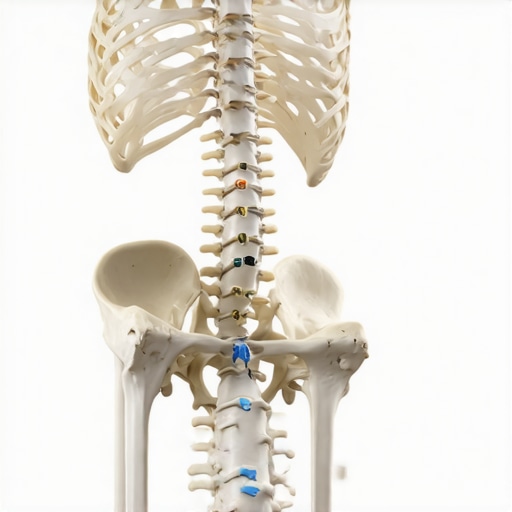
To fix the ‘pancake foot’ problem we discussed earlier, you have to look all the way up to how you breathe. It sounds crazy, but why your breathing pattern determines your lower back stability is a fundamental law of human mechanics. When you inhale into your chest rather than your belly, you lose the internal pressure that supports your spine from the inside out. This makes your pelvis tilt, your knees cave, and your arches collapse. It’s a closed loop. Have you ever fallen into this trap of trying to ‘force’ your posture only to feel worse? Let me know in the comments—I’d love to hear what finally worked for you. Remember, a spinal adjustment can clear the path, but your daily habits—like how you breathe and move—are what keep the path open. This synergy is how chiropractic adjustments enhance posture and mobility over the long haul.
I didn’t just wake up one day with perfect arches; I had to build a toolkit that worked for my hectic schedule. One of the biggest game-changers for me wasn’t a five-hundred-dollar machine, but a simple, hard lacrosse ball. Unlike a soft foam roller, a lacrosse ball provides the pinpoint pressure needed to break up the dense fascia on the bottom of the foot that keeps your arches locked down. I keep one under my desk and use it for two minutes every afternoon. This small habit is one of those mobility hacks for a more active life that bridges the gap between my morning exercises and my evening relaxation. If you’re dealing with that deep, searing plantar pain, a tennis ball is too squishy—you need something with zero give to actually make a change in the tissue. 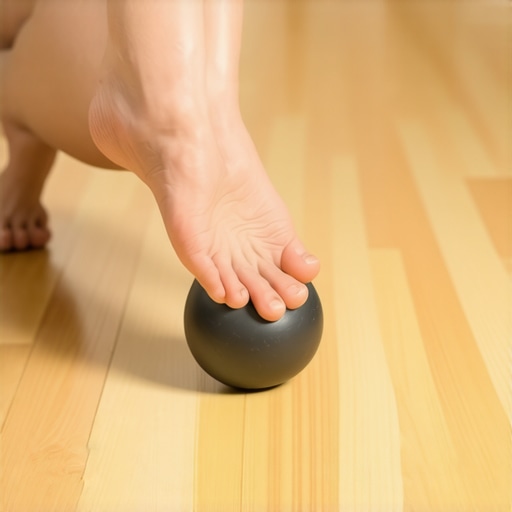
Stop Rolling Your Back and Start Rolling Your Feet
Then there is the shoe situation. Once I fixed my arches, putting my feet back into narrow, tapered ‘coffin’ shoes felt like a betrayal. I had to learn the best way to transition to minimalist footwear without blowing out my Achilles or causing new inflammation. You can’t just switch overnight if you’ve spent thirty years in sneakers with a two-inch heel lift. I started by wearing wide-toe-box shoes for just an hour a day during my neighborhood walks. Research by Dr. Daniel Lieberman at Harvard University shows that habitually barefoot populations have significantly stronger intrinsic foot muscles and a lower incidence of flat feet than those who wear restrictive modern shoes. This structural strength is your best defense against recurring back issues. If you want to dive deeper, I highly recommend checking out the best way to transition to zero-drop shoes safely so you don’t trade back pain for a calf strain.
Why Your Shoes Are Still Your Biggest Posture Enemy
I predict that by 2030, we’ll see ‘smart’ socks with embedded sensors that alert your phone the second your arches begin to collapse during a long walk. Until that technology arrives, you are the sensor. Every few months, I go back to see my specialist to enhance my posture with expert chiropractic techniques that address the subtle shifts I can’t feel. It’s like a dental cleaning for your nervous system; you don’t wait for a cavity to brush your teeth, and you shouldn’t wait for a full-blown spasm to check your alignment.
How do I keep my spine healthy as I get older?
Maintenance isn’t about doing an hour of yoga every morning—it’s about the mobility boosts for posture you sneak into your existing routine. Try this today: the next time you’re brushing your teeth, stand on one leg and try to ‘short foot’ your arch without curling your toes. It’s a thirty-second challenge that tells your brain exactly where your center of gravity is and strengthens the foundation for your entire spine. If you can’t hold it for twenty seconds without wobbling, your foundation needs work.
The Unexpected Realizations That Finally Fixed My Arches
Looking back at my journey from “pancake feet” to a stable foundation, there are a few hard-won realizations that generic advice usually misses. First, I had to stop thinking of my feet as static blocks. Your feet are dynamic sensors that feed information directly to your brain about how to balance your weight. When I started improving posture through mobility, I realized that my back pain wasn’t a “bad back” problem—it was a communication error between my floor contact and my nervous system.
Second, the concept of “comfort” was a trap. I used to reach for the softest shoes, but those just muffled the signals my brain needed. True comfort came when I built the strength to support myself. Finally, I learned that a spinal adjustment isn’t just about the pop; it’s about resetting the baseline so your exercises actually “stick.” This synergy is exactly why chiropractic adjustments unlock a pain-free lifestyle for those of us who have struggled for years.
My Personal Toolkit for Building a Stable Foundation
If you are ready to stop the cycle of back stiffness, you don’t need a gym full of equipment. Here is what I actually use: The Lacrosse Ball. This is my number one tool for breaking up the tension in the plantar fascia. It’s dense enough to get into those deep tissues that a tennis ball simply can’t reach. Zero-Drop Footwear. Once your arches are strong, switching to shoes that don’t tilt your pelvis forward is a game-changer. I highly recommend checking out the best way to transition to zero-drop shoes safely to avoid injury. Professional Alignment. I still visit my chiropractor to ensure my kinetic chain is firing correctly. You can’t fix a crooked house if the frame is locked in the wrong position.
Your Path to a Balanced and Pain-Free Spine
You don’t have to live with the nagging throb of a misaligned spine. By starting at your feet and working your way up, you are addressing the structural root of the problem rather than just masking the symptoms. It takes time, and there will be days when you forget your drills, but every small effort builds a more resilient you. Understanding the link between mobility and posture is your first step toward a future where a walk around the block feels like a joy rather than a chore. Your back—and your feet—will thank you for the investment. Have you ever looked at the wear pattern on the bottom of your favorite shoes and noticed the inner edges are completely smoothed out? Let me know in the comments below—I’d love to help you decode what your feet are trying to tell you!