
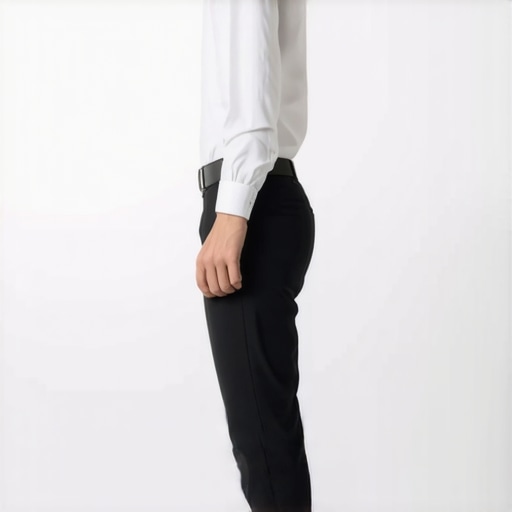
I vividly remember the day I realized my posture was a lie. I was at a neighborhood barbecue, trying to look “upright” and professional, but within thirty minutes, a sharp, familiar throbbing started radiating from my lower back. I tried to tuck my tailbone and squeeze my shoulder blades, but it only made the tension climb into my neck. I looked like a stiff board and felt even stiffer. It turns out, I was making the classic mistake of treating my body like a statue instead of a living, breathing machine. I spent years thinking that staying still was the goal, when in reality, stillness is exactly what causes that heavy, compressed feeling in your vertebrae. This wasn’t just a minor annoyance; it was a physical limitation that kept me from enjoying life. Today, I am going to show you the simple “micro-shift” technique that allows me to stand through entire concerts or long museum tours without that desperate urge to find a bench. We are going to break down why the truth about perfect posture isn’t what you think it is and how you can reclaim your comfort by engaging your body’s natural mechanics.
Stop treating your spine like a concrete pillar
Early in my journey, I made the mistake of thinking my back was “weak” because it hurt. I’d buy expensive insoles and hope for a miracle, but how your shoes interact with the floor is only one small part of the equation. I used to lock my knees so tightly that I was basically cutting off the circulation to my lower limbs. The real issue was my rigid mindset. When you stand with locked knees, you essentially turn off your natural shock absorbers—your muscles—and force your joints to bear the full weight of your torso. This is exactly why most standing desks fail to fix back pain; people just stand there like statues, waiting for the timer to go off. According to ergonomics experts at Cornell University, static standing for long periods creates significant muscle fatigue because it prevents the “muscle pump” that helps blood circulate and nutrients reach your spinal discs. Have you ever found yourself shifting from foot to foot just to get a second of relief, only to have the pain come roaring back a minute later?
Is this really better than just wearing orthotics?
I get the skepticism because I’ve been there—clutching a receipt for $200 custom inserts that didn’t do a thing for my lumbar aches. We are taught that we need external support to stay comfortable, but the “trick” I’m about to show you relies on your internal mechanics. It’s about creating a dynamic environment for your spine where no single disc is taking the brunt of the load for more than a few seconds. Orthotics can help the foundation, but they can’t fix the way you hold your weight. Before we dive into the specific foot positions and hip angles, you need to understand that your back isn’t failing you; your habits are just asking too much of your static structure. We need to move from “standing still” to “standing actively.”To move from standing still to standing actively, you have to embrace the constant sway. Think of your body like a high-end suspension bridge rather than a stone monument. A bridge is designed to move with the wind and the weight of traffic; if it were rigid, it would crack. Your spine works the same way. When I finally applied the micro-shift at a crowded museum last year—a place where I usually last twenty minutes before my legs go numb—I managed three hours without a single flare-up. The secret was never letting my weight settle into one spot for more than a minute. By constantly rotating my pressure points, I was effectively giving each disc a breather while the others took the shift. These mobility hacks simple adjustments for a more active life are the difference between a day spent in pain and a day spent enjoying the moment.
Move your weight like a pendulum to save your spine
The core of the micro-shift is a slow, rhythmic weight transfer. Most of us stand with 50/50 weight distribution, which sounds balanced but actually leads to stagnation. Instead, try a 60/40 split. Shift sixty percent of your weight onto your right leg, let your left hip relax slightly, and then, after about sixty seconds, slowly glide that weight over to the left side. This isn’t a dramatic lean; it should be almost invisible to someone watching you. This subtle movement engages the small stabilizer muscles around your pelvis and keeps blood flowing to your lower extremities. If you find your hips feeling tight during this process, the 15 minute flow to open up sticky hips can help prep your joints for this kind of dynamic movement. When you stay mobile, you prevent the lactic acid buildup that makes your legs feel like lead weights. 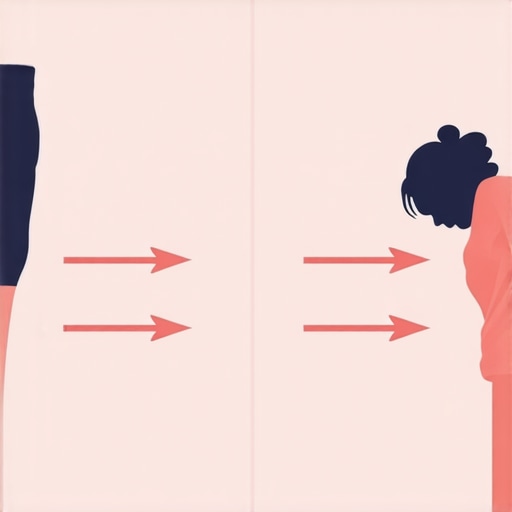
Stop resting your weight on your bone structure
One of the biggest mistakes I see—and one I lived through for years—is hanging on the ligaments. This happens when you lock your knees and let your pelvis spill forward. You aren’t using muscles to stand; you are literally resting your weight on your connective tissue and joints. To fix this, you need to find a neutral pelvis by utilizing the hip hinge fix for chronic lower back aches. Imagine your pelvis is a bowl of water; if you tilt too far forward, the water spills out the front. By keeping a micro-bend in your knees—just enough so they aren’t clicked into the locked position—you force your glutes and core to stay engaged. This muscular engagement acts as a shock absorber for your vertebrae.
Why soft knees are your best defense against back fatigue
I remember trying to explain this to a friend who worked as a retail manager. He complained that his lower back felt like it was being compressed by a hydraulic press. I told him to unlock his knees by just two millimeters. He felt like he was slightly squatting at first, but within an hour, the sharp pain in his L5-S1 disc began to dissipate. This is why why chiropractic care is your secret weapon for better posture; it’s not just about the adjustment, it’s about re-learning how to use your muscles to support your frame. Combining these soft knees with the best exercises for building a spine that doesn’t ache ensures that your body has the endurance to maintain this active stance throughout the workday. Remember, the truth about perfect posture and why it doesn’t exist is that the best posture is your next posture. Movement is the only way to keep the spine hydrated and the nerves happy.
Ditch the idea that stretching always solves stiffness
We have been conditioned to believe that if a muscle feels tight, we should pull on it until it yields. But here is the contrarian truth: many of the people I see with the worst chronic pain are actually too flexible in the wrong places. This is a nuance often missed in basic fitness circles. When you constantly perform passive stretches, you might be contributing to joint laxity rather than functional health. In fact, why your gentle stretching is actually causing more inflammation is often down to the fact that your nervous system is tightening those muscles as a protective reflex because your joints lack stability. According to Dr. Stuart McGill, a leading expert in spine biomechanics, true spinal health often requires more ‘stiffness’—in the form of muscular bracing—rather than more range of motion. If you keep stretching a ‘tight’ hamstring that is actually protecting an unstable pelvis, you are fighting your own body’s survival mechanism. This is where the link between mobility and posture a chiropractors guide becomes essential; it’s about knowing which joints need to move and which ones need to stay rock solid.
Why your DIY back-cracking habit is backfiring
Let’s talk about the ‘oops’ factor that almost everyone falls for: self-adjusting. I know that satisfying pop feels like instant relief, but it is a dangerous trap. When you twist your own neck or back until it cracks, you aren’t usually hitting the segment that is actually stuck. Instead, you are over-stretching the segments that are already moving too much—the hypermobile ones. You get a temporary hit of endorphins, but twenty minutes later, the tension returns because the underlying restriction was never addressed. This is why you should stop cracking your own back every hour. You are essentially creating a cycle of instability that makes your posture even harder to maintain. Professional how chiropractic adjustments enhance posture and mobility focus on the specific, ‘frozen’ segments, allowing the over-worked areas to finally relax.
Can your breathing pattern actually stabilize your lumbar spine?
This is the high-level question that separates the beginners from the experts. If you are ‘chest breathing’—meaning your shoulders rise and fall with every breath—you are effectively turning off your internal weight-lifting belt. Your diaphragm is your primary core stabilizer. When you breathe correctly into your lower ribs, you create intra-abdominal pressure that supports your spine from the inside out. This is why your breathing pattern determines your lower back stability more than any ergonomic chair ever could. By integrating this internal pressure with your micro-shifts, you create a fortress of support that doesn’t rely on external braces. Have you ever fallen into the trap of thinking a quick stretch or a self-crack was the permanent solution, only to have the pain come back by lunchtime? Let me know in the comments.
The gear that actually lives in my gym bag
Over the years, I have tested every gadget from vibrating foam rollers to expensive posture-correcting shirts that felt like wearing a straightjacket. Most of it is clutter. My daily maintenance now boils down to three essentials: a firm lacrosse ball for pinpoint tissue work, a portable lumbar roll for the car, and zero-drop footwear that respects my natural anatomy. I transitioned to minimalist shoes because they allowed my feet to communicate with the ground again, though you absolutely have to follow the best way to transition to zero drop shoes safely or you’ll end up with strained calves. When I’m stuck in a long commute, I make sure to how to use a lumbar roll correctly in an office chair or car seat, which keeps my lumbar curve from flattening into a ‘C’ shape that invites disc bulges. These tools don’t ‘fix’ me; they simply remove the environmental obstacles that prevent my body from maintaining its own alignment.
How can I maintain these mobility gains forever?
Maintenance isn’t about a grueling two-hour routine that you eventually quit; it is about the ‘Check-In.’ Dr. Kelly Starrett, author of ‘Becoming a Supple Leopard’ and a pioneer in the mobility world, emphasizes the ‘bracing sequence’—a specific technical method of organizing your spine from the pelvis up before you even take a step or pick up groceries. I do this every time I stand up from my desk. It ensures that how to improve your balance by adjusting your spine becomes a subconscious habit rather than a chore. If you find yourself slipping back into old patterns of slouching, a quick visit to a professional can reset the baseline for your nervous system. This is why chiropractic care is your secret weapon for better posture; it clears the neurological ‘noise’ so your maintenance movements actually stick and you aren’t just fighting your own reflexes.
AI and the future of our biological suspension
Looking ahead, I predict we are moving away from passive furniture and toward active biofeedback. In the next few years, we’ll likely see shirts with woven-in sensors that provide a gentle haptic pulse the moment your diaphragm stops moving correctly or your shoulders start to round. We are entering an era where the ultimate guide to improving mobility and posture in 2025 will be driven by real-time data rather than guesswork. But until that tech is perfected and affordable, the most ‘advanced’ tool you have is your own interoception—the ability to feel your body from the inside. Try this today: the next time you are waiting in line at the grocery store, don’t look at your phone. Instead, perform one minute of the ‘pendulum shift’ we discussed earlier and notice how the pressure in your lower back simply vanishes. It’s a small, invisible win, but those wins aggregate into a lifetime of movement freedom and structural integrity.
Hard Lessons My Spine Taught Me While I Was Busy Ignoring It
After years of trial and error, I’ve realized that consistency beats intensity every single time. Spending five minutes a day on mobility boosts for posture expert tips for daily adjustments is far more effective than a grueling hour-long session once a week. I also learned that pain is a messenger, not a defect; when my back throbbed, it wasn’t failing—it was asking for movement. Most importantly, I stopped trying to look ‘perfect’ and started focusing on feeling fluid. When you stop policing your posture and start prioritizing your mechanics, the tension naturally melts away as your body finds its own rhythm again.
The Minimalist Kit That Keeps My Joints Quiet
I don’t believe in buying every gadget on the market, but there are a few non-negotiables in my daily routine. First, a simple lacrosse ball is my go-to for breaking up tissue knots that a foam roller just can’t reach. Second, I swear by the best way to transition to minimalist footwear to let my feet function as nature intended. Third, I always carry a portable support for travel; knowing the best way to sit in a car for a 4 hour trip has saved me from countless post-vacation flare-ups. Lastly, I highly recommend looking into professional chiropractic adjustments unlock a pain free lifestyle today because they reset the neurological baseline that allows these tools to work properly.
Start Living in a Body That Doesn’t Feel Like a Cage
Reclaiming your comfort isn’t a destination; it’s a series of small, intentional choices you make throughout your day. Whether you are implementing the enhance your posture with expert chiropractic techniques in 2025 or simply mastering the hip hinge secret for pain free deadlifts, you are building a resilient foundation. You don’t have to be a ‘stiff board’ anymore. By using these mobility hacks and understanding how to handle a sudden back spasm without panicking, you gain the confidence to say yes to more activities and less to the sofa. Which of these micro-shifts are you going to try first during your next long walk or work session? Let me know in the comments below!