
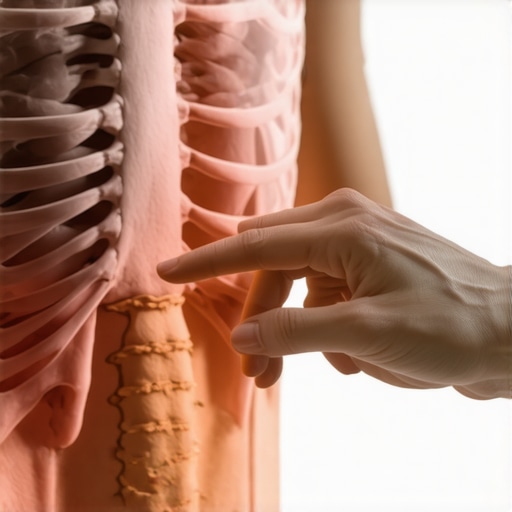
I remember sitting at my kitchen table, nursing a lukewarm coffee, when a jagged spike of pain shot through my left chest. My breath hitched. My palms went clammy. I was twenty-eight, healthy, and absolutely convinced I was about to keel over from a massive heart attack. It is a terrifying, visceral experience that sends thousands of us to the ER every year, only to be told our hearts are fine and our ‘ribs are just irritated.’ It feels like a brush with death, but in reality, it is often just a mechanical glitch in your thoracic cage. Today, I am going to show you exactly why your body is throwing this false alarm and how you can reclaim your breath without the panic.
That Sharp Panic When Your Chest Tightens Without Warning
It is the ultimate physiological prank. You move the wrong way, or maybe you just take a deep breath, and suddenly it feels like a knife is twisting between your ribs. Early in my journey, I made the classic mistake of thinking I could just ‘walk it off’ or, even worse, I would try cracking my own back for relief in ways that probably made the inflammation ten times worse. I spent weeks sleeping propped up on pillows because I didn’t realize that my rib heads were actually slightly out of alignment, putting pressure on the intercostal nerves. This mimicry happens because the nerves in your chest wall share similar pathways to the nerves from your heart, leading your brain to jump to the scariest conclusion possible. Have you ever found yourself clutching your chest and wondering if you should call an ambulance, only for the pain to vanish ten minutes later?
Is this really a rib issue or should I be genuinely worried?
It is completely normal to be skeptical. We are told our whole lives that chest pain equals an emergency, and you should always rule that out first. However, once the doctors give you the ‘all clear,’ you’re often left with no real answers on how to stop your rib cage from feeling stuck when you breathe. According to research published in the Journal of the American Board of Family Medicine, roughly 13% to 36% of chest pain complaints in primary care are actually musculoskeletal in nature, not cardiac. This is where we need to look at the ‘why’—usually a combination of poor desk posture, a sudden twist, or even a heavy bout of coughing that has strained the cartilage. To find relief, you have to understand the difference between nerve pain and muscle soreness in your chest wall. Once you realize it is a mechanical problem, you can stop treating it like a medical mystery and start treating it like the mobility issue it actually is. I want to help you learn how to breathe into your back to relieve rib tension so you can stop living in fear of the next sharp twinge.To stop the phantom heart attack, you need to address the thoracic spine. Think of your ribs like the handles of a bucket. If the hinge—where the rib meets the spine—gets rusty or stuck, the whole bucket handle won’t lift. This is exactly what happened to me when I tried to force a heavy overhead press at the gym. I felt a ‘pop’ in my mid-back and then three days of sharp chest pain. I realized I was trying to move my arms without moving my spine.
Test Your Hinges Before You Try to Fix Them
First, you need to see if your ‘hinges’ are actually moving. You can how to test your own spinal rotation at home to see if one side is locked up. If it is, don’t just twist violently. That’s how you end up in more pain. Instead, use the 2-minute drill for better spinal rotation to gently coax those joints back into a glide rather than a grind. I used to think that the louder the ‘crack,’ the better the result, but the truth about cracking your own back for relief is that you are often just hitting the joints that are already too loose, while the stuck ones stay jammed. 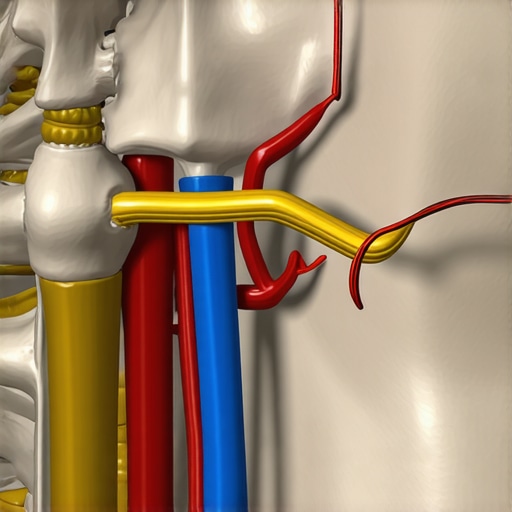
Re-learn How to Breathe Without Irritating Your Nerves
Once you have some movement back, you have to stop the ‘panic breathing.’ When we are in pain, we breathe shallowly into our upper chest, which uses the neck muscles and pulls on the upper ribs, keeping the cycle of inflammation going. You need to learn how to breathe into your back to relieve rib tension. Imagine your breath expanding into the space between your shoulder blades rather than pushing your chest forward. This 360-degree expansion creates internal pressure that gently pushes the rib heads back into their proper alignment from the inside out. I remember the first time I got this right; it felt like a balloon finally inflating in a cramped box. The sharp ‘stab’ in my front chest simply evaporated because the pressure was finally distributed evenly.
Your Desk Setup is Squashing Your Ribs
You cannot fix a mechanical issue if you spend eight hours a day in the exact position that caused it. If you are hunched over a laptop, your rib cage is essentially being folded in half. This compresses the cartilage where your ribs meet your breastbone—the prime real estate for costochondritis. You need mobility boosts for posture expert tips for daily adjustments to break up the static load. A simple place to start is your chair. Learning how to use a lumbar roll correctly in an office chair can force your thoracic spine into a slight extension, which naturally opens up the front of your rib cage and takes the weight off those irritated nerves. It is about creating a workspace that supports your anatomy instead of fighting it.Most people assume that if a muscle feels tight, the solution is to pull on it until it gives up. This is where I see the biggest ‘oops’ in rib recovery. If your rib pain is caused by joint hypermobility or an underlying instability, why your gentle stretching is actually causing more inflammation becomes very clear. You aren’t ‘opening’ anything; you’re just tugging on already angry ligaments. I’ve seen patients spend months on a foam roller trying to ‘flatten’ their mid-back, only to find the sharp stabs get more frequent. This is because they are confusing a protective muscle spasm with a flexibility problem. Your body is locking those muscles down for a reason—it is trying to protect your spinal cord from what it perceives as an unstable joint. When you stretch into that pain, you are overriding a safety mechanism without addressing the reason the safety was on in the first place.
Why do my ribs feel locked again just hours after an adjustment?
This is the million-dollar question for the advanced mover. You get adjusted, you feel like a new person, and then you sit down for lunch and suddenly the tension returns. According to a study in the Journal of Bodywork and Movement Therapies, the effectiveness of manual therapy is often negated if the patient lacks the neuromuscular control to support the new range of motion. You can’t just unlock the door; you have to train the hinges to stay open. This is where the link between mobility and posture becomes the missing piece. If you do not follow up an adjustment with stability work, your brain will revert to its ‘default’ setting of stiffness to keep you safe. 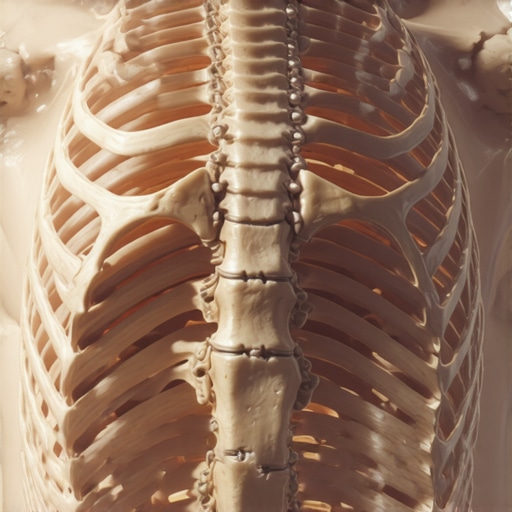 One of the most dangerous traps is the ‘addiction’ to self-adjusting. If you find yourself needing to pop your own back every sixty minutes, you aren’t fixing a problem; you are creating a hypermobile segment. You need to realize why you should stop cracking your own back every hour. You are likely hitting the segments above and below the one that is actually stuck. This creates a cycle where the stuck joint gets even grumpier while the surrounding ones become overstretched and weak. High-level chiropractic adjustments enhance posture and mobility by resetting the neural tone, not just moving bones. Think of it like rebooting a computer that has too many background apps running. The adjustment clears the ‘noise’ in the nervous system, allowing your brain to realize that the rib cage is not actually under attack. But that window of opportunity is short. You have to fill that new space with better movement patterns. This is why I always tell my clients that the truth about perfect posture and why it doesnt exist is actually the best news they could hear. You do not need a military-straight spine; you need a resilient one. By focusing on the best exercises for building a spine that doesnt ache, you transition from ‘fixing a problem’ to ‘building a fortress.’ Have you ever fallen into this trap of over-stretching or constant self-popping? Let me know in the comments.To move beyond the ’emergency’ phase and into true stability, you need a toolkit that lives in your gym bag, not just your chiropractor’s office. I realized that the only way to stop the ‘rib-pop’ cycle was to take ownership of my daily maintenance.
Why a simple lacrosse ball beats expensive massage chairs
I’ve tried the $5,000 massage chairs and the vibrating percussion guns, but nothing touches the effectiveness of a homemade ‘peanut’—two lacrosse balls taped together. This tool is my secret weapon for the thoracic spine. By placing the gap between the balls over my spine and lying back, I can pin down the specific rib heads that feel ‘stuck’ and use my own body weight to encourage a gentle glide. It’s a form of revolutionize your posture with targeted mobility exercises that you can do while watching TV. I use it for three minutes every evening to reverse the ‘c-curve’ my spine takes on after a day at the computer. This isn’t just about feeling good in the moment; it’s about mechanical maintenance.
How do I keep my rib cage moving once the pain stops?
Maintenance is where most people fail because they stop as soon as the ‘phantom heart attack’ feeling vanishes. You have to treat your rib mobility like brushing your teeth. I recommend following the ultimate guide to improving mobility and posture in 2025, which emphasizes consistency over intensity. One of the most effective long-term habits I’ve adopted is the ‘Wall Slide.’ By keeping your back, head, and elbows against a wall and sliding your arms up into a ‘Y’ shape, you force the ribs to rotate and expand under control. It’s an immediate diagnostic tool—if you can’t reach the top without your ribs flaring out, you know you have work to do. 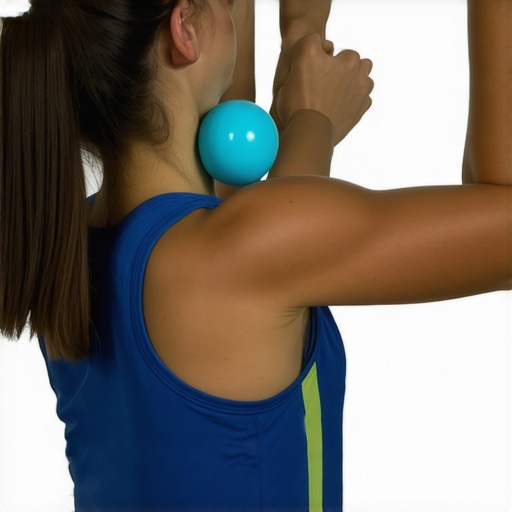
The future of your spine is probably in your smart watch
Looking ahead, I suspect we are moving away from static ‘posture checks’ and toward AI-driven biofeedback. We are already seeing wearable sensors that vibrate when your thoracic spine slumps too far forward, but the next generation will likely integrate with our nervous systems to track respiratory depth and rib cage expansion. This will make mobility boosts for posture expert tips for daily adjustments even more personalized. A 2021 study in the Journal of Clinical Medicine demonstrated that high-velocity, low-amplitude (HVLA) thrusts to the thoracic spine immediately increased respiratory excursion, meaning they literally allow you to take a deeper breath by freeing up the mechanical blocks. As tech catches up, we’ll be able to see these improvements in real-time on our phones. If you’re ready to stop the cycle of chest-tightness, I want you to try the ‘Wall Slide’ tonight for just 10 reps. Focus on keeping your lower ribs ‘knitted’ toward your belly button. If it feels impossible, it’s a sign that your how chiropractic adjustments enhance posture and mobility best when paired with this specific stability work. Don’t wait for the next flare-up to start caring for your cage.
What I Wish Someone Told Me Before My First False Alarm
The most important lesson I learned is that the location of the pain is rarely the actual source of the problem. That sharp jab in the front of my chest was just the end of the fuse; the fire was actually in the joints of my mid-back. I also discovered that chiropractic care is your secret weapon for better posture because it resets the nervous system’s perception of safety. When your brain stops panicking, your muscles stop seizing. Finally, I realized that healing isn’t linear. You might have a great day followed by a stiff one, and that’s okay—it’s just your body recalibrating.
The Gear That Rescued My Thoracic Mobility
I don’t believe in buying every gadget on the market, but three things made a massive difference for my recovery. First, a simple ‘peanut’ (two lacrosse balls) allowed me to self-mobilize specific rib segments at home. Second, incorporating a 3-minute evening routine for a less stiff morning helped me dump the day’s stress before it could ‘set’ like wet concrete. Third, I stopped using a soft sofa for long periods and switched to a firm chair with a proper lumbar roll. These aren’t just ‘tips’; they are the infrastructure of a healthy spine.
#IMAGE_PLACEHOLDER_E#
Claim Your Right to Pain-Free Breathing
Living in fear of your own rib cage is exhausting, but it doesn’t have to be your permanent reality. By combining movement, education, and professional support, you can break the cycle of tension. Remember that chiropractic adjustments enhance posture and mobility by giving you the space to move, but it’s your daily habits that keep that space open. For a comprehensive roadmap, I always point people toward the ultimate guide to improving mobility and posture in 2025. You have the tools now—it is time to start using them.
Have you ever had a chest pain scare that turned out to be just a rib issue? Let me know your experience in the comments below.