
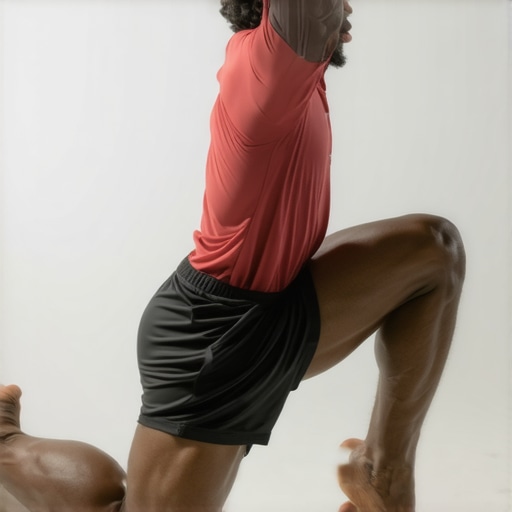
I remember the day I almost fell over just trying to get out of my car. It wasn’t a sudden injury or a sports mishap. My right knee simply felt like it was being cinched by a wire. For months, I babied it. I bought every gel-infused sleeve on the market and stopped my evening strolls. I felt old, and honestly, I was getting a bit bitter about it. But here is the kicker: the problem wasn’t my knee at all. It was my hips. Specifically, my hip flexors were so tight from years of desk work that they were yanking on my femur and forcing my kneecap to track like a derailed train. Today, I am going to show you how to stop treating the symptom and finally fix the source of that nagging ache.
Why Your Knees Are Paying the Price for Your Chair Time
It sounds crazy to think that a muscle in your groin could make your knee feel like it is exploding, but the body is one big connected chain. When you sit for hours, your hip flexors shorten and tighten. Eventually, they stay that way even when you stand up. This tension creates a constant tug-of-war that pulls your pelvis forward, which is often why your lower back hurts when you try to stand up straight as well. But for many of us, that tension travels down. It forces the quadriceps to overwork, and before you know it, you have a knee cap that tracks outward when you walk. I made the classic mistake of thinking I just needed to stretch my legs more, but I was focusing on the wrong side. In fact, I spent weeks on hamstring stretches that were not fixing my tightness because the real thief was hiding in the front of my hip. According to a study published in the Journal of Biomechanics, excessive hip flexor tightness can significantly alter the gait cycle, leading to significantly increased patellofemoral pressure. Have you ever felt that sharp catch in your knee after sitting for just twenty minutes?
Does stretching really work when you are already in pain?
Many people worry that poking at the problem will only make the inflammation worse. I was terrified of that too. But the truth is this: you cannot rest your way out of a mechanical misalignment. If the rope is too short, you have to lengthen it. We are not just going to do random lunges; we are going to use a 15-minute flow to open up sticky hips that actually targets the psoas without aggravating the joint. It is about being smarter than the pain, not just tougher.
Reclaim Your Range of Motion Without Overworking the Joint
The first time I tried the ‘Couch Stretch,’ I was in a cramped hotel room in Omaha, nursing a knee that felt like it had been through a meat grinder. I propped my back foot up against the bed frame, dropped my front knee to the carpet, and immediately felt a searing line of tension from my hip down to my patella. It was messy, I was sweating, and I probably looked ridiculous. But after two minutes on each side, I stood up and felt—for the first time in weeks—a sense of lightness. The ‘catch’ in my knee was gone because I had finally addressed the single most effective stretch for people who sit all day.
Master the Couch Stretch for Deep Hip Release
To do this right, find a wall or a sturdy couch. Drop one knee to the floor (use a pillow if you have sensitive joints) and place your shin flush against the vertical surface with your toes pointing up. Step your other leg forward into a lunge position. The goal is to get your torso upright. If you are hunched over, you aren’t actually stretching the psoas; you are just stressing your lower back. Think of your pelvis like a bowl of water—don’t let it spill forward. Tuck your tailbone under, squeeze the glute of the back leg, and breathe. This is a core part of any 15-minute flow to open up sticky hips because it forces the hip flexor to lengthen under tension.
How to Breathe Your Way Through the Tension
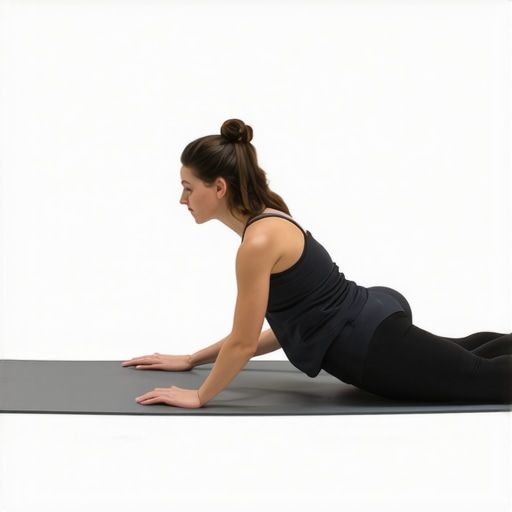
Most people hold their breath when a muscle feels tight, which sends a ‘danger’ signal to the nervous system and makes the muscle tighten even more. Instead, focus on exhaling longer than you inhale. This simple shift in how your breathing habits are creating tightness elsewhere can actually help your hips relax. If the stretch feels like a 10/10 on the pain scale, back off. You want a 7/10 ‘productive’ discomfort.
Change the Way You Stand to Save Your Hips
Stretching is only half the battle if you go right back to the habits that caused the problem. I used to stand in the grocery line with all my weight shifted onto one hip, a habit that makes the hidden reason your hips feel uneven in the mirror become a permanent structural issue. Learning how to fix the way you stand in line is about redistributing that pressure. Keep your feet hip-width apart and imagine ‘screwing’ your feet into the ground to engage your external rotators.
Wake Up Your Glutes to Protect Your Knees
When hip flexors are tight, the glutes often go ‘offline.’ This is called reciprocal inhibition. If the front is tight, the back turns off. To fix this, you need to actively squeeze your glutes during the day. When you are at your desk, try the best standing desk interval for maximum back health, which involves switching positions every 20 minutes. If you feel your knee starting to ache, it is a signal that your hips have stopped doing their job. This is often why chiropractic care is your secret weapon for better posture; sometimes the joint itself needs a manual reset before the muscles can even begin to function correctly again. Even with the right stretches, if you go back to slouching, you are fighting a losing battle. It is the same reason the proper way to use a lumbar roll in your office chair is so critical—it maintains the curve that keeps your hips from locking up.
Let’s dig deeper. Most people treat their body like a collection of rubber bands, assuming that if something feels tight, they just need to pull on it harder. But here is the contrarian reality: ‘tightness’ is often a neurological defense mechanism, not a structural limitation. If your brain perceives a lack of stability in your core or your pelvis, it will reflexively tighten the surrounding muscles—like your hip flexors or hamstrings—to act as makeshift ‘braces.’ When you ignore this and force a deep stretch, you are actually fighting your own nervous system. This is the real reason your hamstrings stay tight despite stretching; they aren’t short, they are overworked and guarded.
Flexibility is Useless Without This One Hidden Ingredient
The secret that elite athletes know, but office workers often miss, is that mobility requires motor control. You can have the longest muscles in the world, but if your nervous system doesn’t know how to stabilize a joint in those new ranges, your brain will lock that joint down to prevent injury. This is why simply doing more yoga doesn’t always stop your knees from aching. You need to combine those stretches with activation exercises that ‘teach’ your body it is safe to move. It’s about building a better relationship with your nervous system, not just forcing your tissues into compliance.
Stop Taking a Foam Roller to Your Lower Back
One of the biggest ‘oops’ factors I see in the mobility world is the misuse of tools. I’ve seen countless people in the gym grimacing as they roll a dense foam cylinder directly over their lumbar spine. It’s a classic trap. In reality, the truth about foam rolling your lower back is that the risk of spinal compression and nerve irritation far outweighs any temporary relief. Your lower back is designed for stability; if it feels tight, it is usually because the joints above (the mid-back) or below (the hips) are locked up. Instead of attacking the symptom, you should focus on opening the areas meant for movement. 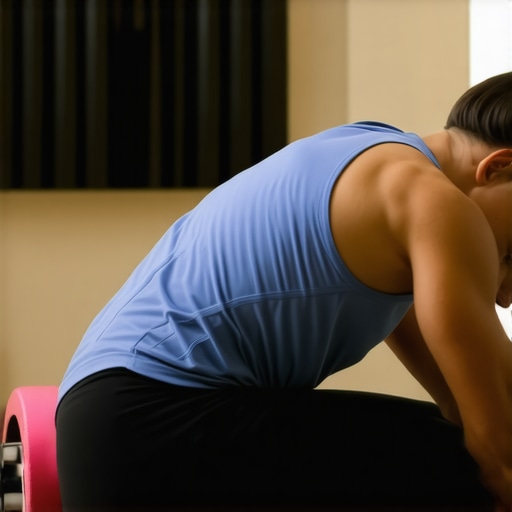
Why do your muscles feel tighter the more you stretch them?
This is the question that usually brings people into my office after months of failed ‘recovery’ routines. The answer lies in the difference between passive flexibility and active mobility. A study published in the Journal of Bodywork and Movement Therapies highlights that perceived muscle stiffness is often a sensory perception response from the nervous system rather than a structural shortening of the muscle fibers. If you have been following the ultimate guide to improving mobility and posture in 2025, you know that the goal isn’t just to be ‘bendy.’ It is to have control over your range of motion. This is where how chiropractic adjustments enhance posture and mobility comes into play. An adjustment doesn’t just ‘crack’ a joint; it provides a high-velocity, low-amplitude input to the nervous system that ‘reboots’ the signal between your brain and your muscles, often instantly reducing that protective tension.
Another nuance people miss is that ‘perfect’ posture is a moving target. We are often told to sit up straight and pin our shoulders back, but why your perfect posture is actually causing muscle fatigue is that you are trying to hold a static, rigid position. True health comes from movement variability. Instead of trying to maintain a statue-like pose, focus on chiropractic adjustments to unlock a pain-free lifestyle by ensuring your joints can move through their full, intended ranges without restriction. Have you ever fallen into the trap of stretching a ‘tight’ muscle only for it to feel worse an hour later? Let me know in the comments.
Once you have used how chiropractic adjustments enhance posture and mobility to hit the reset button on your nervous system, the real work begins at home. I do not just rely on stretches anymore; I have curated a toolkit that fits into my lifestyle without feeling like a second job. My first non-negotiable is a standard lacrosse ball. It is cheap and does more for my hip impingement than a high-end massage gun ever could. I use it specifically on my Tensor Fasciae Latae (TFL)—that pocket-sized muscle on the side of your hip—because when that stays loose, my knee tracks perfectly. If you haven’t tried the 15-minute flow to open up sticky hips, adding a lacrosse ball to the routine is the ultimate level-up.
The transition to flat shoes saved my hips
I spent years in heavily cushioned running shoes with a massive ‘heel-to-toe drop,’ which essentially put my hips in a permanent state of flexion. Understanding the best way to transition to zero-drop shoes safely was the single most impactful change for my chronic lower back tightness. It forced my ankles to actually do their job, which took the strain off my knees and pelvis. It is not a transition you make overnight, but once your body relearns how to ground itself, mobility hacks and simple adjustments for a more active life become second nature. 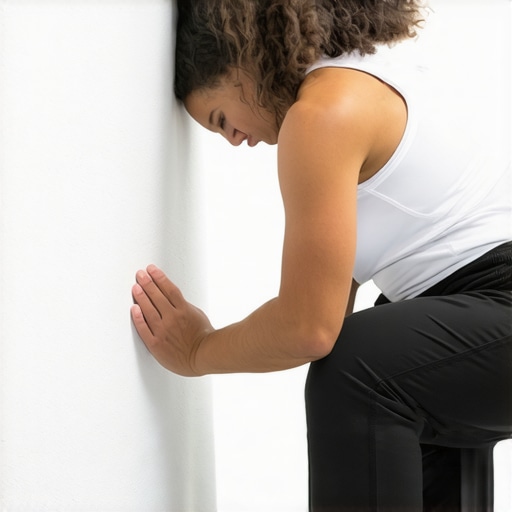
How can you keep your spine healthy for the long haul?
Maintenance isn’t about doing sixty minutes of mobility work every morning; it’s about consistency and strategic stability. Dr. Stuart McGill, a world-renowned expert on spine biomechanics and author of Back Mechanic, emphasizes the ‘Big Three’ exercises—the bird-dog, the side plank, and the modified curl-up—to build the endurance necessary to protect your discs. I integrate these into my week to ensure that my improving posture through mobility practical chiropractor strategies actually stick. You need that ‘stiffness’ in the core to allow for ‘laxity’ in the hips.
The future of posture is probably on your wrist
Looking forward, I predict we are going to see a massive shift toward wearable biofeedback integrated into everyday tech. In 2025 and beyond, we won’t just guess if we are slouching; integrated sensors in our clothing or watches will provide haptic cues to keep us aligned. Until then, you have to be your own sensor. This is why the ultimate guide to improving mobility and posture in 2025 focuses so heavily on proprioception—your brain’s ability to know where your joints are in space. If you want to scale these results, stop thinking of mobility as a workout and start thinking of it as a hygiene habit, much like brushing your teeth. I challenge you to try this tonight: find a lacrosse ball, place it right on that ‘pinch’ point in your glute while sitting on the floor, and breathe through 90 seconds of pressure. It is the fastest way to revolutionize your posture with targeted mobility exercises without needing a gym membership. If you are still feeling ‘stuck’ despite the tools, it might be time to contact us to see if a structural hurdle is standing in your way.
What Nobody Tells You About Chasing the ‘Perfect’ Stretch
After years of working with my own body and helping others, I have realized that the biggest hurdle isn’t a lack of flexibility—it is a lack of neurological safety. Here are the lightbulb moments that changed everything for me:
- Stop ‘bullying’ your muscles: If you stretch a muscle that is tight because it is trying to protect a weak joint, your brain will just make it tighter. You have to address the stability first.
- The ‘Jaw-Hip’ Connection: I used to clench my teeth during stressful emails, and within an hour, my hips would feel like lead. There is a real neurological link between a tight jaw and a tight pelvis.
- Posture isn’t a state of being: It is a skill you practice. Don’t aim for ‘perfect’; aim for ‘different’ by moving every 20 minutes.
- Your gut matters too: It sounds unrelated, but the connection between poor posture and digestive issues is often rooted in how much pressure we put on our midsection by slouching.
Gear That Actually Earned a Permanent Spot in My Gym Bag
I have wasted hundreds of dollars on vibrating rollers and expensive ‘posture shirts.’ If I had to start over, I would only keep these four things:
- A standard lacrosse ball: It is the ultimate tool for pinpointing that TFL muscle. It is small enough to travel with and hard enough to actually make a dent in stubborn fascia.
- Zero-drop footwear: Learning how to tell if your back pain is coming from your shoes was a game-changer. Flat shoes allowed my glutes to finally wake up.
- Stuart McGill’s ‘Back Mechanic’: This book is the gold standard for spine health. It taught me that sometimes not moving certain parts of your spine is the key to letting the rest of your body move freely.
- A high-quality lumbar support: Whether it is for the car or the office, keeping that natural curve in your low back prevents the ‘creep’ that leads to hip tightness.
#IMAGE_PLACEHOLDER_E#
Stop Waiting for the Perfect Time to Fix Your Alignment
It is so easy to fall into the trap of thinking you need a week-long retreat or a fancy gym to start feeling better. The truth is, you can enhance your posture with expert chiropractic techniques in 2025 while also doing the small, boring work at your desk every day. You aren’t ‘fixing’ a broken machine; you are refining a high-performance system that just got a little rusty from disuse. Use these mobility boosts for posture expert tips for daily adjustments to keep the momentum going. You deserve to move without that ‘catching’ sensation in your knee or that dull ache in your lower back. Your body wants to feel good—you just have to give it the right map to get there. Have you ever noticed that stretching one specific area—like your hips—suddenly cleared up pain in a completely different spot like your neck or knees? Let me know your experience in the comments below!