
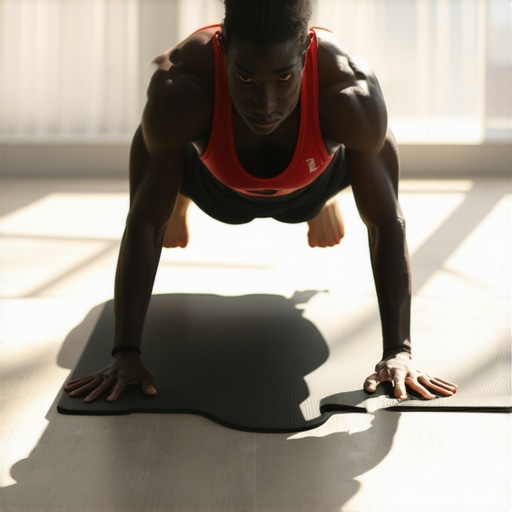
I remember lying on my living room floor, staring at the ceiling, and realizing I couldn’t actually get back up. I’d just finished a “killer” core workout—three sets of fifty crunches—and felt like a champion. Then I sneezed. A single sneeze sent a lightning bolt of pain through my lower back that kept me horizontal for two days. It was a wake-up call that my definition of “strength” was completely broken. I had the visible muscle lines, but I lacked the actual stability to handle a basic bodily function. That moment changed everything for me. It was the start of a journey to figure out how to protect my spine while actually building a body that could move, twist, and lift without fear.
Stop Punishing Your Spine with Sit-ups
For the longest time, I thought a strong core was synonymous with a six-pack. I spent years grinding out sit-ups, only to realize I was actually making myself more fragile. When we repeatedly flex our spine under tension, we are essentially “sawing” at our intervertebral discs. I made the classic mistake of chasing the burn instead of the brace. I’ve learned that a truly functional core isn’t about movement; it’s about resisting movement. It’s about creating a shield around your spine. If you’ve ever wondered why your breathing pattern determines your lower back stability, you’re already ahead of where I was back then. Today, we are going to dive into how you can build that rock-solid foundation without ever having to do another painful floor crunch again. Have you ever felt that weird pinch in your lower back right after a core workout? Drop a comment below; I really want to know if I’m not the only one who felt like they were doing more harm than good.
Is core work actually worth the hype?
I get the skepticism. We see people doing flashy gymnastic moves and think, “That looks like a recipe for a slipped disc.” But the truth is, a strong core is the secret to a pain-free life. It’s what allows you to pick up a toddler, carry groceries, or even just stand for hours without back fatigue. According to a study published by Harvard Medical School, traditional crunches can cause excessive “shearing force” on the lower spine, which is why so many people end up in a chiropractor’s office after a fitness kick. The goal isn’t to look good in a mirror—though that’s a nice side effect—it’s to ensure your spine stays aligned during your daily activities. I used to think I was “stabilizing” my back by doing side bends, but I was actually just irritating my nerves. Understanding the difference between nerve pain and muscle soreness was the biggest breakthrough in my recovery. We’re going to focus on movements that keep your spine neutral while challenging your muscles to work as a single, cohesive unit.
Think of Your Torso as a Pressurized Canister
To understand core stability, stop thinking about individual muscles and start thinking about a soda can. If a can is unopened and under pressure, you can stand on it without it buckling. But the moment you pop the tab and lose that internal pressure, it crushes under the slightest weight. Your torso works the exact same way. For years, I tried to ‘suck my gut in’ while lifting, which is like emptying the can before trying to support a load. I remember trying to move a heavy solid-oak dresser across my bedroom. My first instinct was to hollow out my stomach. I felt a sharp, localized heat in my L5-S1 vertebrae immediately. I stopped, reset my stance, and instead of sucking in, I pushed my abdominal wall out in all directions—creating that 360-degree expansion. The dresser felt half as heavy because my spine was finally supported by internal pressure. This is precisely why your breathing pattern determines your lower back stability; it provides the ‘air brakes’ for your spine.
Master the Dead Bug Before Moving to Weights
If you can’t control your spine while lying on the floor, you have no business putting a barbell on your back. The dead bug is the gold standard for this. Lie on your back with your arms reaching for the ceiling and your knees bent at ninety degrees. The challenge isn’t the movement of your limbs; it’s the stillness of your lower back. I used to speed through these, thinking I was a pro, until a coach placed a small blood pressure cuff under my lower back and told me to keep the needle steady. I failed in five seconds. Using the dead bug variation that actually protects your spine teaches your brain to decouple limb movement from spinal movement. It forces your deep stabilizers to stay ‘on’ while your hips and shoulders do the work.
Your Hips are Hinges, Not Your Spine
We need to address the way you interact with the world outside the gym. Most back injuries don’t happen during a max-effort lift; they happen when you’re tired and reaching for a laundry basket. Your spine is a structural column designed to transfer force, not a flexible hinge. Your hips, however, are massive ball-and-socket joints built for rotation and power. When you bend at the waist, you are putting a massive amount of leverage on tiny ligaments. I shifted my entire movement philosophy once I mastered the hip hinge secret for pain-free deadlifts. Now, whether I’m picking up my keys or a sixty-pound bag of dog food, I focus on pushing my glutes back toward the wall behind me. This keeps the load on the strongest muscles in the body rather than the most sensitive ones. This simple shift is the key to how to safely pick up a heavy box from the floor without that terrifying ‘pop’ sensation that ruins your month.
Stability Beats Artificial Flexibility
I often see people trying to ‘crack’ or ‘pop’ their own backs when they feel stiff during a workout. I used to do it constantly, thinking I was ‘realigning’ myself. In reality, the truth about cracking your own back for relief is that you are often just creating hyper-mobility in joints that are actually trying to stay stiff to protect you. When your core isn’t doing its job, your brain sends a signal to your surrounding muscles to tighten up as a secondary defense. This is why why stretching your hamstrings won’t fix your tight back; those muscles are tight for a reason—they are trying to keep your pelvis from tilting because your core is offline. Instead of stretching the ‘tightness’ away, focus on creating the tension through bracing. When the brain feels the spine is stable, it will automatically ‘let go’ of that protective muscular guarding, giving you more mobility than any 30-minute stretching routine ever could.
I used to be obsessed with sitting like a statue. I bought the most expensive ergonomic chair, set my monitor to the exact millimeter, and forced my shoulders back into a rigid, military-style pose. I thought I was doing everything right, but within an hour, my upper back felt like it was on fire. This is the first big myth I had to unlearn: there is no such thing as a ‘perfect’ static posture. In fact, the truth about perfect posture and why it doesn’t exist is that your best posture is always your next posture. When we try to hold a single position—even a ‘good’ one—we create sustained ischemic pressure on our tissues. Our bodies were built for oscillation, not stagnation.
The lie of sitting up straight
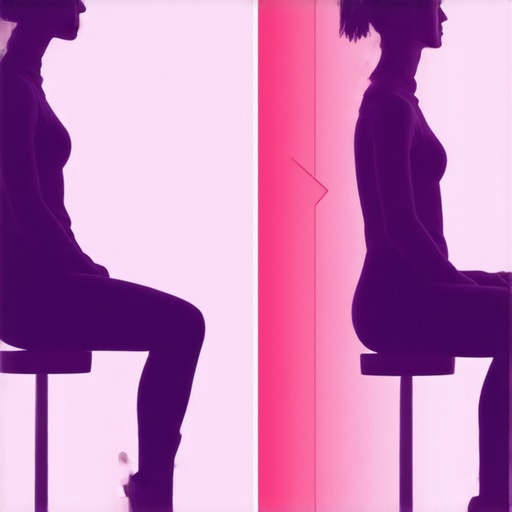
Most of us were told to ‘sit up straight’ by well-meaning parents, but that rigid over-correction often leads to a flared ribcage and a hyper-extended lower back. It’s a trap that creates a different kind of dysfunction. A study published in the Journal of Biomechanics suggests that frequent postural shifts are significantly more effective at reducing spinal load than maintaining any single ‘ideal’ alignment. I realized that by trying to look perfect, I was actually starving my discs of the movement they need to stay hydrated. Instead of focusing on a frozen pose, I started focusing on mobility boosts for posture that involve micro-movements every twenty minutes. Have you ever fallen into the trap of trying to sit perfectly still only to end up in more pain? Let me know in the comments.
Why do your adjustments never seem to stick for more than a day?
This is the question that haunts every person who visits a clinic. You get an adjustment, you feel like a new human for about eight hours, and then the familiar stiffness creeps back in. This happens because of ‘neuromuscular memory.’ If your brain still thinks your spine is unstable, it will pull those vertebrae back into their old, protective positions. This is where how chiropractic adjustments enhance posture and mobility works best: when the passive ‘reset’ of an adjustment is immediately followed by active stabilization. If you don’t reinforce the new range of motion with stability exercises like the dead bug we discussed earlier, you’re just renting relief instead of owning it. I’ve seen so many people make the mistake of ignoring a dull ache in your glutes after an adjustment, not realizing it’s their body’s way of saying the foundation isn’t holding. Understanding the difference between a sore muscle and a misaligned joint is crucial here; one needs rest, the other needs a specific type of movement.
Don’t ignore the warning signs in your glutes
The biggest ‘oops’ factor in spinal health is looking at the back when the problem is actually downstairs. Your glutes are the primary stabilizers of your pelvis. When they ‘go to sleep’ from too much sitting, your lower back has to pick up the slack. This is why you might feel like you need a back adjustment when you actually need a hip reset. I’ve learned that improving posture through mobility requires a global approach. If you are constantly chasing the spot that hurts, you are likely just treating the victim, not the criminal. By integrating things like the hip hinge into your daily life, you take the ‘shearing force’ off your lumbar spine and put the work where it belongs. It’s about building a body that doesn’t just feel good on the table, but feels resilient in the real world.
Your environment is a silent killer of progress
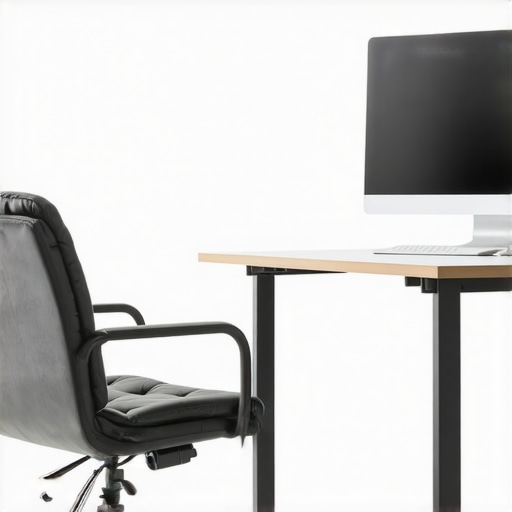
Once you’ve started to get those chiropractic adjustments and you’re hitting your dead bugs, you’ll realize that the biggest enemy isn’t the gym—it’s your desk. I spent years perfecting my workout only to undo it all by spending eight hours collapsed in a cheap office chair. The real shift happened when I learned how to transition from a sitting desk to a standing desk the right way. It wasn’t about standing all day, which actually hurt my feet, but about alternating positions every thirty minutes. I personally use a Topo Mat—it’s a contoured standing mat that encourages your feet to move and stretch while you work. This keeps your glutes engaged and prevents that ‘static’ load that leads to a flare-up. If you’re struggling with the transition, how to manage a flare-up of lower back pain at work is a resource I wish I had back when I first started swapping between sitting and standing.
The gadgets that actually made the cut
I’ve tried every posture corrector and foam roller on the market. Most of them are junk. However, a few specific tools changed my life. First is the McKenzie Lumbar Roll. Knowing how to use a lumbar roll correctly in an office chair is the difference between genuine support and just feeling like you have a log behind your back. It maintains that natural inward curve of your lower spine, which stops the ‘slump’ before it starts. Second is monitor arms. Most of us have our screens too low, which forces the chin to lead the body. Learning how to adjust your monitor to stop reaching with your chin was the final piece of the puzzle for my recurring neck tension. I use a dual-arm gas-spring mount so I can pull my screens to eye level whether I’m sitting or standing. According to Dr. Stuart McGill, a world-renowned spine biomechanics expert and author of Back Mechanic, the cumulative load of poor ‘spinal hygiene’—the way we move during daily tasks—is often a greater predictor of injury than any single heavy lift. This is why I obsess over these small adjustments; they are the 1% gains that keep you out of the doctor’s office.
How can I keep my spine healthy for the long haul?
Maintenance isn’t a destination; it’s a daily ritual. I look at my spine like a high-performance vehicle. You don’t just fix it once and drive it forever; you need oil changes and alignment checks. This is why I follow the ultimate guide to improving mobility and posture in 2025 as a baseline for my weekly routine. I predict that in the next five years, we will see a massive surge in bio-integrated wearables—clothing with haptic sensors that gently vibrate the moment your pelvis tilts into a compromised position. We are moving away from ‘fixing’ pain and toward real-time preventative feedback. For now, I rely on mobility hacks: simple adjustments for a more active life to keep things fluid. My biggest advice? Don’t wait for a ‘pop’ to care about your alignment. I want you to try one specific thing today: check your screen height. If the top third of your monitor isn’t at eye level, fix it right now. It’s the easiest win you’ll get all week.
The Hard Truth About My Failed Pursuit of the Perfect Crack
For years, I believed that a louder ‘pop’ during an adjustment meant I was getting more ‘fixed.’ I was wrong. The sound is just gas releasing from the joint; the real magic happens when you pair that mobility with active strength. I learned that chiropractic adjustments unlock a pain-free lifestyle today only if you teach your brain how to hold onto that new alignment. Another lightbulb moment was realizing that my ‘tight’ hamstrings weren’t actually short; they were holding on for dear life because my pelvis was unstable. Once I stopped stretching them and started bracing my core, the tightness vanished. I also finally understood that why chiropractic care is your secret weapon for better posture lies in its ability to reset the nervous system, not just the bones. It’s about restoring clear communication between your brain and your body so your muscles can finally relax.
My Minimalist Toolkit for Spine Longevity
You don’t need a thousand-dollar setup to find relief, but you do need a few high-impact tools that actually serve your anatomy. I never travel without a McKenzie Lumbar Roll because most airplane and car seats are designed for aesthetics rather than spinal health. If you’ve ever felt that deep ache after a two-hour drive, you know how vital a simple support can be. I also swear by using a 36-inch high-density foam roller, but not for ‘rolling out’ knots. Instead, I use it as a longitudinal postural guide to open up my chest after a long day of typing. For those looking for a structured path forward, I highly recommend following the ultimate guide to improving mobility and posture in 2025 to avoid the trap of doing random exercises that don’t address your specific imbalances. Lastly, I’ve integrated the 3-minute evening routine for a less stiff morning which has done more for my daily comfort than any supplement or expensive gadget ever could.
Take Back Control of How Your Body Feels
You aren’t destined to live with a ‘bad back’ just because of your desk job or your age. The human body is incredibly adaptable, even when it feels like it’s failing you. By focusing on small, consistent wins—like fixing your monitor height or mastering the 30-second move that opens up tight hips in seconds—you create a snowball effect of resilience. The goal isn’t to look like a statue; it’s to build a body that can handle the demands of your life without breaking. Start today, stay patient with the process, and listen to the signals your body is sending you. Have you ever noticed that your back feels worse after a high-stress week, or is it usually tied to a specific activity like driving or gardening for you? Let me know in the comments below!