
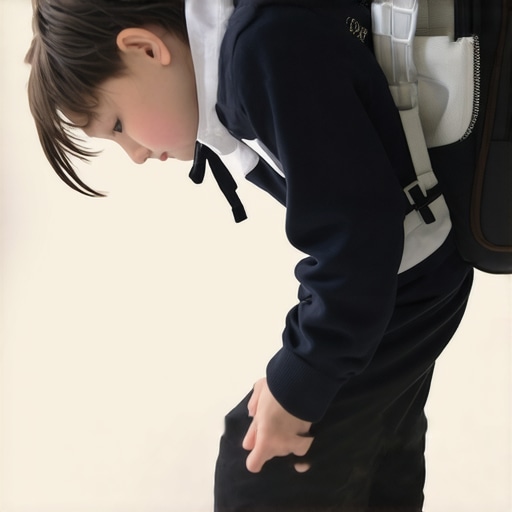
I watched my son, Leo, try to swing his backpack onto his shoulders last Tuesday. He actually grunted. Then, he tilted forward at a forty-five-degree angle just to keep from falling over. It hit me right then—I was letting him carry half his body weight to school every morning. I felt like a total failure of a neighborly expert. I had spent so much time worrying about my own tech neck and screen-time habits that I completely ignored the mini-crisis happening on my kid’s spine. Today, I’m going to show you exactly how to spot the red flags before your child starts complaining of aches that no ten-year-old should have. We’re going to fix the load, the fit, and the way they carry it so they can actually move like a kid again. [image_placeholder_1]
Stop the Hunch Before It Becomes a Habit
The first mistake I made—and it’s a big one—was choosing style over substance. I bought the flashy, single-strap bag because it looked cool. Big mistake. That single strap was absolute murder on Leo’s alignment. If you see your child hooking their thumbs under the straps to lift the weight off their shoulders, or if they have red marks when they take the bag off, you’ve already waited too long. It’s similar to the proper way to carry a single strap laptop bag; balance is everything. I used to think he’d just tough it out, but spinal health isn’t a grit competition. According to the American Occupational Therapy Association (AOTA), a backpack should never weigh more than 10% to 15% of a child’s total body weight. For a fifty-pound kid, that’s only five to seven pounds. Have you ever actually weighed your child’s bag? You might be horrified by what you find.
Is a heavy bag really enough to cause long-term problems?
You might be wondering if I’m being a bit dramatic. I get it. We all carried heavy bags back in the day, right? But the sheer volume of stuff kids carry now is different. When that weight pulls them backward, they compensate by leaning forward or arching their lower back. This constant compensation can lead to the same issues adults face, like needing to know how chiropractic adjustments enhance posture and mobility much earlier than they should. Have you noticed your child complaining of headaches or a heavy feeling in their neck after school? These aren’t just growing pains; they are often structural cries for help. We need to catch these shifts before they become permanent fixtures of their posture.Last Thursday night, I had Leo dump his entire bag on the living room rug. We found three half-empty water bottles, a rock he thought was cool, and two textbooks he hadn’t opened in a month. This is the first step: the weekly purge. Once you have the essentials, place the heaviest items—usually the laptop or those massive math books—closest to the back panel. If the weight is far from the body, it acts like a lever, pulling the shoulders back and forcing the neck to jut forward. This forward head posture is a major contributor to why we see kids needing to improve posture through mobility earlier than ever.
Pack the Heavy Stuff Against the Spine
Think of the backpack like a hiker’s rucksack. The center of gravity needs to be as close to the body as possible. I watched Leo struggle until we moved his heavy binder from the front pocket to the sleeve right against his back. He immediately stopped leaning forward. When the weight is distributed correctly, it minimizes the strain on the tiny muscles of the upper back. This simple adjustment helps prevent the chronic tension that often leads people to seek chiropractic care for better posture later in life. If the bag has compression straps on the sides, use them to cinched the contents down so they don’t shift while your child is walking or running for the bus.
Keep the Bag High and Tight
If the bottom of the backpack is bumping against your child’s lower back or butt, it is far too low. A bag that hangs low creates a massive amount of torque on the lumbar spine. I tightened Leo’s straps until the bag sat snugly against the curve of his upper back. He actually looked taller instantly. It’s a similar principle to targeted mobility exercises—you want to support the spine’s natural alignment rather than fighting against it.
Use the Chest and Waist Straps Every Time
I know, they look a bit dorky, and most kids want to let them dangle. But those extra straps are there for a reason. The chest strap pulls the shoulder straps inward, preventing them from sliding off narrow shoulders and taking the pressure off the outer edges of the collarbone. The waist strap is even more important because it transfers up to 50% of the load from the shoulders to the hips. This is exactly how to fix the gamer lean in teenagers and younger kids before the habit of rounding the shoulders becomes permanent. When Leo started using his waist strap, he stopped complaining about his shoulders feeling ‘itchy’—which was his ten-year-old way of describing nerve irritation from heavy straps.
The Two Finger Gap Rule
You should be able to slide two fingers easily between the shoulder strap and your child’s shoulder. Any tighter, and you risk compressing the nerves and blood vessels, which can lead to tingling or numbness in the arms. Any looser, and the bag will sway with every step, creating a repetitive jarring motion on the spine. This kind of constant micro-trauma is a common reason why traps stay tight even after rest. Checking this gap takes five seconds before they head out the door and can save them hours of discomfort during the school day.
I used to yell at Leo to stand up straight like he was in the Marines. I thought rigidity was the cure for his backpack-induced slouch, but here is the contrarian truth: forced perfect posture is a recipe for exhaustion. When you force a child into a static, upright position, you aren’t fixing their alignment; you are just fatiguing their stabilizer muscles until they eventually collapse even further. In fact, research published in the Journal of Physical Therapy Science suggests that postural stability is more about the body’s ability to adapt to movement than staying in one fixed spot. This is why your perfect posture is actually causing muscle fatigue rather than preventing it.
Can a perfectly still child still develop back pain?
The answer is a resounding yes. We often focus on the bad positions, but the real enemy is lack of movement. If Leo sits for three hours with his back glued to the chair, even in a correct position, his tissues aren’t getting the blood flow they need. This is the nuance most people miss: mobility is the fuel for good posture. Without it, you are just trying to balance a frozen statue. I have started implementing mobility boosts for posture throughout his homework sessions, encouraging him to fidget or stretch every twenty minutes to keep the joints lubricated.
Don’t Fall for the Posture Brace Trap
One of the biggest oops factors I see parents fall for—and I almost did too—is the posture brace. It looks like a quick fix, right? Just strap them in and the problem is solved. But here is the trap: braces do the work for the muscles. If the brace holds the shoulders back, the muscles that should be doing that job simply go on vacation. Over time, those muscles atrophy. This is exactly why most posture braces actually make your back weaker in the long run. You want a strong spine, not a lazy one supported by velcro.
Instead of looking for a magic device, we should be looking at the ultimate guide to improving mobility and posture in 2025 to understand how the whole system works together. It is about building a body that wants to be in alignment because it feels good, not because it is forced. Have you ever fallen into this trap of buying a quick-fix brace? Let me know in the comments—I would love to hear if you saw the same counterproductive results that I did.
Once you’ve sorted out the backpack, the real work begins because posture isn’t a one-and-done project; it’s a lifestyle you’ve got to bake into your family’s daily rhythm. I realized this when I noticed Leo’s shoes were worn down heavily on the inside edges. It wasn’t just his back; his foundation was crumbling. If the feet aren’t supportive, the hips tilt, and the spine has to curve just to keep the head level. I started looking into the best way to transition to zero-drop shoes safely for the whole family because traditional sneakers with huge heels were essentially pushing us into a permanent forward lean. Research published in the Journal of Foot and Ankle Research suggests that minimalist footwear can significantly increase intrinsic foot muscle strength, which provides a more stable base for the entire skeleton. Ignoring the feet is one of the quickest ways to see the hidden connection between flat feet and chronic hip pain manifest in your kids before they even hit high school.
The Simple Roll That Saves My Mid-Back
When Leo is doing his homework, I don’t let him sit on the sofa with a laptop anymore. That’s a one-way ticket to a rounded thoracic spine. Instead, we use a firm foam roll or a rolled-up towel as a makeshift lumbar support. Learning the proper way to use a lumbar roll in your office chair or a kitchen chair is a game-changer. It forces the lower back to maintain its natural curve, which naturally keeps the shoulders from slumping. I’ve found that this one small physical cue is worth a thousand verbal reminders to ‘sit up straight.’ It’s about making the environment do the work for you so you don’t have to rely on a ten-year-old’s willpower.
How can I make these posture changes last for years?
Consistency beats intensity every single time. You don’t need a grueling two-hour mobility session; you need three minutes of movement every time they transition from school to home. We call these ‘movement snacks.’ I use mobility hacks simple adjustments for a more active life like having Leo do a quick chest stretch against the doorframe before he’s allowed to turn on his gaming console. Over time, these small wins accumulate. If you feel like your child’s alignment has already shifted too far, remember that chiropractic adjustments unlock a pain-free lifestyle today by resetting the joint mechanics so those daily habits actually have a chance to stick. Without that reset, you’re often just stretching tight muscles that are protecting a restricted joint.
The High-Tech Future of Kids Posture
I predict that in the next five years, we are going to see a massive surge in ‘smart’ school uniforms. We are already seeing prototypes of shirts with embedded haptic sensors that vibrate gently when the shoulders round past a certain angle for more than sixty seconds. While it sounds a bit Sci-Fi, this kind of real-time biofeedback is exactly what’s needed to combat the ‘screen-slump’ epidemic. Until then, we are the sensors. My advanced tip for you this week: Take a side-profile photo of your child standing naturally today, and then again in three months. You can’t manage what you don’t measure, and seeing that gradual shift toward a more upright, confident stance is the best motivation you’ll ever get to keep these routines going.
Stop Being the Posture Police and Start Being the Architect
I learned the hard way that yelling ‘sit up straight’ actually creates a stressful environment where my son’s muscles tightened up rather than relaxed. After months of frustration, I realized that the environment is the real teacher. If the bag is heavy, they will slouch. If the chair is too big, they will slump. Here are the lightbulb moments that changed how I approach my family’s spinal health:
- The ‘Nagging’ Effect: Constant verbal corrections often lead to muscle guarding. Instead, use mobility boosts for posture to make movement feel like a game rather than a chore.
- Posture is an Action: We shouldn’t aim for a static ‘perfect’ pose. A healthy spine is one that moves frequently. This is why how chiropractic adjustments enhance posture and mobility is so vital; it keeps the joints ready for movement.
- Weight is Invisible: You cannot eyeball 10% of a body weight. Use a scale once a week to keep the burden honest.
A Parent’s Survival Kit for Healthier Backs
Over the years, I have vetted dozens of products, but only a few have earned a permanent spot in our house. These aren’t just gadgets; they are tools that support the work we do to maintain alignment. [image_placeholder_E]
- A Digital Luggage Scale: This is the only way to truly monitor the 10-15% rule. We keep ours right by the mudroom.
- Minimalist Footwear: To fix the back, you have to fix the feet. I highly recommend researching the best way to transition to zero-drop shoes safely to give your kids a stable foundation.
- Firm Foam Rollers: We use these during screen time to prevent the classic thoracic slump. It’s one of the simplest mobility hacks simple adjustments for a more active life that actually sticks.
- The 2025 Posture Roadmap: I constantly refer back to the ultimate guide to improving mobility and posture in 2025 to ensure we are using the most current, science-backed strategies for our home routine.
Your Child Deserves to Move Without Restriction
Watching Leo run to the bus now—without the 45-degree lean—is the best reward for the small changes we made. It wasn’t about one big ‘fix,’ but rather a series of tiny adjustments to how he carries his world every day. Remember that a flexible, strong spine is the greatest gift you can give your growing child. If you feel like you are fighting an uphill battle with their alignment, don’t forget that chiropractic adjustments unlock a pain-free lifestyle today by giving the nervous system a much-needed reset. You have the tools now; it’s time to put them into practice and help your kid feel light on their feet again.
Have you actually weighed your child’s backpack this week? Let me know the surprising (or scary) number you found in the comments below!