

I remember lying on my threadbare living room rug, face turning a deep shade of purple as I cranked out my third set of fifty sit-ups. I thought I was doing the right thing. I thought the burning in my lower back was just “the weakness leaving the body.” Boy, was I wrong. That burning was actually my L5-S1 disc screaming for a ceasefire. One morning, I couldn’t even reach for my coffee mug without a lightning bolt of agony shooting down my leg. It was a visceral, terrifying wake-up call that changed how I looked at fitness forever. Today, we’re going to talk about why that classic gym-class move might be the very thing keeping you in a cycle of chronic pain. If your back pain feels like a dull, heavy pressure that spikes into a sharp pinch when you bend forward, this guide is for you. We’re going to swap those outdated crunches for movements that actually support your life and longevity.
Stop Grinding Your Vertebrae for the Sake of Abs
I made the classic mistake of equating abdominal burn with core stability. In my early thirties, I spent months doing high-rep floor work, only to find that your breathing pattern and spinal alignment were completely trashed by the repetitive flexion. I was effectively training my spine to be angry. According to research published in the Journal of Biomechanics, a traditional sit-up can place over 3,300 Newtons of compressive force on the lumbar spine—well above the limits recommended for safety by many occupational health standards. If you are already dealing with disc issues or localized inflammation, you are essentially playing Russian Roulette with your mobility. Instead of forcing your spine to flex under load, you should be focusing on how to strengthen your core without ever doing a crunch. It’s about creating a functional stiffness that protects you, not a repetitive bending that breaks you down over time.
Is the traditional crunch really worth the risk to your discs?
Many people fear that if they stop doing sit-ups, they’ll lose their core strength or end up with a slouching posture. I certainly felt that way until my chiropractor explained the mechanics of spinal load. But the truth is, a strong core is about resisting movement to protect the nerves, not creating excessive motion in the lower back. When I switched to the dead bug variation that actually protects your spine, my back pain didn’t just lessen—it vanished within weeks. Have you ever felt that terrifying pop or a deep, sickening ache after a core workout? If so, you aren’t alone, and you aren’t failing; you’re just using the wrong tools for your specific anatomy. We need to start prioritizing the best exercises for building a spine that doesn’t ache rather than just following what we saw in 1980s workout videos. This isn’t just about fitness; it’s about being able to pick up your groceries or play with your kids without wondering if your back is going to go out again. Let’s get into the nitty-gritty of what’s actually happening under the skin when you flex your spine.
Turn Your Core into a Pressurized Shield
Instead of pulling your belly button toward your spine—a common mistake that actually flattens the natural curve of your lower back—you need to think about your core as a pressurized soda can. If the can is full and sealed, you can’t crush it. If it’s empty or the top is open, it buckles under the slightest pressure. To build this internal pressure, you must engage in 360-degree bracing. This means feeling your sides and your lower back expand along with your stomach when you breathe. This simple shift in revolutionize your posture with targeted mobility exercises creates a rigid ‘canister’ that protects the nerves exiting your spine. I remember the first time I tried this while carrying a heavy bag of mulch. Usually, I’d feel a twinge immediately. By bracing properly, the weight felt like it was resting on a solid pillar of stone rather than my fragile lumbar joints. If you are struggling to tell the difference between nerve pain and muscle soreness, this bracing technique is often the first step in identifying if your pain is coming from a lack of stability. 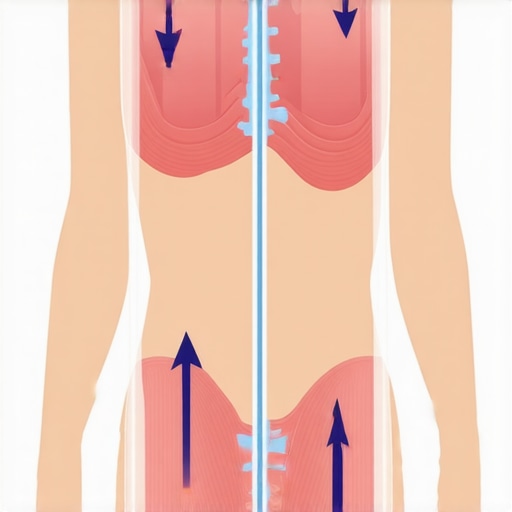
Move from Your Hips and Not Your Discs
Your spine is a series of small joints designed for subtle movement, while your hips are massive ball-and-socket joints designed for heavy lifting. Most chronic back pain stems from the ‘hinge’ happening at the L4 or L5 vertebrae instead of the hips. Think of your spine like a fishing rod; it can bend, but if you repeatedly snap it in the same spot, it will eventually splinter. To fix this, you have to master the hip hinge secret for pain-free deadlifts and daily life tasks. Practice standing with your feet shoulder-width apart and ‘chopping’ at your hip creases with your hands, pushing your butt back toward the wall behind you as if you’re trying to close a car door with your glutes. Your shins should remain vertical. When I finally learned to hinge, I realized I had been ’rounding’ into every task—from tying my shoes to picking up my dog. Mastering this movement is exactly how to safely pick up a heavy box from the floor without feeling that dreaded ‘pop’ in your lower back.
Keep Your Spine Neutral While the World Moves Around You
Once you have the brace and the hinge, you need to apply anti-rotation. Life doesn’t happen in a straight line; you’re reaching for a toddler or grabbing a grocery bag from the backseat. This is where chiropractic adjustments unlock a pain-free lifestyle today by ensuring your joints are actually capable of holding these positions. Anti-rotation exercises, like the Pallof press, teach your core to resist being twisted against your will. This is vital because rotation combined with flexion is the ‘perfect storm’ for disc herniation. I once tried to ‘stretch out’ a tight back by doing aggressive seated twists, only to find my back spasming for three days straight. It wasn’t until I focused on how to fix your pelvic tilt for a flatter stomach look and spinal stillness that the spasms stopped. You aren’t training to be a contortionist; you are training your core to be a master of ‘no.’ By telling your spine to stay still while your limbs move, you take the workload off your discs and put it back on your powerful hip and leg muscles.
Don’t Turn Your Spine Into a Statue
Many ‘experts’ will tell you that the secret to a healthy back is to pin your shoulders back and sit like you’re in a military inspection. I’m here to tell you that’s a recipe for disaster. While we’ve established the importance of stability for heavy lifting, there is a massive nuance people miss: stability is for load, but variability is for longevity. When you try to maintain a ‘perfect’ static position for eight hours at a desk, you’re creating ischemic fatigue—essentially starving your muscles of oxygen because they never get a micro-break to let blood flow back in. The truth about perfect posture and why it doesn’t exist is that your body thrives on the ‘next’ position, not a fixed one. Research published in Scientific Reports suggests that individuals with chronic back pain actually exhibit less postural sway than healthy individuals. Their bodies have become so rigid in an attempt to ‘protect’ the spine that they’ve lost the natural, fluid adjustments that keep discs hydrated and nerves free from compression.
Why Your Hamstring Stretch is Actually a Nerve Tug-of-War
Here is a trap I see daily: the ‘stretching obsession.’ You feel a tight, pulling sensation in the back of your legs, so you spend twenty minutes a day touching your toes. But what if that tightness isn’t a short muscle? Often, it’s your sciatic nerve being put under tension because your pelvis is out of alignment. If you keep pulling on a nerve that is already irritated, you’re just fueling the fire of localized inflammation. This is why stretching your hamstrings won’t fix your tight back; you’re effectively playing tug-of-war with your nervous system. 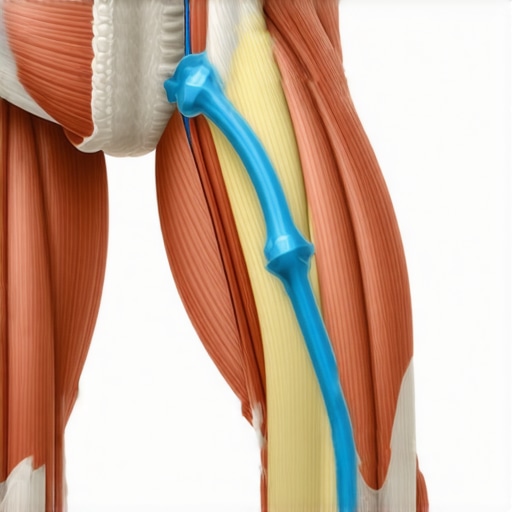 Instead of mindless pulling, you need mobility boosts for posture that address the joint’s position first. If the hip joint isn’t centered, the brain will keep the muscle ‘tight’ as a secondary stabilizer. It is a protective reflex, not a flexibility deficit.
Your Back Pain Might Actually Be an Ankle Problem
Another hidden nuance is regional interdependence. We often look at where the pain is, but the cause is usually a joint above or below. If you have stiff ankles from years of wearing restrictive shoes or old injuries, your lower back has to pick up the slack every time you squat, bend, or even walk across the room. This is the hidden link between your ankle mobility and your lower back that most people ignore in their recovery journey. When the ankle can’t move, the lumbar spine is forced to flex under load, leading back to those disc issues we discussed earlier.
Can you actually reverse years of ‘tech neck’ through adjustments alone?
I often hear from people who worry they’ve ‘melted’ into their desk chairs permanently. The sophisticated truth is that chiropractic adjustments unlock a pain-free lifestyle today by resetting the neuro-modulatory response of your spine. It’s not just about a mechanical ‘click’; it’s about restoring the high-speed communication between your vertebrae and your brain. However, if you don’t learn the difference between a sore muscle and a misaligned joint, you’ll fall back into old patterns within hours. You must pair the mechanical fix with the behavioral shifts in how you move through your day. Have you ever fallen into the trap of thinking you just need to ‘stretch more’ to fix your pain? Let me know in the comments below!
Stop Overcomplicating Your Routine with Expensive Gadgets
Maintenance isn’t about a two-hour gym session once a week; it’s about the microscopic habits that populate your day. I call these ‘movement snacks.’ I used to think I could out-train a desk job with a heavy deadlift session, but I was wrong. Real progress happens in the gaps. For example, learning mobility hacks simple adjustments for a more active life transformed my workday from a slog into a series of resets. I started using a simple timer on my desktop that forces me to stand every 25 minutes. It’s not just about standing; it’s about shifting the load. Most people wait until they are in pain to move, but by then, the tissue ischemia has already set in. You have to move while you still feel good to stay feeling good.
The Tiny Tool That Actually Fixed My Lower Back
When it comes to tools, I’ve tried every expensive gadget on the market—from vibrating sensors to $2,000 chairs. Most of them are junk because they try to do the work for you. The one thing that actually saved my back during long drives and office hours was learning how to use a lumbar roll correctly in an office chair. Most people place it too low near the tailbone, which actually forces the spine into a weird, hyper-extended position. According to a study published in the Journal of Bodywork and Movement Therapies, maintaining the natural lumbar lordosis during prolonged sitting significantly reduces the intradiscal pressure compared to slumping. It’s a cheap, low-tech fix that yields high-tech results. I also became obsessed with how to use your phone at eye level to save your spine. It sounds silly until you realize you’re spending hours a day with sixty pounds of force on your neck just to scroll through social media.
How do I maintain a healthy spine without it becoming a full-time job?
The secret is integration, not isolation. You don’t need a separate ‘posture hour.’ You need to weave mobility boosts for posture into things you’re already doing. Brush your teeth while standing on one leg to improve your balance and hip stability. Take your phone calls while pacing instead of hunched over a laptop. This is where how chiropractic adjustments enhance posture and mobility really shines—the professional adjustment clears the mechanical path, and your daily habits keep that path open. If you only see a chiropractor but return to a C-shaped posture for eight hours, you’re just spinning your wheels.
Future-Proofing Your Body with Wearable Feedback
Looking forward, I predict we are going to see a massive shift toward biofeedback wearables that don’t just ‘vibrate’ when you slouch, but actually track your pelvic tilt and diaphragmatic breathing rate in real-time using AI-driven sensors. We are moving away from passive care—where someone ‘fixes’ you—and toward active, data-driven self-correction. The ultimate goal is to build a body that doesn’t need a gadget to tell it how to stand.  If you really want to level up right now, I challenge you to try the ‘360-degree breath’ every time you sit down at your desk today. It’s the single most effective way to internalize stability without needing a single piece of equipment.
What I Wish I Knew Before My First Major Back Spasm
After years of trial and error, I realized that pain is often a messenger, not a death sentence for your fitness goals. One of the biggest shifts was understanding that improving posture through mobility practical chiropractor strategies isn’t about standing stiffly like a statue; it’s about giving your joints the freedom to move through their full range without friction. Here are the lightbulb moments that changed everything for me:
- Stop chasing the site of the pain: I spent years rubbing my lower back when the real culprits were my locked-up hips and frozen ankles.
- Movement is medicine, but dosage matters: Doing 500 reps of an exercise won’t fix a structural misalignment; it just fatigues your body’s compensation patterns.
- Stability is quiet: A truly stable core doesn’t look like a shaking, straining athlete; it looks like a person breathing calmly while carrying a heavy load.
Low-Tech Essentials for High-Performance Spinal Health
You don’t need a gym full of expensive gadgets to maintain a healthy spine, but you do need a few high-quality habits and tools. I swear by the 3-minute evening routine for a less stiff morning to decompress after a long day at the office. If you’re looking for professional help, make sure you know how to choose an Omaha chiropractor that actually listens to your wellness goals rather than one who just puts you on a generic treatment plan. I also keep a simple lumbar roll in my car; it’s the most underrated investment I’ve ever made for my long-term disc health.
Your Journey Back to Effortless Motion
It is incredibly easy to feel defeated when your back ‘goes out’ for the tenth time. But remember, your body is designed to heal and adapt. #IMAGE_PLACEHOLDER_E# By focusing on 360-degree bracing and hip-hinging, you are essentially rewriting the internal software of your nervous system. This is why chiropractic care is your secret weapon for better posture; it clears the mechanical noise so you can start moving with intention again. Don’t wait for the ‘perfect’ time to start. Start with one better breath, one better hinge, and one less floor crunch today. Your future self will thank you for the resilience you’re building right now.
Have you ever tried a “miracle stretch” that ended up making your back feel tighter or more painful the next day? I’d love to hear about your experience in the comments below!