

I’ll never forget the day I almost threw my computer out the window. My right wrist felt like it was being scorched by a tiny blowtorch every time I typed a simple email. Like most people, I assumed I had carpal tunnel. I bought the ergonomic mice, the gel pads, and those Velcro braces that make you look like a mediocre bowler. I even went down a deep rabbit hole of why your wrist hurting might be a mid-back problem, which got me closer, but I was still missing the real “why.” The real lightbulb moment happened when a mentor of mine watched me reach for my coffee and asked why my chin was lead-climbing my chest. I was so focused on the pain in my hand that I couldn’t see my posture was collapsing from the top down.
Stop Bracing Your Wrist and Look Up Instead
For years, I made the classic mistake of treating the fire where I saw the smoke. I was so focused on my hand that I ignored the fact that the nerves powering those fingers actually start in the cervical spine. If your neck is out of alignment, it’s like kinking a garden hose at the spigot and wondering why the nozzle isn’t spraying. This is where chiropractic adjustments unlock a pain-free lifestyle because they address the source, not just the distal ache. Today, we’re going to peel back the layers of this hidden connection and show you how a “neck problem” can masquerade as a “wrist injury.” Have you ever felt that annoying tingle in your fingers even when you aren’t using your mouse?
Is a neck adjustment actually worth the hype for hand pain?
It sounds a bit strange at first, doesn’t it? You hurt in one spot, and someone wants to adjust a joint six inches away. But the science is solid. According to the Mayo Clinic, cervical radiculopathy—essentially a pinched nerve in the neck—can cause pain that radiates all the way down to the hand, often mimicking carpal tunnel syndrome to a T. I wasted six months on wrist stretches that did absolutely nothing because the nerve was actually being choked at the base of my neck. Improving your situation isn’t about more ice packs; it’s about how chiropractic adjustments enhance posture and mobility to free up those neural pathways. Learning the secret to fixing tech neck without quitting your phone was a total game-changer for my daily comfort. Let’s dive into why your posture is secretly sabotaging your grip strength and what you can do about it right now.
Check Your Hardware Before You Blame Your Software
First, we need to see if your ‘garden hose’ is actually kinked. You can’t fix what you haven’t measured. Grab a chair and learn how to test your own spinal rotation at home. If you find you can’t look over your shoulder without shifting your whole torso, that’s a massive red flag. Your neck is essentially stuck in a ‘forward’ lock, which puts maximum tension on the nerves going to your wrist. Think of your spine like a mast on a ship; if the mast leans forward, all the rigging—your nerves—gets pulled tight and eventually frays. 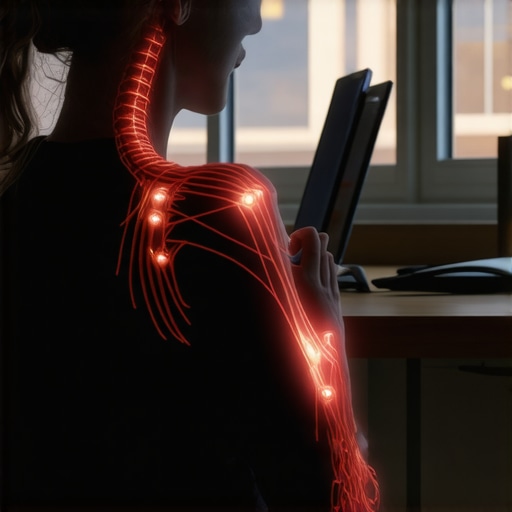
Why Your Head Feels Like a Heavy Bowling Ball
The average human head weighs about 10 to 12 pounds. For every inch you lean forward, that weight effectively doubles. I remember trying to power through a 12-hour coding session with a monitor that sat about three inches too low. My wrist was screaming. I was wearing two braces and taking ibuprofen like candy. Then, I spent five minutes on the simple change to your monitor height that kills headaches and—miraculously—the fire in my wrist dampened within days. I wasn’t healing my wrist; I was just finally letting my neck relax so it could send clean signals to my hand. This is why why chiropractic care is your secret weapon for better posture—it resets the structural foundation so your muscles don’t have to work overtime just to keep your eyes level.
Try the Simple Wall Stretch Right Now
Next, we have to open the chest. When you hunch, your pectoral muscles shorten and pull your shoulders forward, creating a physical bottleneck for blood flow and nerve signals. It’s essentially a traffic jam at the top of your arm. Use the wall stretch that fixes slumped shoulders fast twice a day. It feels like pulling apart a sticky grilled cheese sandwich, but it’s necessary to create space. While you’re at it, you should also learn how to loosen your chest muscles after a day of hunching to prevent that ’rounded’ look from becoming permanent.
Breathe Into Your Back to Free Your Ribs
Most of us breathe into our chests when stressed, which hitches the shoulders up toward the ears. This constant ‘shrugging’ creates tension in the mid-back that radiates down the arm. You need to learn how to breathe into your back to relieve rib tension. By expanding the back of your rib cage, you create an internal ‘massage’ for the nerves exiting the thoracic spine. This was the final piece of the puzzle for me. Once I stopped the shallow chest breathing, the ‘phantom’ wrist pain that wouldn’t go away finally stayed gone. It turns out, my body wasn’t broken; it was just crowded.
Why Your Perfect Sitting Posture is Actually Making You Tired
We’ve been told since kindergarten to “sit up straight,” but the truth is that “perfect posture” is a bit of a myth when it’s static. Most people think it means sitting like a statue at 90-degree angles. However, expert research, including studies published in the Journal of Physical Therapy Science, suggests that prolonged static loading—even in so-called “ideal” positions—can lead to muscle ischemia and fatigue. This is why your perfect posture is actually causing muscle fatigue. You aren’t designed to be a statue; you’re designed to move. The real secret to spinal health isn’t finding one perfect position; it’s finding your next position every 20 minutes. 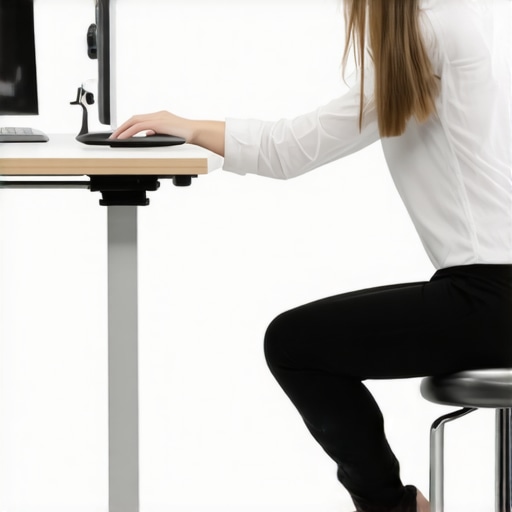
The Posture Brace Trap That Weakens Your Core
I often see people buying those Velcro posture straps thinking they are a shortcut to a pain-free life. But the reason why most posture braces actually make your back weaker is quite simple: your muscles stop doing their job. They “offshore” the structural labor to the brace. As soon as you take it off, your spine collapses because your internal stabilizer muscles have essentially gone on vacation. It’s a classic “use it or lose it” scenario. Instead of relying on a crutch, we need to understand the link between mobility and posture so your body can support itself naturally.
Why does my back feel tighter after I spend 20 minutes stretching?
This is the nuance most people miss, and it’s a total game-changer for those dealing with chronic aches. If your tightness is coming from a nerve being pulled—like a leash that’s too short—stretching the muscle only yanks on that sensitive nerve even harder. Your brain then tightens the muscle further as a protective mechanism. For example, why stretching your hamstrings might actually make your back pain worse is a classic example of neural tension masquerading as muscle tightness. You cannot stretch your way out of a nerve impingement; you have to create space for the nerve to glide. This is where how chiropractic adjustments enhance posture and mobility becomes so effective—we are resetting the mechanical environment so the nerve isn’t being pinched every time you move.
Stop Doing Neck Circles and Start Moving Intentionally
Most people’s default response to a stiff neck is to roll it in wide, crunchy circles. Please, stop rolling your neck in circles and do this instead: focus on specific, isolated rotations. When you roll your neck aimlessly, you often bypass the stiff segments and overwork the joints that are already hyper-mobile. It’s like trying to untie a knot by pulling both ends of the rope—you just make it tighter. Have you ever fallen into this trap of over-stretching or using a brace that didn’t work? Let me know in the comments.Once you’ve stopped the bad habits, the real work begins: maintenance. I’m not talking about a three-hour gym routine; I’m talking about the gear that stays on my desk and the software that keeps me from reverting into a human pretzel. The most underrated tool in my kit is actually the simplest—a standard lacrosse ball. I use it for tack-and-stretch work between my shoulder blades. Unlike a foam roller, which is often too broad to hit the specific muscles that pull on your ribs, a lacrosse ball allows for pinpoint accuracy. If you’ve ever wondered the truth about foam rolling your lower back, you’ll know that specificity is king when it comes to releasing deep tension.  I also swear by a high-quality monitor light bar. It sits on top of your screen to eliminate glare, which sounds like a luxury until you realize how your vision is forcing your neck into a forward lean just to see the text clearly. When you can’t see properly, your head drifts toward the screen like a moth to a flame. Combine this with the best monitor height for preventing tension headaches, and you’ve essentially fixed 80% of your structural issues without even standing up.
How do I keep my spine healthy for the long haul?
Consistency beats intensity every single time. You don’t need a total life overhaul; you need mobility hacks and simple adjustments for a more active life that fit into your existing schedule. I personally use a micro-break app that locks my screen for sixty seconds every half hour. This forces me to perform the 2-minute drill for better spinal rotation. According to a study published in the British Journal of Sports Medicine, taking frequent movement snacks is significantly more effective for reducing musculoskeletal pain than one long bout of exercise at the end of the day. This is exactly improving posture through mobility with practical chiropractor strategies in action. Looking ahead, I predict we’re going to see a massive shift toward AI-integrated posture monitoring. We are already seeing webcams that can track the forward head carriage angle in real-time, pinging you when you start to slump. It might sound futuristic, but for those of us who lose track of time, it is a lifesaver. This is the future of the ultimate guide to improving mobility and posture in 2025—using technology to save us from the problems technology created. If you really want to level up, stop using a standard chair and try the desk setup trick for people who hate standing desks. Use a stool that encourages a slight pelvic tilt to keep your lower back in its natural curve. My challenge for you today: move your monitor up just two inches using a stack of books and feel the immediate relief in your neck.
Why My Wrist Brace Now Sits in the Trash
The most profound realization I had during this journey was that pain is a liar. It screams at the wrist, but the culprit is often hiding in the shadows of the neck or mid-back. Here are the core truths that finally stuck after years of trial and error:
- Stretching a pinched nerve is like pulling a hair trigger; it only makes the body more defensive and the muscles tighter.
- Micro-movements throughout the day are far more powerful than a single one-hour gym session once a week.
- Your desk setup is either a tool for longevity or a slow-motion injury machine.
The Gear That Actually Earned a Spot on My Desk
I’ve tried every ergonomic gadget under the sun, but only a few actually made a permanent difference. I highly recommend a firm lacrosse ball for those stubborn knots between the shoulder blades; it provides a level of precision a foam roller simply can’t touch. A simple monitor riser or even a sturdy box can change your life by keeping your chin from dipping into that destructive ‘tech neck’ angle. Finally, I trust mobility boosts for posture expert tips for daily adjustments to keep me honest throughout the workday. These aren’t just toys; they are the structural supports for your spine that prevent the ‘kink in the hose’ from returning.
Reclaim Your Focus from the Pain
You don’t have to accept a life of tingling fingers and burning forearms as the mandatory cost of doing business in a digital world. By shifting your perspective from the hand to the spine, you are addressing the root cause rather than just chasing symptoms. Remember that chiropractic adjustments unlock a pain-free lifestyle today because they restore the flow of clear neural information from your brain to your fingertips. Don’t wait until you can’t hold a coffee mug to take action. Start with small, targeted mobility exercises and watch how your body responds when it finally has the room to breathe. Keep an eye on how you enhance your posture with expert chiropractic techniques in 2025 as technology continues to evolve. You’ve got the tools; now it’s time to use them and get back to the work you love. Have you noticed your wrist pain gets worse after a long day of staring at your phone or laptop? Let me know in the comments below!”,”image”:null,”categoryId”:0,”postTime”:””}“`of OTAA. Use standard port 1700. For security, set `auto_provision: false`. Configuration is done via the command line or a configuration file. Ensure the LoRaWAN channel plan (e.g., US915, EU868) matches your hardware. Use `chirpstack-gateway-bridge` for seamless communication.