

It was 8:45 PM last Sunday, and I was deep into a ‘just one more episode’ Netflix binge on the sofa. I shifted my weight, and a sharp, hot needle of pain shot from the base of my skull right down into my shoulder blade. My neck wasn’t just stiff; it felt like it had been set in concrete. Here is the weird part: by 10 AM on Monday, sitting at my ‘boring’ office chair, that pain usually dulls down to a whisper. You would think the weekend is for recovery, right? Wrong. For years, I made the classic mistake of thinking I could ‘rest’ my way out of a stiff neck by basically melting into my upholstery. I even tried those aggressive, self-taught neck cracks—big mistake. I ended up making the inflammation worse because I didn’t understand that stretching your neck can actually trigger more headaches if your joint alignment is already compromised. Today, I am going to show you why your weekend ‘chill’ is a secret trap for your cervical spine and how you can reclaim your Sunday nights without the throbbing pain.
Your Sunday Chill is a Trap for Your Spine
The truth is, your Monday morning desk setup—even if it is not perfect—usually has some semblance of structure. On Sundays, all that goes out the window. We spend hours with our chins tucked to our chests, scrolling through social media or propping our heads up at weird angles against a soft sofa armrest. It is a phenomenon often called ‘Tech Neck,’ and it is more than just a sore muscle. Research published in the Journal of Physical Therapy Science found that sustained forward head posture doesn’t just cause aches; it actually limits your lung capacity by compressing the chest wall. You aren’t just sore; you are literally struggling to breathe deeply while you are ‘relaxing.’ I spent way too long ignoring the best way to sit on a sofa to protect your discs, thinking my spine was indestructible. It wasn’t until I started focusing on improving my posture while using a laptop on the couch that the Sunday night vise-grip feeling started to disappear. When you are slumped, your neck muscles are working ten times harder than they do when you are upright. By the time Sunday night rolls around, they are simply exhausted. This is why learning how to use your phone at eye level is a game-changer for your evening comfort. Have you ever felt that specific Sunday night throb that magically disappears once you are back in your routine on Monday?
Is a professional adjustment really worth the hype?
Many people worry that their weekend stiffness requires a lifelong commitment to a clinic, but often, it is about combining simple mobility hacks with targeted professional help. The goal is to ensure your joints are actually moving correctly so your muscles don’t have to overcompensate during your downtime. When your spine is out of whack, even the softest pillow won’t save you. Real chiropractic adjustments can unlock a pain-free lifestyle by addressing the root mechanical issue rather than just rubbing a sore muscle. I used to be a skeptic myself, until I realized that my ‘weekend rest’ was actually just a recipe for spinal misalignment. We are going to dive into the specific moves that can reset your neck before the Monday morning alarm even rings.
Stop the Sofa Sag Before It Stops You
Think of your spine as a high-performance suspension system on a car. When you spend your Sunday afternoon slumped into a soft couch, it is like parking that car with one wheel on a curb for eight hours straight. The suspension gets stressed, and the frame starts to warp. To fix this, you have to transition from ‘passive’ rest to ‘active’ recovery. I remember one specific rainy Sunday where I spent four hours in a beanbag chair reading. When I finally stood up, I felt like my head was attached to my torso by rusty, un-oiled hinges. I actually had to perform a 30-second drill just to reach my coffee mug on the top shelf without a sharp wince. This ‘locked’ feeling happens because your muscles have literally molded to the shape of your furniture. If you are going to lounge, you need to use a support cushion or learn how to use a lumbar roll correctly even in a casual setting. This simple physical barrier prevents your lower back from rounding, which in turn stops your neck from protruding forward like a turtle. 
Your Chin is the Steering Wheel for Your Spine
The most effective way to reset your alignment is to realize that where your chin goes, your spine follows. When you are looking down at a phone, you are adding up to 60 pounds of pressure to those tiny cervical vertebrae. To combat this, I started implementing a rule: if my elbows aren’t supported, the phone stays down. By propping your arms up on a pillow, you bring the screen to eye level and instantly shave off that mechanical load. This isn’t just about comfort; it is about the link between mobility and posture that determines how you will feel when the Monday morning alarm goes off. If you have already hit the point of no return and the stiffness is set in, you need to focus on gentle decompressions. I found that improving posture through mobility works best when you focus on the ‘stuck’ segments of the mid-back rather than just stretching the neck itself.
Reset Your Internal GPS with Micro-Movements
Static stretching is often a trap. If your joints are misaligned, pulling on the muscles around them is like pulling on a knotted shoelace—it only makes the knot tighter. Instead, use ‘active resets.’ I now swear by a 3-minute evening routine that focuses on thoracic rotation and scapular retractions. One evening, after a particularly long session of ‘couch-potatoing,’ I felt a familiar pinch. Instead of the usual aggressive neck cracks, I spent three minutes doing floor-based mobility work. The difference was night and day; the blood flow returned, and the ‘heat’ in my shoulders dissipated. This works because you are teaching your nervous system that it is safe to let go of the muscle guarding. When you combine these movements with mobility boosts for posture, you are essentially hitting the ‘refresh’ button on your nervous system. If the pain persists, it is usually a sign that a mechanical blockage exists that only chiropractic care as a secret weapon can truly resolve. By clearing the joint interference, your Sunday resets actually start to stick.The biggest lie we are told about spinal health is that there is a ‘perfect’ static position we should maintain all day. Most people spend their lives chasing a military-style rigidity, but the truth about perfect posture is that it doesn’t exist in a fixed state. In my experience, forcing yourself to sit perfectly upright for eight hours is actually more damaging than occasional slouching. Why? Because your spine thrives on movement, not a frozen pose. When you lock yourself into what you think is ‘good’ posture, you create isometric tension that starves your discs of the nutrient-rich fluid they need to stay healthy. I’ve seen countless patients come in with more pain after buying a ‘posture corrector’ because they were fighting their body’s natural mechanics. 
Stop Chasing the Symptom and Find the Source
One major ‘oops’ factor I see with advanced fitness enthusiasts is the tendency to over-stretch. We are conditioned to believe that if something feels tight, we must pull on it. However, why your gentle stretching is actually causing more inflammation often comes down to the fact that the muscle is tight because it is protecting a misaligned joint. If you have a cervical subluxation, your neck muscles will tighten up to prevent further injury. Yanking on those muscles is like yelling at a security guard for locking the door; they are just doing their job. A study in the Journal of Bodywork and Movement Therapies highlights that passive stretching alone rarely changes long-term muscle length if the underlying joint mechanics are flawed. This is where the difference between a sore muscle and a misaligned joint becomes the most important distinction in your recovery.
Why does my alignment fail even with an expensive ergonomic desk?
You can have a five-thousand-dollar chair and the perfect monitor height, but if your brain’s internal GPS—your proprioception—is skewed, you will still end up in pain. When your spine has been misaligned for years, your brain accepts ‘crooked’ as the new ‘straight.’ This is why how chiropractic adjustments enhance posture and mobility is so vital; the adjustment resets that neurological feedback loop. If you are only focusing on your desk setup and ignoring a dull ache in your glutes or mid-back, you are essentially trying to align a car that has a bent frame. You need to combine targeted mobility exercises with structural corrections to see lasting change. I’ve found that even stretching your hamstrings won’t fix your tight back if the issue is actually coming from a tilted pelvis that your brain refuses to level out.
Take the Lead on Your Own Recovery
To truly break the cycle of Sunday night stiffness and Monday morning misery, you have to move beyond the basics. Start looking at improving mobility and posture in 2025 as a lifestyle adjustment rather than a quick fix. Have you ever fallen into the trap of thinking a new gadget or a specific stretch would be the ‘magic bullet,’ only to have the pain return two days later? Let me know in the comments. Real progress happens when you stop trying to force your spine into a box and start giving it the varied movement and professional alignment it craves. Check out these mobility boosts for posture to start your week with a more resilient frame.
Maintaining a healthy spine isn’t about one heroic effort on a Sunday night; it is about the quiet, repetitive choices you make during the other 165 hours of the week. I learned this the hard way after cycling through three different ‘ergonomic’ chairs that all promised to fix my life. The hardware only works if the software—your movement habits—is updated. I finally realized that how your choice of pillow impacts your mid-back health is just as critical as your desk height. If you spend eight hours a night on a surface that collapses under your weight, you are starting every day with a mechanical deficit. I personally switched to a contoured cervical pillow because it prevents my head from rolling into that dreaded forward-tilt while I sleep, keeping my cervical curve neutral without me having to think about it.
Ditch the Fluffy Pillows for Something That Actually Supports You
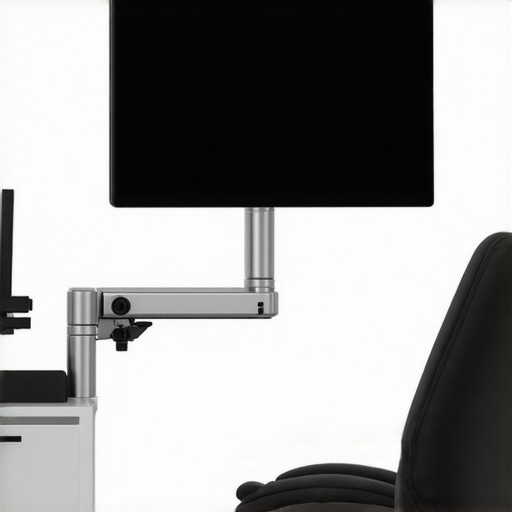
The tools I recommend aren’t necessarily the most expensive ones, but they are the most anatomically honest. For instance, a simple firm lumbar roll is worth ten times more than a high-tech mesh chair that lacks a dedicated pivot point for your lower back. When you use a roll, you are forcing the lumbar spine into its natural lordosis, which automatically stacks your shoulders over your hips. This is a foundational element of improving posture through mobility because it offloads the constant tension on your traps. I also recommend a dedicated monitor riser or a gas-spring arm; you need to learn how to adjust your monitor to stop reaching with your chin. If your screen is even two inches too low, your nervous system will naturally pull your head forward to compensate, leading to that ‘stuck’ feeling by 3 PM.
How do I maintain my spinal alignment over the long haul?
Consistency in maintenance is what separates people who have ‘bad backs’ from those who stay mobile into their 80s. A study published in The Spine Journal (Vol. 15, Issue 8) emphasizes that disc height recovery and nutrient exchange happen most effectively during frequent, short periods of movement rather than one long gym session. This is why I advocate for ‘mobility snacks’—sixty-second resets every hour. When you combine these micro-breaks with regular professional check-ins, the results compound. Many of my readers find that how chiropractic adjustments enhance posture and mobility isn’t just about the immediate crack; it’s about the long-term neurological retraining of your muscles. It keeps the ‘check engine light’ of your body from turning into a full-blown breakdown. By utilizing chiropractic care as your secret weapon, you are ensuring that your joints stay lubricated and your nervous system stays clear of interference.
Your Future Spine Is Watching What You Do Today
Looking ahead, the trend for 2025 and beyond is moving toward biofeedback. We are already seeing wearable sensors that vibrate when you slouch, but I predict we will soon see AI-integrated workspaces that automatically adjust lighting and desk height based on your fatigue levels detected via ocular tracking. Until that tech is perfected, you are the pilot of your own frame. I want you to try one advanced tip tomorrow: raise your monitor or laptop by exactly two inches more than you think you need. Force your eyes to look slightly upward. You’ll feel an immediate release in the base of your skull. If you want to dive deeper into these high-level habits, check out the ultimate guide to improving mobility and posture in 2025 for a step-by-step blueprint. Stop waiting for the pain to return before you take action—your future self will thank you for the alignment you claim today.
After years of struggling, I finally realized that ‘taking it easy’ was often the very thing causing my agony. Here are the three shifts that changed everything for me:
- First, I stopped assuming every ‘crack’ was a good one. In fact, the truth about cracking your own back for relief is that it often provides a temporary endorphin rush without actually fixing the underlying mechanical misalignment.
- Second, I learned that even popular exercises can backfire if your form is slightly off. I spent weeks wondering why my back felt tighter after my morning routine until I discovered why most people do the cat-cow stretch wrong by over-extending the neck.
- Third, I accepted that my spine needs a professional advocate. Finding the right support isn’t about dependency; it is about proactive maintenance. Knowing how to choose an Omaha chiropractor that actually listens to your wellness goals was the definitive turning point in my long-term recovery journey.
My Non-Negotiable Gear for a Resilient Frame
I don’t believe in cluttering your home with endless gadgets, but these three items are essential for anyone who works at a desk or relaxes on a sofa. I personally use a contoured cervical pillow to protect my neck curve while I sleep, a high-density lumbar roll for my office chair to prevent the ‘slump,’ and a simple monitor riser to keep my gaze level. These tools work in tandem with chiropractic adjustments to unlock a pain-free lifestyle by reinforcing structural alignment when you are not in the clinic. I trust these methods because they respect the mechanical reality of your skeleton rather than just masking the surface-level symptoms.
You Deserve a Monday That Does Not Hurt
The cycle of weekend pain and weekday survival is exhausting, but it is not a permanent life sentence. By making small, intentional changes to your movement and your environment, you can reclaim your mobility and your energy. Remember that chiropractic care is your secret weapon for better posture, providing the structural foundation you need to make your new habits actually stick. You have the power to change how you feel by tomorrow morning. Which of these Sunday habits do you find the hardest to break—the deep sofa slouch or the constant phone scrolling? Let me know below!