
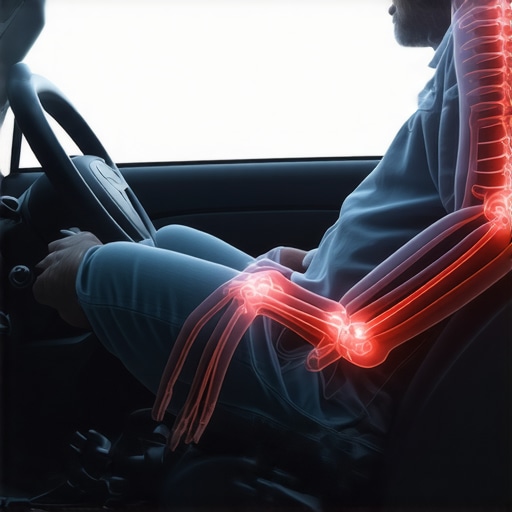
I’ll never forget the rainy Tuesday I had to pull onto the shoulder of I-80 because my right leg was screaming at me. It wasn’t a cramp. It was that unmistakable, white-hot lightning of sciatica. I was only twenty minutes into my commute, yet I felt like I’d been tortured. For months, I tried to tough it out, thinking I was just getting older or that my car simply had ‘bad seats.’ I even made the mistake of ignoring a dull ache in your glutes, assuming it would just go away with enough ibuprofen and a few awkward stretches at red lights. Spoiler alert: it didn’t. Today, I’m going to show you exactly why your car is a sciatica trap and the small, weird adjustments that will finally let you drive without dreading every mile. We are going to fix your seat, your reach, and your mindset so you can actually enjoy a road trip again.
Your Car Seat is Secretly Compressing Your Nerve
The way modern car seats are designed—often with a deep ‘bucket’ shape—actually forces your pelvis into a tucked position, known as a posterior pelvic tilt. This puts immense pressure on your lumbar discs and the piriformis muscle. According to the Mayo Clinic, prolonged sitting, especially in a vibrating vehicle, can significantly exacerbate nerve compression because the body is constantly micro-adjusting to the car’s motion. I spent years thinking I needed a new vehicle, but the real issue was my spinal alignment. If you’ve been struggling with this, you might have noticed why your sciatica feels worse when you drive compared to just sitting at a desk. It is that constant vibration combined with the ‘gas pedal foot’ that keeps your sciatic nerve under constant tension while your muscles are trying to stay stable. Have you ever felt like your leg was ‘fizzing’ before you even left your neighborhood?
Is an expensive ergonomic cushion actually worth the money?
I get it—you’ve probably seen those $100 memory foam wedges on Amazon and wondered if they’re the magic bullet for your back. Honestly? Most people use them wrong. When I first started trying to fix my pain, I just threw a bulky pillow back there and called it a day. All I did was push my hips too far forward and lose my neck support. Instead of buying gadgets, you should learn how to use a lumbar roll correctly—it works just as well in a car as it does at work to maintain the natural curve of your spine. You don’t need a fancy brand; you need the right placement.
Small Tweaks That Save Your Spine
The first thing I changed wasn’t the seat, but how I reached for the controls. We often forget that our upper body affects our lower back. You might need to learn how to adjust your steering wheel to save your shoulders, which in turn lets your mid-back relax and takes the ‘pull’ off your lower spine. When your shoulders are hunched, your whole nervous system is on edge, making you more sensitive to pain. Sometimes, the root cause isn’t even in your back; it’s about how chiropractic adjustments unlock a pain-free lifestyle today by resetting that pelvic tilt that happens when you’re stuck in traffic for an hour. We’re going to dive into the exact seat angles you need to stop the pinch.
Angle Your Hips to Stop the Nerve Pinch
Most car seats create a ‘cradle’ that traps your tailbone below your knees. Imagine your pelvis is a bucket of water; in this position, the water is constantly spilling out the back. This is what we call a posterior tilt, and it’s the primary reason why your sciatica feels worse when you drive. To fix this, adjust the base of your seat so your hips are slightly higher than your knees. If your seat doesn’t tilt, use a small wedge or a folded towel under your sit-bones. You need to learn how to fix a tilted pelvis with three simple moves to ensure your spine stays neutral while you’re reaching for the pedals. 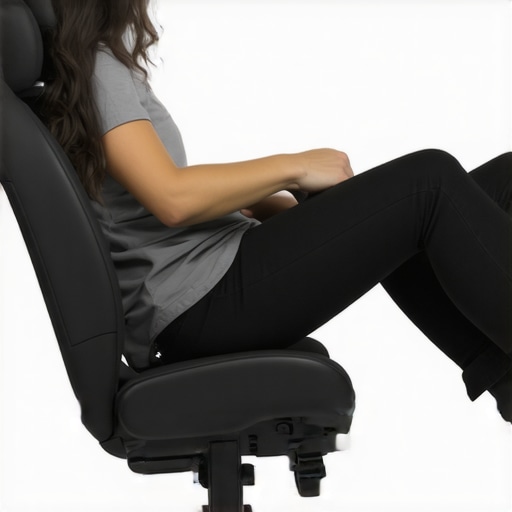
Stop Reaching for the Steering Wheel
If your arms are fully extended, your shoulder blades are pulling away from your spine, which creates a chain reaction of tension down to your lower back. Bring the steering wheel closer to you and lower it slightly. You should be able to rest your wrists on top of the wheel without your shoulders leaving the seat back. When you learn how to adjust your steering wheel to save your shoulders, you’re actually giving your sciatic nerve ‘slack’ by relaxing the upper part of the spinal cord. This prevents the ‘tug-of-war’ happening between your neck and your lower back.
Empty Your Back Pockets Before You Start the Engine
I learned this the hard way during a cross-country move. I had a thick leather wallet in my right back pocket, and about three hours into Nebraska, my entire leg went numb. It was like sitting on a literal rock that was crushing my sciatic nerve against my hip bone. Even a thin wallet creates an imbalance that forces your spine to curve sideways. This is the mistake of ignoring a dull ache in your glutes—it starts as a small pressure point and ends in a full-blown flare-up. Now, everything goes in the center console before I even put the car in gear.
Reset Your Mobility Before Long Hauls
Passive sitting is the enemy of a healthy spine. If you know you have a long drive ahead, implement mobility hacks simple adjustments for a more active life before you even turn the key. A quick 30-second hip hinge or a psoas stretch can prime your muscles for the static load of driving. Sometimes, the physical restriction in your hips is too deep for just a stretch, which is where chiropractic adjustments unlock a pain-free lifestyle today by ensuring your joints aren’t ‘stuck’ in that painful car-seat position. If your foundation is crooked, no amount of seat adjustment will feel perfect. You might also find that choosing to revolutionize your posture with targeted mobility exercises can help your body recover faster once you finally step out of the car and back onto solid ground.
The 110-Degree Rule for Your Backrest
Don’t sit bolt upright like you’re in a dining chair. A slight recline—about 110 degrees—takes the pressure off the lumbar discs while still allowing you to see the road clearly. This small change in angle, combined with knowing how to use a lumbar roll correctly in an office chair or car seat, keeps the natural ‘S’ curve of your spine intact. When I started reclining just two notches further than usual, the ‘lightning’ in my leg stopped appearing after thirty minutes of driving. It’s about creating space for the nerve to breathe rather than squashing it against the seat frame.Most people think that if a muscle feels tight, the solution is to pull on it until it gives up. But here is the truth: for those of us with chronic sciatica, stretching your hamstrings is often the worst thing you can do. When your sciatic nerve is inflamed, it’s already under tension. Stretching the muscle on top of it is like pulling both ends of a frayed rope. You’ll find that why stretching your hamstrings won’t fix your tight back is because the tightness is a protective brake applied by your brain. If you force it open, your body responds with even more inflammation. This is why many find that why your gentle stretching is actually causing more inflammation and prolonging the flare-up rather than fixing the root cause. Instead, focusing on revolutionize your posture with targeted mobility exercises that prioritize stability over length is what finally breaks the cycle.
Stop Stretching Your Hamstrings if Your Back Aches
The real nuance lies in stability, not just flexibility. Dr. Stuart McGill, a world-renowned expert in spine biomechanics, emphasizes that spinal hygiene—the way we move throughout the day—is far more important than any singular exercise. One of the biggest traps I see is people trying to self-adjust their lower back while driving. You know the move: you twist your torso until you hear a loud pop. While it feels good for about five minutes, you’re actually creating hypermobility in the joints that need to stay stable. Understanding the truth about cracking your own back for relief is vital because you’re likely over-stretching the ligaments, which makes your muscles work double-time to hold you together. This is where chiropractic adjustments unlock a pain-free lifestyle today by targeting the specific segment that is stuck, rather than indiscriminately popping everything.
Does cracking your own back actually help or just create more instability?
For most, it’s a temporary dopamine hit that ignores the underlying misalignment. When you constantly pop the same spot, you’re usually hitting the segment above or below the one that’s actually stuck. This leads to a cycle where your muscles never truly relax because they’re guarding a loose joint. Instead of chasing the crack, focusing on the dead bug variation that actually protects your spine helps build the deep core tension required to keep the nerve from getting pinched in the first place.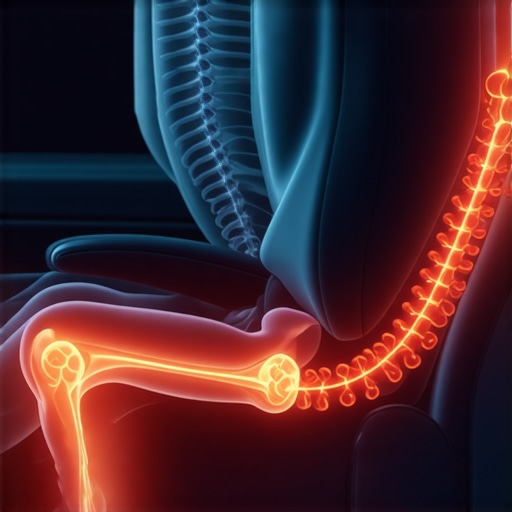
The Hidden Connection Between Your Breath and Your Pelvis
There’s another layer to this: your breath. If you’re a chest breather, you aren’t using your diaphragm to stabilize your spine. This means your lower back muscles have to do all the work of holding you up against the vibrations of the road. This is why your breathing pattern determines your lower back stability more than any lumbar cushion ever could. When you combine poor breathing with a weak posterior chain, you end up with a situation where why your glutes fail to activate during lunges or even while walking, leaving your sciatic nerve completely unprotected. Distinguishing the difference between nerve pain and muscle soreness is the first step in stopping the cycle of aggressive recovery that actually hurts you. Have you ever fallen into this trap? Let me know in the comments.It’s a trap I fell into for years until I realized that mobility is a lifestyle, not just a series of stretches. Here is the kit I actually use to survive those cross-country drives. I never leave for a trip longer than two hours without my specific setup. First, I use a high-density McKenzie lumbar roll. I’ve talked before about how to use a lumbar roll correctly, and the same rules apply to the driver’s seat. It keeps my spine from collapsing into that ‘C’ shape, which is the primary driver of disc herniation. Second, I keep a hard lacrosse ball in the door pocket. When I stop at a rest area, I use it against the car’s door frame to release the glutes. This works because it breaks up the adhesion that builds up during static loading. Implementing these mobility hacks simple adjustments for a more active life makes the difference between arriving ready to explore or arriving ready for a nap. Dr. Kelly Starrett, author of ‘Becoming a Supple Leopard’ and a pioneer in movement mechanics, frequently emphasizes that ‘position is power.’ If you lose your spinal position while driving, you lose the ability for your muscles to stabilize your core effectively, leaving your nerve roots vulnerable to every bump in the road.
How can I keep my spine healthy between drives?
Maintenance isn’t just what you do behind the wheel; it’s how you recover once the engine is off. When I get home after a long haul, the first thing I do is spend five minutes on the floor. I use the 3-minute evening routine for a less stiff morning to decompress the discs that have been vibrating for hours. If I feel a specific spot in my hip ‘locking up,’ I’ll use the best way to use a foam roller for a tight it band to soothe the lateral tension that builds from hovering over the gas pedal. Routine maintenance acts like an oil change for your joints; if you skip it, things start to grind, and eventually, the check-engine light for your back starts flashing. 
Why Your Smart Seat Still Fails You
We are seeing a surge in ‘luxury’ ergonomic seats with 20-way adjustments, yet back pain statistics among frequent drivers are higher than ever. Why? Because a chair, no matter how expensive, cannot fix a lack of movement. My prediction is that the future of automotive design will shift toward ‘Active Seating’—seats that actually move slightly and intermittently while you drive to stimulate blood flow and prevent static nerve compression through haptic feedback. Until that tech becomes standard, you are your own best mechanic. This is why chiropractic adjustments unlock a pain-free lifestyle today; they address the structural shifts that no ‘massaging’ car seat can reach. You need to ensure your skeleton is actually capable of holding the ‘good’ posture you’re aiming for. If your facet joints are stuck, even a Rolls Royce seat won’t save you from a flare-up. I challenge you to try this advanced tip: next time you’re stuck at a long red light, perform five ‘seated cat-cows’ by gently arching and rounding your back. It’s a small move that keeps your spinal discs hydrated and prevents the ‘stuck’ feeling that leads to sciatica. Do not just sit there—move.
The Brutal Truth About Ergonomic Car Seats
The hardest lesson I learned during my recovery was that no amount of expensive leather or heated cushions can compensate for a spine that isn’t moving. I spent years blaming the manufacturer when I should have been looking at my own habits. First, I realized that ‘resting’ in a slumped position is actually active punishment for my discs. Second, you have to accept that the truth about perfect posture and why it doesn’t exist means your best position is always your next one. Finally, I learned that small, frequent micro-movements at stoplights are more effective than one giant stretch at the end of the day. If you don’t keep the blood flowing, the nerve stays sensitive.
My Non-Negotiable Kit for Long-Distance Comfort
I never pull out of my driveway for a long haul without three specific things. I always carry a high-density lumbar roll to maintain my spinal curve; it is much more reliable than built-in car supports. I also keep a firm lacrosse ball in the center console to use against my glutes the moment I step out at a rest stop. For anyone who travels often, I highly recommend checking out the ultimate guide to improving mobility and posture in 2025 to build a foundation that lasts beyond the car ride. If your journey involves flying, make sure you know how to sit on a plane to avoid landing with a stiff back, as the mechanics are surprisingly similar to driving. These tools aren’t just accessories; they are my insurance policy against a flare-up.
#IMAGE_PLACEHOLDER_E#
Reclaim Your Freedom on the Open Road
Sciatica can make your world feel very small, turning a simple trip to the grocery store into a gauntlet of pain. But it doesn’t have to stay that way. By applying these mobility hacks simple adjustments for a more active life, you are giving your nervous system the safety it needs to relax. Remember that chiropractic adjustments unlock a pain-free lifestyle today by resetting the mechanical issues you can’t fix with a cushion alone. You deserve to enjoy the drive again, whether it’s a commute or a cross-country adventure. Have you ever had to pull over and walk around just to stop your leg from throbbing? Let me know your experiences in the comments below.