

It was a rainy Tuesday morning during my last move, and I was feeling invincible. I had already cleared out the kitchen and the bedroom, and there it was—the dreaded ‘miscellaneous’ box. It wasn’t even that heavy, maybe twenty pounds at most. But I was tired, I was rushing, and I did that lazy, diagonal reach-and-twist move we have all been guilty of at some point. I didn’t feel a snap; I felt a weird, hot ‘shift’ in my lumbar spine. Within an hour, I couldn’t even stand up straight to brush my teeth. I spent the next four days on the floor, staring at the ceiling and wondering why I had ignored every basic rule of mechanics. That is the thing about your back—it is incredibly resilient right up until the second it is not. Today, I want to share how I stopped making those ‘rookie’ mistakes so you can move your house (or just your groceries) without ending up in a waiting room.
Stop Relying on Your Knees and Start Using Your Hips
Many of us grew up hearing the mantra ‘lift with your knees, not your back,’ but that advice is actually pretty incomplete. If you just bend your knees while keeping your torso vertical, you often end up putting an incredible amount of shear force on your patellar tendons. The real secret I discovered through years of trial and error is the hip hinge fix for chronic lower back aches, which involves pushing your glutes back to load your hamstrings rather than your spine. When I finally learned how to sit back into a lift, the pressure on my discs vanished. I also had to unlearn my biggest mistake: underestimating the ‘light’ stuff. I used to think I only needed to be careful with 50-pound crates, but most injuries happen with medium-sized objects because we let our guard down. Now, I always employ the bracing technique that protects your spine during heavy yard work even if I am just picking up a stray shoe. It creates a ‘natural weight belt’ of muscle that keeps everything in place.
Do I really need a strategy for light boxes?
You might be thinking this sounds like overkill for a box of books or a laundry basket. However, statistics show that repetitive ‘micro-trauma’ is just as dangerous as one heavy lift. According to research cited by the Mayo Clinic, back pain is one of the most common reasons people seek medical care, and it is frequently caused by improper lifting and poor biomechanics over time. If you ignore the mechanics now, you eventually won’t be able to tell the difference between a sore muscle and a slipped disc because the pain will be so constant. It is about building a foundation where your body is ready for anything. I finally realized that getting chiropractic adjustments to unlock a pain-free lifestyle was only half the battle; the other half was how I moved when I was away from the office. Have you ever had a ‘minor’ lift turn into a week on the couch? It is a frustrating wake-up call, but it is also the perfect time to reset your habits before a more serious injury occurs. Let’s look at exactly how to position your feet to keep your center of gravity where it belongs.
Build a Solid Base with the Tripod Foot
Your feet are the literal foundation of your skeletal system; if they are wobbly, everything north of your ankles is in jeopardy. Most people simply ‘stand’ near an object, but you need to actively root yourself. Think of your foot as a tripod with three points of contact: the center of your heel, the base of your big toe, and the base of your pinky toe. When you engage all three points, you create an arch that generates stability. This simple shift is one of the most effective mobility hacks simple adjustments for a more active life because it prevents your knees from caving inward during a deep squat. I remember trying to help a friend move a heavy sleeper sofa and feeling my arches collapse; the immediate result was a sharp, biting pain in my SI joint. I had to stop the move, reset my feet, and consciously ‘screw’ my feet into the floor to regain control. 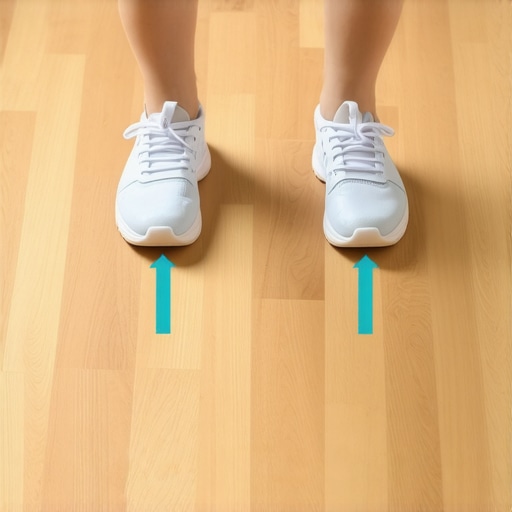
The Secret Behind Tripod Feet
To execute this, imagine you are trying to tear a piece of paper on the floor between your feet by rotating your thighs outward without actually moving your feet. This creates tension in the hips, which locks your pelvis into a safe position. It is the groundwork for the ultimate guide to improving mobility and posture in 2025, turning a precarious lift into a stable, mechanical movement.
Pressurize Your Core to Save Your Spine
Many people think ‘bracing’ means just sucking in your gut, but that actually makes your spine more vulnerable. Imagine a sealed soda can—it is nearly impossible to crush from the top because of the internal pressure. If you pop the tab and empty the liquid, the thin aluminum crumples instantly. You need to create that same internal pressure before your hands even touch the box. Take a deep breath into your belly—not your chest—and tighten your abdominal wall as if someone is about to punch you. This ‘intra-abdominal pressure’ creates a rigid cylinder that supports your vertebrae from the inside out. If you skip this, you are committing the classic deadlift mistake that leads to immediate disc pressure, even if you are just picking up a laundry basket.
Proximity is Your Shield Against Disc Injuries
Physics is a relentless teacher. Think of your arms as a fishing rod; if you catch a heavy fish, the further the tip of the rod is from your body, the more the rod bends and risks snapping. Your spine works the same way. Every inch an object moves away from your center of gravity multiplies the effective weight of that object on your lumbar discs. When I moved that old CRT television for my brother, I tried to keep it at arm’s length to avoid getting dust on my shirt. Halfway across the room, I felt my mid-back start to round—a clear sign of why your posture collapses when you get tired at the gym or during manual labor. I had to pull the dusty TV right against my chest, essentially making it part of my own body weight. This is a core part of improving posture through mobility practical chiropractor strategies: the closer the load, the shorter the lever, and the safer the spine.
Move Your Feet to Protect Your Hips
Never, under any circumstances, should you ‘plant and twist.’ If you need to move an object to the side, move your entire body by stepping your feet in the new direction. Your spine is designed for flexion and extension, but it is remarkably fragile when asked to rotate under a heavy load. Think of your nose and your toes as being connected by a rigid rod; wherever your toes go, your nose (and your torso) follows in a single, unified block.
I used to think that as long as I followed the basic rules of lifting, my back would be bulletproof. I was wrong. The deeper I got into my own recovery, the more I realized that most of the conventional wisdom we hear is only a fraction of the story. Let’s dig deeper into why sometimes the very things we do to ‘save’ our backs end up causing more harm than good.
Stop Chasing the Perfect Vertical Spine
One of the biggest myths I had to unlearn is that ‘good posture’ means being as straight as a board. In reality, why your perfect posture is actually causing muscle fatigue is often due to people fighting the natural S-curve of their spine. When you force a rigid, vertical position, you are essentially asking your small stabilizer muscles to do the work of your large prime movers. This creates a state of constant tension that leads to those nagging mid-back aches. Instead of trying to be a statue, you should focus on ‘dynamic’ posture. Your spine is meant to move, and the best position is always the next one. This is a core concept in the link between mobility and posture a chiropractors guide; true health is found in the ability to transition smoothly between movements, not in holding a fixed pose.
Is your ‘tightness’ actually a safety signal from your brain?
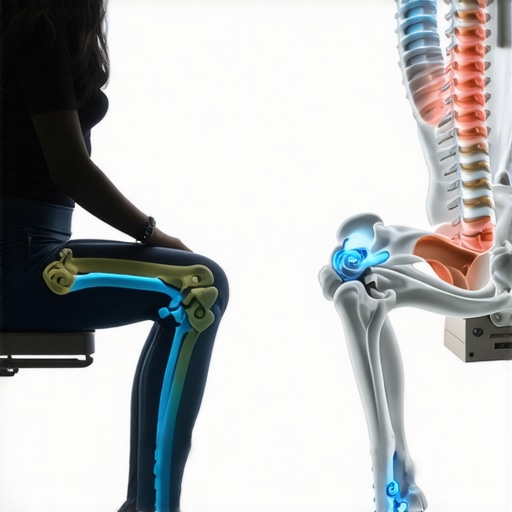
Many of us feel ‘tight’ and immediately reach for the nearest foam roller or start a heavy stretching routine. However, there is a sophisticated nuance here: sometimes your brain makes a muscle feel tight because it is trying to protect a weak joint. Dr. Stuart McGill, a world-renowned expert in spine biomechanics, has often noted that stretching a back that is already unstable can actually lead to further injury. This is exactly the real reason your hamstrings stay tight despite stretching—they are working overtime to stabilize a pelvis that your core isn’t supporting. If you keep stretching them, you’re just pulling the ’emergency brake’ tighter. Instead of mindless stretching, you need to look at mobility hacks simple adjustments for a more active life that focus on stability and motor control rather than just length.
The Danger of the Self-Adjustment Loop
We’ve all been there—that satisfying ‘pop’ you get when you twist your own back in an office chair. It feels like instant relief, right? But here is the ‘oops’ factor most people miss: why you should stop cracking your own back every hour is because you are likely hitting the joints that are already moving too much (hypermobile) while the stuck joints remain frozen. You’re essentially loosening the lug nuts on a wheel that’s already wobbly. This creates a temporary dopamine hit but actually destabilizes your spine over time. Professional chiropractic adjustments to unlock a pain-free lifestyle are targeted specifically at those stuck segments, allowing the over-worked joints to finally rest. Have you ever fallen into this trap of constant self-cracking? Let me know in the comments. It’s a frustrating cycle, but breaking it is the first step toward real structural change.
After realizing that I couldn’t just ‘fix’ my back once and forget it, I started looking for tools that actually worked. I stopped buying the gimmicky vibrating braces and focused on foundational changes that integrated into my life. For instance, learning the proper way to use a lumbar roll in your office chair changed my workday from a painful slog into something manageable. I realized that my chair wasn’t necessarily the problem—my lack of support for my spine’s natural curve was. I also stopped guessing where my screen should be and implemented the best monitor height for preventing tension headaches, which almost immediately eliminated that heavy afternoon fog I used to feel by 3 PM.
How can I maintain my spinal health over the long haul?
The answer isn’t a 90-minute yoga class once a week. It is about those mobility boosts for posture expert tips for daily adjustments that you do when nobody is watching. I started using the morning routine that stops your back from clicking, which takes exactly four minutes but sets the tone for the entire day. Maintenance is about consistency, not intensity. Research published in the Journal of Manipulative and Physiological Therapeutics (JMPT) suggests that maintenance chiropractic care significantly reduces the number of days people suffer from bothersome back pain by keeping the nervous system’s communication lines open before a crisis occurs.

One of the biggest shifts I made was rethinking my footwear. I realized my fancy office shoes were essentially high heels for men, throwing my pelvis into a permanent anterior tilt. I had to research the best way to transition to zero-drop shoes safely so I didn’t trade my lower back pain for Achilles tendonitis. This is a crucial part of the link between mobility and posture a chiropractors guide; your foundation affects every single joint above it.
The Future of Posture is Coming for Your Smartphone
We are moving toward an era where ‘wearable biomechanics’ will be the norm rather than the exception. I expect to see AI-powered clothing that gently nudges you with haptic feedback when why your posture collapses when you get tired at the gym or during a long flight. Until then, you have to be your own sensor. Use the 10-second move to reset your shoulders at work every time you finish an email or a phone call. If you want to see a real change, pick just one tool from this list—like adjusting your monitor height—and do it right now. Don’t wait for your back to ‘tell’ you it is time for a change; by the time you feel the signal, the strain has already set in.
Three Vital Truths I Wish I Knew Before My Injury
Looking back at my recovery, I realized that my back wasn’t fragile; my habits were. The hardest lesson was accepting that I couldn’t out-stretch a bad movement pattern. I had to stop looking for a quick fix and start looking at my foundations. For example, I discovered that my choice of footwear was actually tilting my pelvis forward, making every lift significantly harder on my discs. I had to learn how to tell if your back pain is coming from your shoes before I could truly start to heal. I also learned that the daily move that prevents hip impingement was more valuable than an hour of random stretching because it addressed the specific way I moved through my home. Real growth happened when I focused on mobility boosts for posture expert tips for daily adjustments that I could perform anywhere, even while waiting for my coffee to brew.
Gear That Actually Fixed My Daily Aches
If you are serious about protecting your spine, start with a few foundational tools that offer high returns for very little effort. First, I swear by the proper way to use a lumbar roll in your office chair to prevent that ‘C-shape’ slump that ruins your bracing power. Second, prioritize a morning check-in; implementing the morning routine that stops your back from clicking has become my non-negotiable ritual for ensuring my joints are awake before I ask them to carry a load. #IMAGE_PLACE_HOLDER_E# Finally, remember that professional eyes are vital for long-term success. Relying on chiropractic adjustments to unlock a pain-free lifestyle ensures that your segments are moving correctly so your exercises actually target the right muscles.
Build a Future Where You Move Without Fear
Your body is designed for motion, not for the static stress of modern life. By implementing these small shifts in how you lift, stand, and sit, you aren’t just avoiding a ‘bad back’—you are investing in a future where you can stay active for decades. Use the ultimate guide to improving mobility and posture in 2025 as your roadmap for continued progress. It is never too late to start moving with intention and respect for your mechanical limits. Have you ever noticed your back feel tight after a specific activity like driving or gardening? Let me know in the comments below.