

I spent three years convinced I had a chronic migraine problem. Every Tuesday at 3:00 PM, like clockwork, the back of my skull would start to throb, eventually creeping over my head until it felt like an ice pick was lodged behind my right eye. I tried every dark-room-and-cool-cloth trick in the book. I even cut out chocolate and cheese, thinking they were triggers. It wasn’t until a chiropractor friend watched me turn my head to look at a menu that she pointed out the real culprit: my neck wasn’t moving, so my head was paying the price. If you feel like your brain is being squeezed in a vice and no amount of water is helping, we need to talk about your spine.
Stop Treating Your Forehead When Your Neck Is the Culprit
We often separate our heads from our bodies in our minds, but that connection at the top of your spine is a highway of nerves and muscles. When your ‘tech neck’ becomes more than just a stiff muscle, it manifests as what doctors call a cervicogenic headache. I used to think the secret to reducing tension headaches without medication was some mystery I hadn’t solved, but it was really about mechanical alignment. According to the American Migraine Foundation, cervicogenic headaches are considered ‘referred pain’—meaning the pain is sensed in one area but actually originates from another source, usually the top three vertebrae of your spine. This means your C1, C2, or C3 joints are likely the ones screaming for help, even if you feel the pressure behind your eyes or in your temples.
Is This Just a Normal Headache or Something More Serious?
One of the biggest mistakes I made early on was trying to ‘stretch’ the pain away. I’d pull my head to the side or roll it around vigorously, thinking I was helping my mobility. In reality, why stretching your neck is making your headaches worse is a lesson I learned the hard way; aggressive pulling can actually irritate those sensitive nerves and tiny stabilizer muscles even further. Have you ever felt that specific ‘click’ or ‘grind’ when you look over your shoulder? That’s a massive clue that the issue isn’t in your brain, but in your bones. Today, I’m going to show you how to distinguish between a standard stress headache and one rooted in your cervical spine so you can finally stop the cycle. [image]
How Your Daily Habits Are Tricking Your Nerves
Think about how you’re sitting right now. Is your chin poking forward like a turtle? That’s what we call ‘forward head posture,’ and it adds a massive amount of weight to your neck muscles. This isn’t just about looking slumped; the truth about text neck and long-term nerve damage is that it creates a constant tug-of-war in your upper back. To fix this, we have to look at the link between mobility and posture as a single system. If you don’t have the mobility to keep your head centered over your shoulders, your nerves will eventually let you know via a pounding headache. Have you ever noticed your headaches get significantly worse after a long day of staring at a laptop or driving in heavy traffic? If so, you are likely dealing with a neck-related issue rather than a random neurological glitch.
How to Run a Diagnostic Check on Your Own Vertebrae
To stop the pain, you first need to confirm where it’s actually coming from. I remember sitting in my office a few years ago, trying to figure out why my vision was getting slightly blurry alongside the usual Tuesday afternoon throb. I decided to follow a guide on how to test your own spinal rotation at home using nothing but a piece of tape on the floor and my phone camera to record my range of motion. When I watched the playback and saw that I could turn my head 80 degrees to the left but barely hit 45 to the right, it was a massive ‘lightbulb’ moment. Your neck should move like a well-oiled hinge, not a rusty gate. If you feel a sharp catch or if you’ve noticed how to tell if your dizziness is caused by your neck, you’re likely dealing with a significant joint restriction at the C1 or C2 level. Think of your head as a 12-pound bowling ball balanced on a broomstick. If that broomstick is tilted even an inch, your muscles have to work ten times harder just to keep the ball from falling.
The Chin Tuck That Actually Works
Most people do this move wrong—they jam their chin down into their chest like they’re trying to hide a double chin. The real ‘tuck’ is a horizontal slide. Imagine there’s a string pulling the back of your skull toward the ceiling while you gently retract your nose straight back toward your spine. I started doing this every time I hit a red light while driving. At first, it felt like nothing was happening, and I felt a bit ridiculous. Then, around day four, I felt a tiny ‘pop’ during a tuck—not the scary kind, but the kind that felt like a stuck drawer finally sliding open. This is the secret to fixing tech neck without quitting your phone; it’s about these micro-adjustments throughout the day rather than one big stretch. 
Stop Fighting Your Desk Setup
You can do all the corrective exercises in the world, but if you spend eight hours a day forced into a ‘C’ shape, you’re losing the war against gravity. I used to work with my laptop literally on my lap because it felt ‘cozy.’ I learned the hard way that how to fix your posture while using your laptop on the couch is mostly about bringing the screen up to your eyes, not dropping your eyes to the screen. I finally stacked three thick hardcover books under my laptop stand, and the relief in my upper traps was almost instantaneous.
Fixing the Twist in Your Dual Monitor Setup
If you use two screens, check right now to see if one is your ‘favorite.’ If you’re constantly looking 20 degrees to the right for hours, you’re essentially braiding your neck muscles into a knot. This is exactly why your dual monitor setup is twisting your neck and triggering those tension-style migraines. Center your primary screen directly in front of your nose. If you use both screens equally, sit right in the middle of the seam where they meet. These small mechanical changes are the ‘low hanging fruit’ of pain relief. You don’t need a five-hundred-dollar ergonomic chair; you just need to stop forcing your cervical spine into a constant spiral.
Why Chasing Perfect Posture is Actually Backfiring
People often tell you to “just stand up straight,” as if your spine is a frozen statue. In my experience, the biggest myth in the wellness world is the idea of “perfect posture.” We’ve been conditioned to think there’s one ideal geometric alignment we must hold at all costs. However, the truth about perfect posture and why it doesn’t exist is that your best posture is actually your “next” posture. When you try to force a rigid, “military” stance, you are likely just swapping one set of stressed muscles for another. This rigidity prevents the natural micro-movements your spinal discs need to stay hydrated. Let’s dig deeper: the “oops” factor I see most often is mistaking tension for shortness. If your upper traps feel like steel cables, your instinct is to stretch them. But often, those muscles are already overstretched because your head is forward. Stretching them further just creates more instability and pain. This is why your traps are always tight even after a massage; you’re treating a symptom of weakness with even more length.
Does the Sound of a Spinal Adjustment Measure Its Success?
Many people get addicted to the “pop.” They think if they don’t hear a sound, the adjustment didn’t “take.” This mindset leads to the dangerous habit of self-adjusting, or why you should stop cracking your own back every hour. Research published in the Journal of Manipulative and Physiological Therapeutics suggests that the audible release—known as cavitation—is simply gas bubbles popping in the joint fluid. It is not an indicator that the joint has moved into the correct position. True expert chiropractic techniques focus on restoring neurological communication and joint play, not just chasing a noise. If you are just hunting for the “click,” you are likely hyper-mobilizing the joints above or below the actual stuck spot. This is also why your gentle stretching is actually causing more inflammation rather than fixing the root cause. You need to focus on the link between mobility and posture as a functional unit, where stability is just as important as movement.
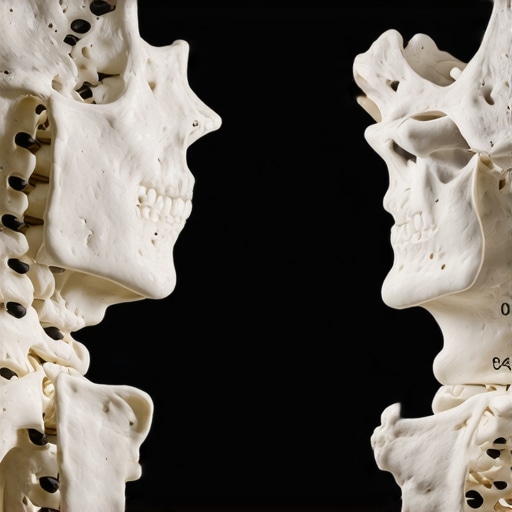
A common mistake is thinking mobility simply means being “bendy.” I have seen yoga instructors with incredible flexibility who still suffer from chronic neck pain because they lack the deep segmental stability to hold their head up during a long day. You can have all the range of motion in the world, but if your C1-C2 complex doesn’t have the “motor control” to stay centered, you are still going to get those headaches. I recommend looking into practical chiropractor strategies that prioritize neuromuscular control over raw flexibility. Have you ever fallen into the trap of thinking you just needed “one more good stretch” to fix your pain? Let me know in the comments—I’d love to hear your experience with what actually worked and what didn’t.
I’ve spent thousands on ergonomic gadgets over the years, but the most effective tool in my recovery kit cost exactly four dollars: a standard Lacrosse ball. Most people use foam rollers for their back, but a roller is too blunt for the delicate area where your skull meets your neck. I use the ball to pin down the suboccipital muscles—those tiny, stubborn fibers that stay semi-contracted when you stare at a screen. By applying targeted pressure here, I’m not just relaxing a muscle; I’m performing one of those mobility hacks for a more active life that actually resets the nervous system’s tone. This is why I always prioritize specific tools that allow for ‘segmental’ work over general stretching.
How do I keep these spinal gains for the long haul?
Maintenance isn’t about doing a grueling hour-long routine every Sunday; it’s about ‘spinal hygiene’ distributed throughout your day. As Dr. Stuart McGill, a world-renowned expert in spine biomechanics, emphasizes in his research on spinal health, the cumulative load of how you move during mundane tasks is what determines your injury risk. I’ve integrated the 2-minute drill for better spinal rotation into my morning coffee ritual. If you don’t build these daily adjustments into your existing schedule, you simply won’t do them. I also suggest looking at the best standing desk interval for your specific body type; for me, that means a 20-minute sit/8-minute stand/2-minute move cycle that keeps my joints from ‘locking’ into place.
The future of sitting is probably not sitting at all
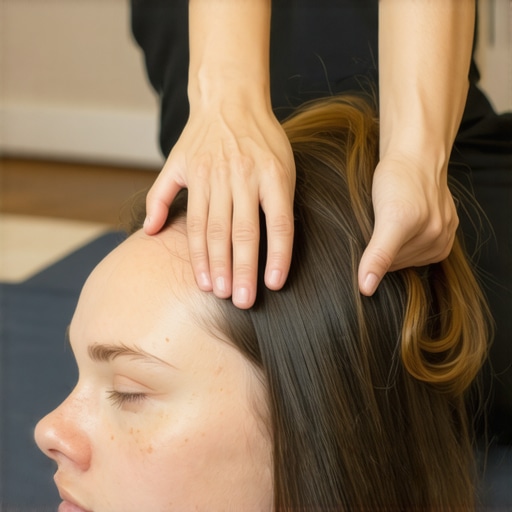
Looking ahead, I predict we are moving toward ‘active workstations’ that use AI-driven biofeedback to nudge us when our posture begins to fail. Until those become affordable, your best bet is to scale your results by changing your environment. For instance, I’ve found that the best way to transition to minimalist footwear is a secret weapon for neck health. When your feet can feel the ground, your pelvis aligns better, which trickles up to your neck. Using chiropractic care as a secret weapon allows you to keep the joints open while these tools do the daily heavy lifting. I want you to try one thing today: set a timer for 30 minutes, and when it goes off, perform the chin-tuck slide I mentioned earlier for just ten seconds. This small act of neurological ‘re-booting’ is how you stop a headache before it even starts. We are playing the long game here, and improving mobility and posture in 2025 is going to be about consistency over intensity.
The Hard Truths About Healing Your Cervical Spine
Looking back at my three-year struggle, there are a few ‘lightbulb’ moments that finally moved the needle and allowed me to reclaim my focus. First, I realized that consistency beats intensity every single time. I used to think a 60-minute yoga session once a week would offset 40 hours of slouching; it won’t. You need those micro-adjustments throughout the day to reset the clock. Second, your environment is your destiny. If your setup is wrong, your body will eventually mold itself to that dysfunction. Lastly, I stopped treating my neck in isolation. I learned that how chiropractic adjustments enhance posture and mobility is about the whole kinetic chain, from the arches of your feet to the base of your skull.
The Simple Tools I Use to Stay Pain-Free
You don’t need a gym full of expensive equipment to keep your spine happy. My personal toolkit is actually quite lean. I swear by a basic Lacrosse Ball for hitting those suboccipital trigger points that cause the ‘ice pick’ sensation. I also recommend keeping a copy of ‘Becoming a Supple Leopard’ by Kelly Starrett on your desk; it’s a masterclass in understanding how your joints should actually move under load. For my workspace, I finally invested in a real monitor arm, but a stack of heavy textbooks works just as well to keep your screen at eye level. This is how you revolutionize your posture with targeted mobility exercises without spending a fortune on gadgets.
[image]
A Future Without the Tuesday Afternoon Throb
Recovery isn’t a straight line, and you might have days where the tension creeps back in after a stressful meeting. The difference now is that you have the diagnostic tools to fight back before the pain takes over. You know that chiropractic adjustments unlock a pain-free lifestyle today by resetting the nervous system, but the tiny daily habits you build will keep that door open for years. Don’t let the complexity of spinal health intimidate you. Start with the simple chin-tuck slide, fix your screen height, and listen to what your body is telling you. We’re aiming for a life where mobility, chiropractic, posture, adjustments aren’t just healthcare buzzwords, but the foundation of your daily physical comfort. You’ve got the knowledge now—it’s time to use it.
Have you ever felt that specific ‘ice pick’ headache behind your eye that just wouldn’t quit? Let me know in the comments below—I’d love to hear what finally gave you relief.