

I remember the exact moment my right shoulder finally gave up on me. It was three hours into a cross-country drive, somewhere outside of Des Moines, and my upper back felt like someone was pressing a hot soldering iron into my trapezius. I tried the usual tricks—shrugging, rolling my neck, blasting the AC—but the ache wouldn’t budge. It wasn’t until I pulled over and realized I was practically reaching for the stars just to hold the top of the wheel that it clicked. My car was literally engineering my pain. I was making the classic mistake of fighting my vehicle’s layout rather than making it work for my anatomy. Today, we are going to fix that. I’ll show you exactly how to dial in your driving position so you can stop the burning sensation before it starts.
Stop Reaching Like You’re on a Rollercoaster
Most of us treat our steering wheel like a fixed piece of furniture, but it’s actually a highly adjustable tool that can either save your spine or wreck it. I spent years with my wheel tilted too high because I thought it gave me more legroom. Big mistake. That extra inch of height forced my shoulders to hike up toward my ears every time I made a turn. If you’ve ever wondered why your shoulders hunch up when you are stressed, imagine adding the physical strain of a poorly positioned wheel to that mental tension. When your arms are outstretched for hours, you aren’t just driving; you’re performing an isometric hold that exhausts your rotator cuffs and neck. To find relief, you need to think about your daily mobility adjustments as starting the moment you sit in the driver’s seat.
Does a few inches of tilt really make a difference?
You might think I’m being dramatic. “It’s just a wheel, I’ve driven this way for a decade!” Sure, but that decade is exactly why your neck clicks every time you check your blind spot. When your arms are stretched too far or angled too high, your muscles stay in a state of constant, low-level contraction. According to a study by the Mayo Clinic, repetitive strain from poor ergonomic positioning is a leading cause of chronic musculoskeletal disorders. This isn’t just about comfort; it’s about avoiding a future where you need a pinched nerve fix in your shoulder blade just to get through your commute. I’ve learned the hard way that the best way to sit in a car for a long trip starts with the steering column, not just the lumbar support. Have you ever finished a long drive and felt like you needed a professional massage just to be able to turn your head again? If so, your current settings are likely the culprit. Let’s look at the “Goldilocks zone” for your steering wheel—not too high, not too low, but just right for your unique frame.
Bring the Steering Wheel to Your Natural Reach
The biggest mistake most drivers make is sitting too far from the wheel, forcing their arms to stay fully locked. Think of your arms like a bridge; a bridge under constant tension eventually cracks. To find your ideal distance, sit back in your seat and extend one arm straight out. Your wrist should be able to drape over the top of the steering wheel without your shoulder blade leaving the seat back. When I first tried this in my old truck, I realized I was sitting nearly four inches too far back. Once I moved the seat forward and adjusted the telescopic wheel toward my chest, the constant tugging sensation in my mid-back vanished within two days. This simple adjustment ensures your muscles aren’t fighting a constant tug-of-war against gravity. Using improving posture through mobility practical chiropractor strategies can help you maintain this alignment long after you park the car.

The Simple Wrist Test for Perfect Alignment
If you have to peel your shoulders off the seat to turn the wheel, you are essentially doing a repetitive-motion workout that your rotator cuffs never signed up for. Use the wrist-drape method as your absolute baseline. If your car doesn’t have a telescoping wheel, you’ll need to move your seat closer. I know, we all like to lounge, but that “cool” lean is exactly why you might need a best stretch for people who drive for a living by the time you reach your destination. Your elbows should have a soft, comfortable bend—about 20 to 30 degrees—when your hands are on the wheel. This bend acts like a shock absorber for the vibrations of the road, preventing that energy from traveling straight into your neck joints.
Drop the Height to Save Your Neck
Next, look at the tilt. Most people aim the steering wheel at their face like a spotlight, but it should actually be aimed toward your chest. When the wheel is too high, you have to lift your arms higher than your heart, which restricts blood flow and forces the upper traps to work overtime. It’s like holding two gallons of milk at shoulder height; eventually, something is going to scream. By lowering the wheel so it points at your sternum, you allow your shoulders to drop into a neutral, relaxed state. If you find your shoulders still creeping up, try the 10-second move to reset your shoulders at work right there in the driver’s seat. It works just as well at a red light as it does at a desk.
Why 9 and 3 is the New Standard
Forget the old “10 and 2” rule your driver’s ed instructor taught you. Modern steering wheels are designed for the “9 and 3” position. This lower hand placement keeps your center of gravity low and prevents your shoulders from hiking toward your ears. I remember a long haul through the Rockies where I switched to 9 and 3 specifically because my neck was starting to seize. The difference was immediate—my chest felt more open, and I could actually breathe deeper. When your spine is properly aligned and your rib cage isn’t compressed, why chiropractic care is your secret weapon for better posture becomes clear, as it addresses the structural shifts that happen when we default to poor habits. Dialing in these manual settings is the first step toward a pain-free commute.
Most people think that finding the right seat settings is the finish line. They spend hours dialing in the mirrors and the lumbar support, then sit as still as a statue for the next four hours. This is actually a massive mistake. In the world of biomechanics, we say ‘your best posture is your next posture.’ Trying to hold a ‘perfect’ position for hours is an isometric nightmare that leads to muscle fatigue. Even the most ergonomic chair becomes a torture device if you don’t move. You need to understand that the truth about perfect posture and why it doesn’t exist is that mobility matters more than alignment alone. Static loading—where you keep the same muscles under tension without break—is what causes the fascia to stiffen and the blood flow to restrict.
Stop Trying to Sit Like a Statue
While we’ve talked about the right angles for your arms, the real secret is the micro-adjustment. Every fifteen minutes, you should slightly shift your weight or adjust the tilt of your seat by a single degree. This redistributes the pressure across different vertebrae. If you stay rigid, you’re just inviting a different kind of ache. This is the ‘oops’ factor most people ignore: they find a ‘good’ spot and then lock themselves into it like a vault. Don’t do that. Move. Use mobility hacks simple adjustments for a more active life to keep your joints lubricated even while you’re behind the wheel.
Does breathing matter more than your seat position?
Most advanced drivers don’t realize that their diaphragm is the most important ‘posture muscle’ they have. If you are a chest breather, you are constantly pulling on your neck muscles with every inhale. According to a study in the Journal of Physical Therapy Science, dysfunctional breathing patterns are directly linked to chronic neck and back pain because they force accessory muscles to do the work of the core. Even if your seat is perfect, poor breathing will ruin your progress. This is why improving posture through mobility practical chiropractor strategies often starts with the ribcage, not the spine. 
The Trap of Over-Supporting Your Lumbar
We have been sold the idea that more cushion equals more comfort, but that’s a dangerous myth. If your car seat has a lumbar support that feels like a tennis ball pushing into your spine, it might actually be doing more harm than good. When you over-support the lower back, your deep stabilizers—the multifidus and transversus abdominis—simply turn off. This is precisely why most posture braces actually make your back weaker over time. You want the seat to support you, not to replace your muscle function. Real relief comes from how chiropractic adjustments enhance posture and mobility by resetting those neural pathways so your muscles stay engaged. Have you ever fallen into the trap of using too many cushions or braces? Let me know in the comments below, I’d love to hear your experience.
Swap Your Factory Lumbar for a Custom Wedge
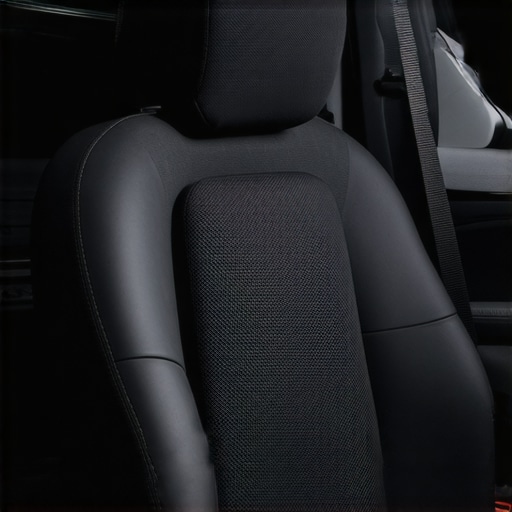
I stopped relying on built-in car lumbar supports about three years ago because they are often too rigid and hit the wrong part of the spine for 80% of drivers. Instead, I started using a small, manual inflatable air bladder. This tool is a game-changer because it allows for ‘dynamic support.’ You can slightly increase the pressure for the first hour and then deflate it a bit for the second, preventing your muscles from becoming complacent. According to the SAE International J1100 standards, car interiors are designed around a generic ’95th-percentile male’ manikin, which means if you aren’t that specific size, the car wasn’t actually built for you. Using a dedicated seat wedge or a small rolled-up towel at the base of your sacrum is often more effective than the most expensive luxury seat settings. This is similar to why people prefer the truth about exercise balls as desk chairs; it’s about active engagement rather than passive slouching.
How do I maintain my spinal alignment during long-haul drives?
The secret isn’t a one-time fix; it is a ritual of movement. Every time you stop for gas or a coffee, you need to perform a ‘system reset.’ I personally swear by the 2-minute drill for better spinal rotation the moment I step out of the vehicle. This flushes the joints with synovial fluid and counters the forward-hunched position of driving. Long-term results come from the cumulative effect of these tiny habits. If you neglect these micro-breaks, your body will eventually require how chiropractic adjustments enhance posture and mobility just to get back to your baseline. Think of your car seat as a gym—you wouldn’t hold a bicep curl for four hours, so don’t hold your spine in a single shape for that long either.
The Future of Your Commute is Proactive
I predict that within the next decade, we won’t have to manually adjust our seats at all. We are already seeing the emergence of ‘haptic seats’ that use AI to detect muscle fatigue and automatically shift the lumbar support or initiate a gentle massage sequence to prevent blood pooling. Until your car is that smart, you have to be the pilot of your own biomechanics. Utilizing mobility boosts for posture expert tips for daily adjustments will keep you ahead of the curve. By combining physical tools like wedges with improving posture through mobility practical chiropractor strategies, you turn your commute from a source of pain into a window for recovery. My biggest piece of advice? Go out to your car right now and try the ‘wrist-drape’ test we discussed earlier; if you find yourself reaching even an inch, slide that seat forward two notches and feel the instant relief in your shoulder blades.
Hard Truths I Learned from a Decade of Road Trips
I used to think that a luxury car with ’24-way power seats’ would solve my back pain. It didn’t. The biggest lesson I’ve learned is that a expensive seat is just a fancy cage if you don’t know how to live in it. First, the ‘cool’ factor of reclining your seat is a fast track to a herniated disc; staying upright isn’t just about discipline, it’s about mechanical advantage. Second, don’t ignore that tiny flutter of tension in your traps; it’s a warning light, not a suggestion. I’ve realized that the reason your neck clicks when you look over your shoulder often starts with your hands being too high on the wheel hours earlier. Finally, the best adjustment you can make is the one you do every 20 minutes—keep your joints guessing.
My Drive-Day Survival Gear
If you want to move beyond factory settings, I recommend a few specific tools that have changed my life on the road. I never leave for a trip over two hours without my manual inflatable lumbar bladder; it’s the only way to get dynamic support that changes with your fatigue levels. I also suggest looking at your footwear; I found that the best way to transition to zero-drop shoes safely actually improves your pedal feel and prevents that weird ankle strain during cruise control. For more comprehensive help, I always point people toward the ultimate guide to improving mobility and posture in 2025 to build a foundation that lasts long after you’ve parked the car.
Turn Your Commute into a Recovery Session
Driving doesn’t have to be a slow decline into stiffness. When you start applying these mobility boosts for posture expert tips for daily adjustments, you stop fighting your car and start using it as a tool for better health. You’ll arrive at your destination with more energy and less brain fog because your body isn’t wasting resources on ‘survival posture.’ Remember, chiropractic adjustments unlock a pain-free lifestyle today by making sure your frame is ready for the road. Don’t wait for the burning sensation to return; make these changes today and claim your commute back. Have you ever tried the wrist-drape test and realized you were sitting way too far back or too far forward? Let me know in the comments! #IMAGE_PLACEHOLDER_E#