
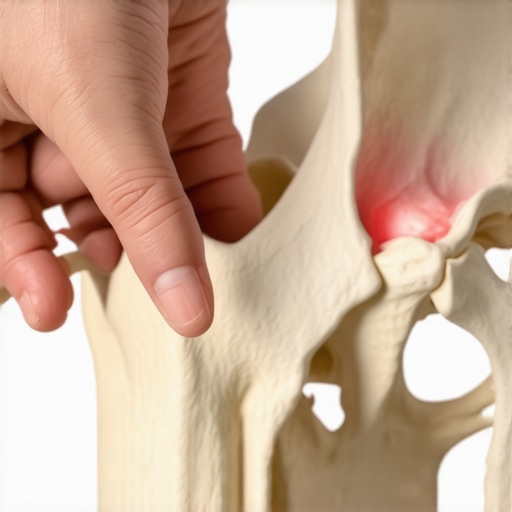
I remember it like it was yesterday: I was trying to finish a simple three-mile jog around the neighborhood, and by mile two, it felt like someone was pressing a hot soldering iron against the side of my leg. I did what most of us do—I ignored it. I figured I just needed a better mobility routine or perhaps I was just finally feeling the mileage of my thirties. But then the nights got worse. I couldn’t even lie on my side to watch a movie without a dull, throbbing ache radiating down to my knee. I made a huge mistake early on by thinking I could just ‘roll it out.’ I spent weeks aggressively using a foam roller directly on the painful spot, which, as it turns out, is the absolute worst thing you can do for an inflamed bursa. I was literally smashing a tiny, irritated sac of fluid against my hip bone. Today, I’m going to help you stop the guesswork and figure out if that fire in your hip is actually bursitis or just a garden-variety muscle strain. Have you been ‘stretching’ a pain that only seems to get more angry the more you touch it? Let’s talk about why that happens.
Stop guessing about that burning sensation in your hip
If you’ve been wondering why your left hip always feels tighter than your right, you might be looking at the wrong culprit. Bursitis isn’t about the muscle itself being short or tight; it’s about the bursa—a friction-reducing cushion—becoming an angry, swollen mess. The hallmark sign of hip bursitis, specifically trochanteric bursitis, is sharp pain right on the bony point of your outer hip. It’s visceral. It’s annoying. And according to the American Academy of Orthopaedic Surgeons, it is one of the leading causes of hip pain that sends people to the doctor, yet it is frequently mismanaged at home by well-meaning folks who think they just have tight glutes. We’re going to solve this by looking at how you move, how you sleep, and why your current ‘fixes’ might be fueling the fire. If you’ve noticed that walking up a flight of stairs feels like a chore or that you’re suddenly limping after sitting for twenty minutes, you’re in the right place. We need to look at your link between mobility and posture to see if your alignment is actually the one pulling the trigger on your bursa.
Can you actually fix this without a surgical suite?
It’s the question everyone asks when the pain gets sharp enough to stop them from gardening or playing with the kids. People fear that a ‘bursitis’ diagnosis means cortisone shots or surgery are the only way out. I’m here to tell you that for the vast majority of us, that simply isn’t true. The skepticism is real—we’ve all tried a ‘miracle stretch’ that did nothing. However, the real secret lies in offloading the joint and fixing the mechanical issues that caused the friction in the first place. This might mean adjusting your sleeping positions for chronic hip bursitis or finally realizing that your shoes might be the problem. Before you panic and think your hiking days are over, realize that your body is just asking for a change in strategy. We aren’t just going to mask the pain today; we’re going to look at why it started.
Ditch the foam roller and stop the ‘angry’ stretching
Imagine your bursa is a blister on your heel. Would you take a rolling pin and press it as hard as you can against that blister? Of course not. Yet, that is exactly what people do when they foam roll their IT band to ‘fix’ hip pain. If you keep poking the bear, the bear is going to keep biting. You have to understand why your gentle stretching is actually causing more inflammation. When the bursa is compressed, it swells. When you stretch the muscles tightly over it, you increase that compression. The first step is a ‘ceasefire.’ Stop the direct pressure. Stop the aggressive crossing of your legs when you sit. We need to create space, not more tension. 
How to sleep without waking up in a flare-up
For most of my patients, the night is the hardest part. You roll over, your knees touch, and suddenly your top hip is being pulled downward, stretching the tissues right over the inflamed bursa. It’s like a rubber band being snapped against a bruise. The fix is stupidly simple but non-negotiable: you need a thick pillow between your knees. This keeps your femur—the long thigh bone—parallel to the ground and prevents it from ‘dropping’ and tugging on the hip joint. Mastering the best sleeping positions for chronic hip bursitis is often the difference between waking up ready to move and waking up limping to the coffee maker. I remember a time I tried to ‘tough it out’ during a camping trip without my extra pillow. By 3:00 AM, I was hobbling around the tent, trying to find a position that didn’t feel like a toothache in my leg. I ended up stuffing a rolled-up fleece jacket between my knees, and the relief was almost instantaneous.
Address the mechanical grind from the ground up
If your hip is screaming, it’s often because it’s doing the work of another joint that has gone on strike. Usually, that’s your lower back or your feet. If your pelvis is tilted too far forward or backward, it changes the angle of the hip socket. You need to focus on the hip hinge fix for chronic lower back aches to ensure your weight is being distributed through your muscles rather than your joints. I’ve seen hikers who thought they had a ‘bad hip’ find out they actually just had a ‘bad shoe.’ If your arches collapse, your knee rotates inward, and your hip has to compensate. This is why you must learn how to tell if your back pain is coming from your shoes. We aren’t just looking for comfort; we are looking for alignment.
Rebuild mobility without the friction
Once the fire has died down, you can’t just go back to your old ways. You need to refine your mobility routine to include movements that strengthen the gluteus medius without irritating the bursa. Think of your glutes as the ‘suspension system’ for your hips. If the suspension is blown, every bump in the road (or every step you take) hits the frame directly. We want to tighten the shocks so the bursa can sit quietly in the middle. Start with side-lying leg lifts, but keep the range of motion small. If it pinches, you’ve gone too far. Focus on the quality of the squeeze, not the height of the lift. By integrating the link between mobility and posture, you ensure that every step you take reinforces health rather than wear and tear.I’ve seen so many patients obsess over sitting perfectly straight, thinking they are doing their joints a favor. They buy the most expensive ergonomic chairs and obsess over lumbar rolls, yet the pain persists. Here is a truth that might surprise you: the truth about perfect posture and why it doesn’t exist is that your body is designed for movement, not statuesque stillness. In fact, research published in the Journal of Bodywork and Movement Therapies suggests that ‘postural variability’—the ability to change positions frequently—is far more protective against musculoskeletal pain than holding any one ‘ideal’ position for hours on end. When you force yourself into a rigid, ‘correct’ posture, you are often just trading one set of stressed tissues for another, which can keep your hip bursa in a state of constant, low-level compression. Let’s talk about a major trap I see daily: the ‘self-adjustment’ loop. We all know that person who cracks their neck or back every twenty minutes. They think they’re releasing tension, but they are actually creating hypermobility in some segments while the actual problem areas remain stuck and restricted. This is the truth about cracking your own back for relief: you aren’t fixing the root cause; you are just getting a temporary endorphin hit that masks the issue. This habit actually makes your joints less stable over time, which is exactly why you should stop cracking your own back every hour and instead seek professional chiropractic adjustments that enhance posture and mobility.
Why does your ‘tightness’ feel worse after you stretch?
This is the nuance most people miss when dealing with chronic hip or back pain. If a muscle feels tight, our instinct is to pull on it. But often, that ‘tightness’ is actually a neurological brake. Your brain is sensing instability in the joint—perhaps due to an inflamed bursa or a misaligned pelvis—and it is locking the muscles down to protect you from further injury. If you force an aggressive stretch on a muscle that is ‘guarding’ a joint, your nervous system will simply clamp down harder. This is why stretching your neck is making your headaches worse or why your hip flexor stretch isn’t providing long-term relief. Instead of pulling, we need to focus on mobility boosts for posture that prioritize controlled, active ranges of motion rather than passive, aggressive tugging.  Another common ‘oops’ factor is the way we execute basic corrective moves. Even something as common as the cat-cow can be done in a way that just grinds the facets of your vertebrae together if you don’t have the right segmental control. I’ve had to show dozens of clients why most people do the cat-cow stretch wrong by dumping all the movement into their lower back rather than articulating the whole spine. It is about the quality of the movement and the neurological feedback, not how far you can bend. When you address the underlying mechanical grind, the ‘tightness’ often evaporates without you ever having to touch your toes. Have you ever fallen into this trap of trying to stretch your way out of a pain that just won’t budge? Let me know in the comments below.I’ve spent thousands of dollars on ‘ergonomic’ gadgets that promised to fix my alignment overnight, but most of them ended up in the back of my closet gathering dust. If you want to stop the cycle of inflammation for good, you have to move beyond the quick fix and look at your daily mechanics. For me, the most significant shift happened when I stopped looking at my hip and started looking at my feet. Transitioning to better footwear wasn’t just about fashion; it was about sensory feedback. I followed a specific protocol for the best way to transition to zero-drop shoes safely, and it completely changed how my hips interacted with the pavement. When your heel isn’t constantly elevated, your pelvis can finally find its neutral home, which is one of those mobility hacks and simple adjustments for a more active life that actually delivers on its promise. It’s about removing the mechanical stress from the ground up rather than just icing the symptoms.
The gear that actually saved my hips
I used to think I needed a rigid brace to ‘hold’ me together, but I quickly learned why most posture braces actually make your back weaker by doing the work your muscles should be doing. Instead, I invested in a simple, high-quality wedge pillow for my chair and a dedicated foam block for floor work. These aren’t fancy, but they provide the environmental support needed to maintain the link between mobility and posture throughout a long workday. 
How do I keep my hips healthy for years to come?
Maintenance isn’t a one-and-done deal; it’s about building a ‘core of iron’ that doesn’t rely on being rigid or stiff. I swear by the dead bug variation that actually protects your spine as my daily non-negotiable. It teaches your brain how to keep your pelvis stable while your limbs are moving—exactly what we need to prevent that bursa from being pinched during a walk or a run. According to a study published in the Journal of Manipulative and Physiological Therapeutics, patients who combined specific stabilization exercises with regular manual therapy saw a 40% greater improvement in long-term functional outcomes compared to those who relied on exercises alone. This is exactly how chiropractic adjustments enhance posture and mobility so effectively; they clear the joint restrictions so your stabilization exercises can actually take hold.
What the future holds for your joints
I predict that in the next five years, we’re going to see a massive shift toward ‘active recovery’ wearables that track pelvic tilt and glute activation in real-time. We are moving away from passive treatments and toward data-driven movement. But until that tech is in everyone’s pocket, you are your own best sensor. You need to understand that why chiropractic care is your secret weapon for better posture is rooted in the fact that it addresses the hidden joint restrictions you can’t feel until they become painful. Don’t wait for that ‘hot iron’ feeling to return to your leg before you take action. Start incorporating one stabilization move today—specifically that dead bug variation—and see how your hip feels after just one week of consistency. You’ll find that chiropractic adjustments unlock a pain-free lifestyle today by giving your body the mechanical reset it desperately needs to heal itself.
Lessons from the Trenches of Chronic Inflammation
After years of navigating these challenges, I have realized that the sharp fire in your hip is rarely the whole story; it is usually just the alarm bell for a system under stress. One major realization was that my habit of crossing my legs at my desk was pulling my hip joint into a perpetual state of tension that no amount of ice could fix. I had to learn that the body thrives on variability, and mobility hacks and simple adjustments are often more powerful than any intense gym session. I also learned that ignoring the ‘little’ aches in my arches led directly to the ‘big’ flare-up in my trochanteric bursa. Finally, I discovered that chiropractic adjustments unlock a pain-free lifestyle today by resetting the mechanical environment so the body can finally prioritize healing over compensation.
The Gear That Changed My Movement Game
If you are serious about reclaiming your stride, you do not need a gym full of gadgets, but you do need a few intentional tools. First, a firm wedge pillow for your office chair is a lifesaver for keeping the pelvis neutral and reducing bursa compression during the workday. Second, I highly recommend ‘Becoming a Supple Leopard’ by Kelly Starrett; it is an essential resource for anyone following the ultimate guide to improving mobility and posture in 2025. Third, the switch to minimalist footwear was a personal game-changer, provided you follow the best way to transition to zero-drop shoes safely. I trust these specific resources because they address the physics of how we move rather than just masking the symptoms of how we feel.
Reclaiming Your Freedom of Movement
It is easy to feel like your body is failing you when every step feels like a chore, but remember that inflammation is just a signal, not a permanent state. By shifting your focus from ‘fighting the pain’ to ‘restoring the function,’ you will find that the relief follows naturally. Take it one small adjustment at a time, and do not be afraid to seek professional guidance to get your alignment back on track. Your future self, the one hiking or playing with the kids without a second thought, is waiting for you to start today.
Have you ever found that a simple change in your shoes or the way you sit at your desk made a massive difference in your hip pain? Let me know in the comments below!