
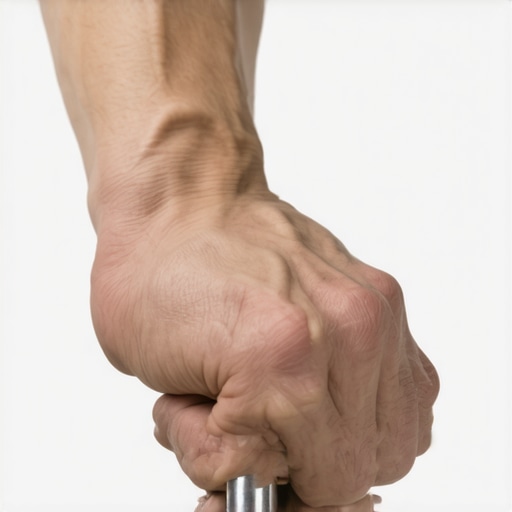
I’ll never forget the day a simple jar of pickles defeated me. It wasn’t the lid; it was the sharp, searing heat that radiated from my outer elbow down to my wrist the moment I twisted. I felt like I was eighty years old. For weeks, I’d been ignoring that dull ache during my workouts, thinking I just needed to ‘tough it out’ or maybe stretch my triceps more. Boy, was I wrong. I spent months babying my arm, wearing those itchy velcro braces, and wondering if I’d ever be able to carry a heavy suitcase again without flinching. It took a long, frustrating road of trial and error to realize that my elbows weren’t the real enemy—my weak, neglected grip was the culprit. [image]
Your Forearms Are Secretly Running the Show
We often treat our bodies like a collection of separate parts, but everything is a chain. When you grab something, the muscles in your forearm fire to stabilize your wrist and pull on the tendons that attach right at your elbow. If those muscles are weak or imbalanced, those tendons take the brunt of the force. It’s why the hidden connection between wrist pain and your neck is so vital to understand; tension rarely stays in one spot. I made the classic mistake of focusing on the ‘show’ muscles like biceps while my stabilizers were screaming for help. According to a study published in the Journal of Hand Therapy, grip strength is a significant indicator of overall upper extremity health, and neglecting it is a fast track to chronic tendon issues.
Today, I’m going to show you how to build a grip that acts like armor for your joints. We aren’t just talking about crushing a gripper; we’re talking about functional stability that keeps you in the game, whether you are looking for the secret to pain-free gardening this weekend or trying to hit a new personal best in the gym. Have you ever felt that sudden, sharp ‘zing’ in your elbow when reaching for something as light as a coffee mug? If so, you’re exactly where I was three years ago.
Does Grip Training Actually Work for Joint Pain?
You might be thinking that adding more work to a painful area sounds like a recipe for disaster. I thought the same thing. I worried that squeezing anything would just inflame the area further. But the “rest and wait” approach usually just leads to weaker muscles and a recurring injury the next time you try to be active. Much like how why your traps are always tight even after a massage points to deeper postural issues, elbow pain is often a cry for better support from the hands up. By the time we’re done, you’ll see that a stronger grip doesn’t just mean a firmer handshake; it means elbows that don’t quit on you when life gets heavy.
Build a Grip That Does Not Give Up
The first time I tried to fix my elbow, I made the mistake of thinking it was an isolation issue. I’d sit on the bench and do tiny wrist curls with five-pound dumbbells, wondering why it felt like I was poking an open wound. The real breakthrough came when I swapped those isolation moves for ‘functional holds.’ Think of your arm like a suspension bridge; if the cables are frayed at the ends, the whole structure wobbles. When I started performing heavy farmer’s carries, I wasn’t just working my hands. I was forcing my entire upper body to stabilize. I remember the first session vividly: I grabbed two 50-pound kettlebells and tried to walk across the gym. My elbow started to zing, but as I focused on the bracing technique that protects your spine during heavy yard work, something clicked. By engaging my lats and core, the pressure on my elbow tendons vanished. The load was finally being shared by the big players, not just the tiny connector tissues.

Unstick Your Nerves Before You Load Your Muscles
Sometimes the pain you feel in your elbow or wrist isn’t actually a muscle tear; it is a ‘stuck’ nerve. Nerves need to slide and glide through your muscles like a silk thread through a needle. When they get caught—often due to inflammation or poor posture—you get that sharp, electric shock sensation. I discovered that if I didn’t address the nerve tension first, no amount of strengthening would help. You can use techniques similar to the nerve glide that stops sciatica in the shower but applied to the median and ulnar nerves in your arm. I started doing simple wrist-to-shoulder glides every morning. At first, it felt tight and awkward, like I was trying to stretch a guitar string that was ready to snap. After three days, the ‘heaviness’ in my forearm started to lift, making the actual strength work much more effective.
Why Your Mid-Back Is the Secret to Hand Strength
It sounds crazy to look at your spine when your hand hurts, but why your wrist hurting might be a mid-back problem is a question every athlete should ask. If your shoulders are rolled forward from staring at a laptop, the nerves exiting your neck are already being squeezed before they even reach your elbow. I spent years trying to stretch my forearms when the real issue was my ‘hunched’ posture killing the power supply to my hands. When I integrated the 10-second move to reset your shoulders at work, my grip strength literally jumped by 15% in a single week. My muscles weren’t suddenly bigger; they were just finally getting a clear signal from my brain.
Stop Over-Stretching the Painful Spot
We have an instinctive urge to pull on things that hurt. When my elbow flared up, I would pull my fingers back into a deep stretch for minutes at a time. This is often the worst thing you can do for an irritated tendon. Tendons under tension don’t want to be stretched further; they want to be compressed and loaded. It’s a similar logic to how to tell if your leg pain is actually coming from your spine—you have to find the source rather than just attacking the symptom. Instead of aggressive stretching, I switched to isometric holds. I would hold a heavy dumbbell still for 45 seconds, just letting the muscle fire without moving the joint. This ‘quiet’ work is what actually rebuilds the collagen in your tendons. It was boring, and it didn’t look impressive in the gym, but it was the only thing that stopped the morning stiffness that had plagued me for years.
After fixing my grip and realizing the connection to my mid-back, I fell into another trap: the obsession with ‘perfect’ static posture. I used to think there was one specific, holy-grail position my spine needed to be in at all times. But here is the truth that many ‘posture experts’ won’t tell you: there is no such thing as a perfect static position. In fact, why your perfect posture is actually causing muscle fatigue is a lesson I learned the hard way. When you try to force your body into a rigid, military-style stance, you are simply trading one type of muscle strain for another. Real stability is dynamic, not frozen. This is where understanding how chiropractic adjustments enhance posture and mobility becomes a game changer; it is not about ‘fixing’ you into a permanent shape, but about restoring your nervous system’s ability to move through ranges of motion without restriction. 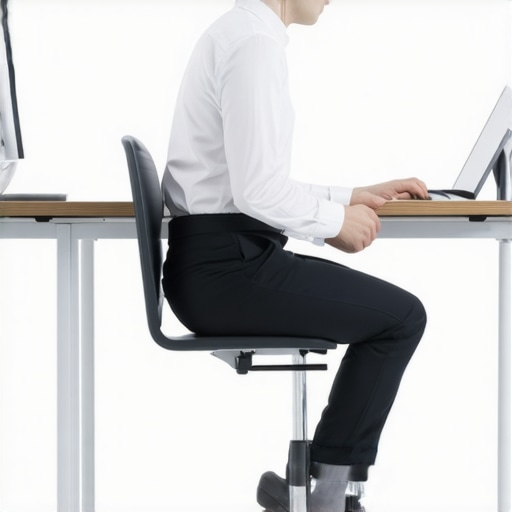
The Posture Brace Trap
One of the biggest mistakes I see—and one I personally made—is reaching for a velcro posture brace the second your back starts to ache. It feels like a logical quick fix, but why most posture braces actually make your back weaker is something your stabilizers will quickly demonstrate. These devices act as a structural crutch, essentially telling your deep core and spinal muscles they can take a permanent vacation. Within weeks, your natural ability to hold yourself up atrophies. If you are relying on a strap to keep your shoulders back, you aren’t solving the problem; you’re just outsourcing your health to a piece of elastic. Have you ever fallen into this trap of relying on a brace? Let me know in the comments below.
Is Weekly Maintenance Actually Necessary?
A common nuance people miss is the difference between ‘crisis care’ and ‘performance care.’ You might wonder if you really need to keep up with mobility work once the initial pain is gone. According to a study published in the Journal of Manipulative and Physiological Therapeutics, spinal manipulative therapy is most effective when paired with active exercise to ‘lock in’ the new range of motion. Think of the adjustment as clearing the debris off a rusted gear; if you don’t keep the gear turning through movement, it will just seize up again. The link between mobility and posture is a two-way street. The adjustment opens the door, but your daily movement habits are what keep you from walking back into the same old pain cycles. Stop looking for a permanent ‘fix’ and start looking for a better way to move every single day.
I stopped using soft foam rollers years ago. They are often like trying to fix a dented car with a marshmallow. Instead, I use a high-density ‘peanut’ ball—essentially two lacrosse balls fused together—specifically to target the T4 to T8 region of my mid-back. This tool provides a specific ‘shear force’ that a standard roller simply cannot replicate. While a flat roller spreads the pressure across the entire back, the peanut focuses it on the paraspinal muscles, allowing me to apply targeted pressure without putting direct force on the vertebrae themselves. If you are serious about your recovery, mobility hacks for a more active life usually start with this kind of precision. This isn’t just about ‘rolling out’; it’s about restoring the sliding surfaces of your fascia so your joints can actually move through their full range.

How do I keep my spine healthy over the long haul?
Sustaining these gains isn’t about doing a grueling two-hour gym session every Sunday; it’s about micro-dosing your movement throughout the week. I’ve integrated the 2-minute drill for better spinal rotation into my daily schedule every time I finish a focused block of work. This isn’t just stretching; it’s a neurological reset that tells your brain it’s safe to let go of tension. When we talk about ‘scaling’ your results, we mean moving from basic pain relief to advanced functional strength. For me, that meant mastering the hip hinge fix for chronic lower back aches. If your hips don’t move, your lower back has to compensate, and that is a recipe for long-term wear and tear. I also treat why chiropractic care is your secret weapon for better posture as a monthly check-in rather than an emergency visit. It’s like an alignment for your car; you can drive on slightly crooked tires for a while, but eventually, the tread wears out unevenly and causes a blowout.
Why Your Environment is the Next Frontier in Mobility
A study published in the Journal of Bodywork and Movement Therapies (2021) highlights that consistent self-myofascial release can significantly reduce the sensitivity of trigger points, but it works most effectively when the underlying joint mechanics are sound. This is where the future of posture is headed. I predict we are moving toward a world of ‘smart fabrics’ and AI-driven biomechanical analysis where sensors integrated into our clothing will track our spinal curvature in real-time. We are transitioning from reactive care to proactive, automated monitoring. Until that tech is in your shirt, you are the pilot of your own health. My challenge to you today: grab a lacrosse ball or a ‘peanut,’ find a wall, and spend exactly ninety seconds rolling out the space between your shoulder blades. Don’t just read about it—actually feel the shift in your breathing and the immediate release in your neck.
The Truth About Why My Elbow Pain Kept Coming Back
I spent years thinking that a sharp pain in my wrist meant I needed more rest, but the biggest ‘lightbulb moment’ was realizing that total rest actually makes tendons more brittle. You need controlled load, not just a sofa and a bag of ice. Another hard-earned lesson: don’t ignore the sounds your body makes; while the truth about cracking your own knuckles and neck at home might surprise you, constant clicking is usually a sign that your mobility is restricted elsewhere. Finally, I learned that my ‘weak’ grip was actually my brain’s way of protecting a neck that was out of alignment—my body was literally cutting power to my hands to prevent further injury. Stop chasing the pain and start looking for the source.
Tools and Rituals I Use to Stay Mobile Every Day
When people ask what they should buy first, I always point them toward a high-density peanut ball and a single 35lb kettlebell. The peanut ball allows for the specific T-spine releases we discussed, while the kettlebell is perfect for the farmer’s carries that bulletproof your grip. For those looking to dive deeper into professional strategies, I trust the insights found in mobility boosts for posture: expert tips for daily adjustments and the ultimate guide to improving mobility and posture in 2025. These resources provide the roadmap I wish I had when I first started my recovery journey; they bridge the gap between simple stretching and actual functional change.
Reclaim Your Strength and Start Moving Today
You don’t have to accept that ‘creaky’ feeling as your new normal. Whether you are struggling with a jar of pickles or a heavy deadlift, the path to a pain-free life starts with small, consistent changes to how you move and hold yourself. If you feel like you’ve hit a plateau, remember that why chiropractic care is your secret weapon for better posture often comes down to clearing the path for your nervous system to function. Don’t wait for a crisis to start caring for your spine. Reach out through our contact us page if you need guidance on where to start. Your future, stronger self will thank you for taking action today. Have you ever noticed your grip strength failing during a task that used to be easy? Let me know in the comments below!