

I remember a Tuesday last fall when my body finally went on strike. I was pulling into my driveway after an eight-hour shift behind the wheel, and for three solid minutes, I literally could not uncurl my frame to get out of the car. It was terrifying. I felt like a piece of dry driftwood ready to snap. For months, I had been ignoring that deep, dull ache in my tailbone and the buzzing in my thighs, thinking it was just part of the professional driving lifestyle. I even tried [the specific way to sit in a car for long commutes to avoid sciatica](https://quackersneck.com/the-specific-way-to-sit-in-a-car-for-long-commutes-to-avoid-sciatica), but my foundational mobility was already shot. I was making a classic mistake: I thought a better lumbar cushion would save me. It won’t. Today, I am going to show you the exact “reset” move that saved my career and my spine, even if you spend ten hours a day on the road. Have you ever had to do that awkward “side-roll” out of your seat because your hips were too locked to stand up straight? Drop a comment and tell me I am not the only one.
The Real Reason Your Lower Back Screams After an Hour Behind the Wheel
Sitting isn’t just passive resting; it’s an athletic endurance event for your spine, and most of us are losing. When you’re driving, your body is effectively trapped in a ninety-degree fold while being subjected to constant micro-vibrations from the road. It is a recipe for long-term stiffness. My biggest mistake early on was trying to fix this with aggressive static stretching. I would stand up at gas stations and reach for my toes, but I eventually learned [why your hamstring stretches aren’t fixing your tightness](https://quackersneck.com/why-your-hamstring-stretches-arent-fixing-your-tightness) and was actually making my nerve tension worse. According to research by Dr. Alf Nachemson, the pressure on your lumbar discs increases by about 40% when you are sitting slumped compared to standing. That is a massive load to put on your lower back day after day. You might have read about [the best way to sit in a car for a 4-hour trip](https://quackersneck.com/the-best-way-to-sit-in-a-car-for-a-4-hour-trip), but without the right mobility work, even the most expensive ergonomic seat eventually fails to protect you.
Does one simple move really beat a thousand-dollar car seat?
It sounds too good to be true, doesn’t it? We are conditioned to think we can buy our way out of pain with gel pads and orthopedic beads. While those help, they are just bandages. The truth is that your psoas—that deep muscle connecting your spine to your legs—shortens every second you are in that seated position. You need a way to tell your nervous system that it is safe to let go and expand again. Even if you’ve mastered [how to sit in a car for 5 hours without sciatica flares](https://quackersneck.com/how-to-sit-in-a-car-for-5-hours-without-sciatica-flares), your muscles still need a physical “off switch” to combat the hours of compression. This one stretch is that switch, and it takes less time than filling up your gas tank.
Stop Driving with the Handbrake On Your Spine
Think of your psoas muscle like a heavy-duty emergency brake. When you sit for hours, that brake is pulled tight, locking your pelvis into a forward tilt that yanks on your lumbar vertebrae. You can have the softest seat in the world, but if that ‘brake’ stays engaged, your back will never find peace. I remember a particularly grueling trip through Nebraska where I pulled into a truck stop feeling like my spine had been compressed into a harmonica. I tried the usual gas-station toe-touch, but it just made my legs tingle in a scary way. That is when I realized I was attacking the wrong problem. You don’t need more flexibility; you need to reset the tension. To do this, you have to master the hip hinge fix for chronic lower back aches before you even think about heavy stretching. This move ensures that when you finally stand up, your weight is carried by your glutes and hamstrings rather than your fragile spinal discs.
The Three-Step Psoas Release That Actually Works
To perform this reset, find a flat spot next to your car. Place your right foot forward and your left foot back in a shallow lunge. Here is the secret: don’t just lean forward. Instead, tuck your tailbone underneath you as if you are trying to hide it. This is essentially the pelvic tilt move for instant pregnancy back relief, but it works wonders for drivers of any background because it creates an immediate ‘opening’ in the front of the hip. Once you feel that pull in the front of your left thigh, squeeze your left glute as hard as you can for ten seconds. You are essentially using reciprocal inhibition to force the psoas to relax. If you skip this squeeze, you are just tugging on a knot. I used to do this against my rear bumper every two hours, and the difference was night and day; I went from ‘side-rolling’ out of the cab to actually walking like a human being again. 
Brace Your Core Before You Step Out
Most of the damage happens in the transition from sitting to standing. When you are parked, your spine is at its most vulnerable. Before you swing your legs out of the door, apply the bracing technique that protects your spine during heavy yard work. Stiffen your midsection as if someone is about to poke you in the stomach. This creates internal pressure that acts as a natural back brace. This simple habit prevents those micro-tears that occur when you suddenly load your spine after it has been ‘de-activated’ by a long drive. If you combine this bracing with the single most effective stretch for people who sit all day, you are effectively neutralizing the cumulative stress of the road.
Why Your Knees and Hips Are Part of the Same Problem
It is easy to hyper-focus on the lower back, but the body is a chain. When your hip flexors are shortened from driving, they pull on your pelvis, which in turn changes the angle of your femur. This is often how to fix knee pain caused by tight hip flexors—by realizing the knee is just a victim of what is happening at the hip. To keep the whole system fluid, I recommend adding the 2-minute drill for better spinal rotation to your morning routine. This prevents the ‘frozen’ feeling in your mid-back that often translates into lower back compensations by the time you reach mile fifty.
The Posture Myth That Is Exhausting Your Muscles
People often tell me they try to maintain ‘perfect posture’ by pulling their shoulders back like a soldier and holding their breath. But here is the kicker: that rigid stance is often why your perfect posture is actually causing muscle fatigue. Your body is not a statue; it is a dynamic system designed for movement. When you lock yourself into what you think looks right, you create isometric tension that starves your muscles of oxygen. Real spinal health is found in improving posture through mobility practical chiropractor strategies rather than static bracing. This is a common trap for drivers who try to sit ‘perfectly’ for hours, only to find their mid-back burning even worse than when they slumped. 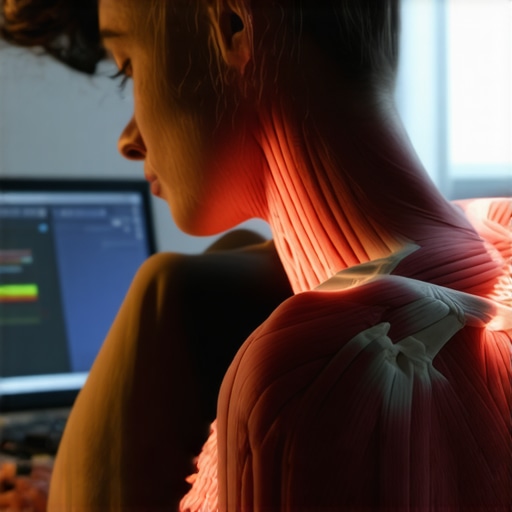
Stop Trying to Crack Your Own Spine
The most dangerous habit I see in chronic sitters is the DIY adjustment. You feel that deep pressure, twist your chair, and hear a satisfying ‘pop.’ You get a momentary rush of endorphins, but you are likely making things worse. This is why you should stop cracking your own back every hour: you are creating hypermobility in the joints that are already moving too much, while the actual ‘stuck’ segment remains locked. A professional knows what a chiropractor actually looks for during your first exam, which is the specific segment that has lost its proper motion. When you self-crack, you’re just stretching the ligaments of the segments above and below the problem, leading to long-term instability. Have you ever fallen into the trap of thinking a louder ‘pop’ meant a better result? Let me know in the comments.
Is your brain actually keeping your muscles in a defensive state?
Sophisticated research published in the Journal of Manipulative and Physiological Therapeutics suggests that many cases of ‘stiffness’ are actually a neurological protective mechanism rather than a short muscle. When your spine is slightly out of alignment, your brain ‘splints’ the area with muscle tension to prevent further injury. This is why chiropractic adjustments unlock a pain free lifestyle today; they provide a high-velocity, low-amplitude input to the nervous system that signals it is safe to relax. Without this reset, you can do the 15 minute flow to open up sticky hips every day and still feel tight because your brain hasn’t received the signal to let go.
The Hidden Nuance of Joint Proprioception
Most people view mobility as just ‘stretching,’ but it is actually about proprioception—your brain’s ability to know where your joints are in space. When you sit in a car, your joint receptors go ‘numb’ from lack of varied input. By utilizing mobility hacks simple adjustments for a more active life, you keep those receptors firing. This prevents the ‘sensory motor amnesia’ that leads to that awkward side-roll out of the car. Instead of just pulling on your muscles, you should be focused on the link between mobility and posture a chiropractors guide which emphasizes neurological resets over mindless stretching. If you keep treating your body like a collection of rubber bands instead of a complex electrical system, you’ll always be chasing the pain rather than fixing the cause.If you want to keep this feeling of openness for years rather than hours, you need a toolkit that moves with you. I don’t mean a trailer full of gym equipment; I mean a few specific items that live in my cab or my bag at all times. First on that list is a high-density lumbar roll. Most ‘ergonomic’ chairs have a curve built into them that is either too low or too soft to actually support the weight of your torso. I personally use a firm, 4-inch diameter roll that creates a physical stop for my pelvis. You have to learn the proper way to use a lumbar roll in your office chair or car seat, placing it right at the belt line rather than higher up in the small of your back. This mechanical support takes the pressure off those vulnerable lumbar discs, allowing your nervous system to stay in that ‘safe’ state rather than going into a defensive spasm.
Why Your Shoes Are Quietly Sabotaging Your Lower Back
The second tool I swear by is actually on my feet. After years of driving in heavy work boots with a significant heel, my calves were perpetually short, which tilted my pelvis and crushed my lower back before I even stepped out of the truck. Switching to wide-toe-box, flat footwear changed my entire kinetic chain. If you are curious about making the switch, check out the best way to transition to zero drop shoes safely so you don’t trade back pain for a calf strain. This shift allows your heels to sit level with your toes, which naturally resets the tilt of your hips and takes the ‘pull’ off your hamstrings. 
How do I maintain my spinal health over time?
Consistency beats intensity every single time. Dr. Stuart McGill, a world-renowned expert in spine biomechanics and author of The Back Mechanic, emphasizes the concept of ‘spinal hygiene.’ Just like you brush your teeth to prevent cavities, you have to move your joints to prevent the cumulative micro-trauma of sitting. This means performing your psoas resets and bracing drills every single day, not just when the pain returns. I’ve found that mobility boosts for posture expert tips for daily adjustments are the only sustainable way to counteract the forty-plus hours a week I spend seated. You should also understand how chiropractic adjustments enhance posture and mobility as a preventative maintenance schedule, rather than an emergency fix for when you’re already ‘locked up.’
Predicting the Future of Posture and Wearable Tech
Looking ahead, I predict we will see a massive shift toward wearable biofeedback that goes far beyond simple step counting. We are already seeing the early stages of shirts with integrated sensors that vibrate when your mid-back starts to round or when your core tension drops below a certain threshold. This real-time feedback will help bridge the gap between knowing what to do and actually doing it. Until then, you are your own best sensor. If you want to dive deeper into the long-term roadmap for staying fluid as you age, I’ve put together the ultimate guide to improving mobility and posture in 2025. Your challenge for the next 48 hours is simple: every time you get out of your vehicle or away from your desk, use the bracing technique before your feet hit the ground. Don’t let your spine ‘flop’ into standing; protect that alignment from the very first second of movement.
Why I Finally Stopped Chasing the Localized Pain
One of the hardest lessons I learned was that the spot that hurts is rarely the spot where the problem started. For years, I rubbed my lower back when the real culprit was my locked hips. I also had to accept that the real reason your hamstrings stay tight despite stretching is often neurological protection, not a lack of length. My lightbulb moment happened when I realized that my body was trying to protect me by tightening up because it felt unstable. Instead of fighting my body, I started working with it. I found that why chiropractic care is your secret weapon for better posture is largely because it addresses the communication between the brain and the spine, rather than just forcing a bone into place.
The Practical Gear That Changed My Daily Commute
You don’t need a massive overhaul to see results; you just need the right leverage. I stopped buying generic cushions and started using these mobility hacks simple adjustments for a more active life that I can do while waiting at a red light or a loading dock. My toolkit is now lean: a firm lumbar roll, zero-drop shoes to keep my pelvis neutral, and a commitment to revolutionize your posture with targeted mobility exercises. These aren’t just nice to haves; they are the barriers between a productive career and a forced retirement due to injury. If you want a comprehensive roadmap, I always point fellow drivers toward the ultimate guide to improving mobility and posture in 2025 for a deep dive into long-term spinal health. #IMAGE_PLACEHOLDER_E#
Drive Toward a Future Without the Constant Ache
The road doesn’t have to be a thief that steals your physical well-being. By implementing these resets and understanding that chiropractic adjustments unlock a pain free lifestyle today, you are taking back control of your health. Don’t wait for the day your body goes on strike like mine did. Start with one small change today, whether it is bracing your core before exiting your vehicle or finally ditching the thick wallet in your back pocket. You deserve to arrive at your destination feeling as good as when you started. Have you ever noticed your back pain disappears when you switch shoes or clear out your pockets? Let me know your experience in the comments below!