

I remember sitting in my home office three years ago, my neck feeling like a rusty hinge that desperately needed oiling. I’d grab my chin, jerk my head to the left, and—crack—that familiar series of pops would ring out. For about ninety seconds, I felt like a new man. But by the time I finished my next email, that nagging dull ache was back, only this time it felt deeper. I was stuck in a loop, and honestly, I thought I was helping myself. I was wrong. We’re going to break down why that instant gratification is actually a trap and how you can finally find relief that lasts longer than a commercial break.
That Satisfying Pop is Just a Temporary Chemical High
When you twist your neck to get that sound, you aren’t actually aligning anything. You’re simply stretching the joint capsule and causing gas bubbles to burst. It feels good because your brain releases a small hit of dopamine and endorphins—the body’s natural painkillers. I made the massive mistake of chasing that high every thirty minutes, thinking I was fixing my stiffness. In reality, I was just making my joints hypermobile and irritated. It’s a bit like scratching a mosquito bite; it feels great for a second, but you’re really just making the inflammation worse. If you’ve ever wondered how to tell if your headache is coming from your neck, you might notice that the more you crack, the more those tension headaches seem to linger.
The real danger isn’t just the irritation. When you self-adjust, you usually end up cracking the joints that are already moving too much to compensate for the one that is actually stuck. According to research cited by Harvard Health Publishing, spinal manipulation is most effective when it is highly specific, something you simply cannot achieve on yourself. You’re basically hitting the refresh button on the wrong part of your spine. Most people don’t realize that the truth about cracking your own back for relief is that it provides a neurological distraction rather than a structural fix.
Can you actually do permanent damage by cracking your own neck?
This is the big fear everyone whispers about, and while the extreme risks are rare, the long-term instability is almost guaranteed. By constantly forcing those joints to pop, you’re stretching out the ligaments that are supposed to keep your head steady. I found out the hard way that why stretching your neck is making your headaches worse often comes down to this exact cycle of over-stretching. You are creating a loose joint that your muscles then have to guard even harder, leading to more knots and more pain. Have you ever found yourself cracking your neck just to get through a single Zoom call? I’d love to hear if you’re stuck in that same cycle I was, because it’s a hard habit to break without a real plan.
Stop Chasing the Pop and Focus on the Block
Instead of wrenching your head to one side, we need to focus on what I call ‘joint hygiene.’ This is about moving through a full, controlled range of motion rather than forcing a sudden release. Think of your neck like a high-performance engine; if you just keep revving it without oiling the parts, things will eventually seize up. I started incorporating mobility hacks into my workday every 50 minutes. The goal wasn’t to hear a noise, but to remind my brain that my neck is allowed to move without fear. When you feel that ‘blocked’ sensation, it’s usually not a bone out of place; it’s your nervous system tightening the muscles to protect a perceived weakness. By forcing the crack, you’re overriding a safety signal without fixing the underlying instability.
Teach Your Neck to Hold Its Own Weight
I remember the first time I tried a proper chin tuck. I was at a stoplight in downtown Omaha, pulling my head back so hard I gave myself a triple chin. A guy in a truck next to me stared, probably wondering why I was making faces at myself in the rearview mirror. But that silly-looking move was the specific exercise that stabilizes a hypermobile spine, and it did more for my pain in one week than ten years of self-cracking ever did. It turns the ‘on’ switch for the tiny muscles right next to your vertebrae that have gone dormant from years of slouching. To do this correctly, imagine a string pulling the crown of your head toward the ceiling while you gently tuck your chin straight back—not down toward your chest, but back like you’re sliding a drawer shut. Hold it for three seconds, feel the stretch at the base of your skull, and release. Repeat this ten times whenever you feel the urge to crack.

The Laptop Stand That Saved My Cervical Spine
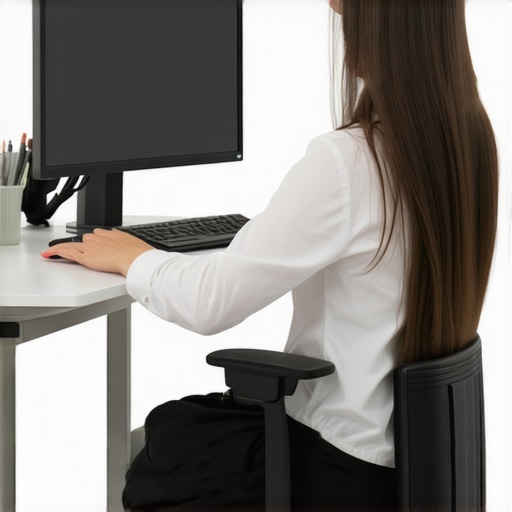
Your neck is often the victim of what’s happening a few inches away. If you’re constantly leaning forward, you’re essentially asking your neck to hold up a bowling ball at a 45-degree angle. You have to learn how to adjust your monitor to stop reaching with your chin because your body follows your eyes. If your screen is too low, your neck will never heal. I even discovered that why your eyes might be the hidden cause of your neck pain is a real phenomenon—straining to see small text forces your head forward into that ‘turtle’ position. I swapped my laptop for a separate monitor at eye level and the results were messy at first; my mid-back actually ached because it wasn’t used to sitting upright. But within two weeks, that constant ‘need’ to pop my neck simply evaporated because the weight of my head was finally balanced over my shoulders. You can revolutionize your posture with targeted mobility exercises, but if your environment forces you into a bad position for eight hours a day, you’re fighting an uphill battle.
Why Your Search for Perfect Symmetry is a Losing Game
Building on that temporary high I mentioned earlier, the real nuance lies in identifying why your body wants that release in the first place. Most people assume their neck is ‘tight’ because the muscles are too short. In reality, those muscles are often ‘long and weak,’ screaming for stability. This is the ultimate ‘Oops’ factor: people spend hours stretching muscles that are already over-lengthened from slouching. When you do this, you’re not releasing tension; you’re increasing instability. I’ve seen so many people buy those elastic posture braces that pull your shoulders back… but the truth about perfect posture and why it doesn’t exist is that your body is designed for dynamic movement. Chasing a static ‘ideal’ only fatigues your postural stabilizers faster.
Stop Stretching Into That Sharp Pinch
If you feel a sharp catch when you move, that is your body’s ‘no-go’ zone. One of the biggest mistakes I see is people trying to ‘push through’ a block. If you’ve ever felt that the secret to calming a sharp pinch in your shoulder blade is more force, you’re likely triggering a stretch reflex that works against you. This is why your gentle stretching is actually causing more inflammation. When your brain senses a threat to the joint, it sends a signal to the surrounding muscles to lock down. By forcing the stretch, you’re essentially trying to win a tug-of-war against your own nervous system—a battle you will always lose.
Why does my dominant side always feel tighter than the other?
It’s a common frustration for anyone trying to fix their alignment. We are functionally asymmetrical. We use our dominant side for everything from mousing at a desk to reaching for coffee, so it makes sense that the neural pathways and muscle tone on that side are more developed. I spent years obsessing over why your dominant side always feels tighter than the other, only to learn that symmetry isn’t the goal—functional balance is. If you’re constantly trying to ‘stretch out’ your dominant side to match the other, you might be weakening the very muscles that provide your spine with its primary support.
Instead of chasing a mirror image, we should be prioritizing movement variability. Research in the Journal of Physical Therapy Science suggests that the healthiest spines belong to individuals who frequently vary their seated positions. They don’t just sit up straight; they tilt, shift, and move. This constant micro-adjustment prevents any single tissue from bearing the full load for too long. When we stop moving, why your desk posture is ruining your breathing capacity becomes a much more urgent problem, as a static rib cage restricts the very muscles meant to help you take a deep breath.
The most sophisticated step you can take is learning the difference between nerve pain and muscle soreness. If you feel a zing, a tingle, or a cold sensation, that’s a nerve signal, and no amount of stretching will ‘release’ it—in fact, it usually makes it worse. Understanding the difference between a sore muscle and a misaligned joint allows you to stop guessing and start addressing the root cause. Have you ever fallen into the trap of thinking you could ‘stretch’ away a sharp, pinching pain? Let me know in the comments; I’d love to hear your story and help you break that cycle.
Maintaining your progress isn’t about doing an hour of yoga every morning; it’s about those small, intentional ‘movement snacks’ that keep your nervous system from going into lockdown mode. I’ve found that the biggest hurdle isn’t a lack of effort, but a lack of consistency. Once the sharp pain disappears, it’s incredibly easy to slip back into the same habits that caused the trouble in the first place. This is where improving posture through mobility practical chiropractor strategies becomes your daily insurance policy. I personally set a timer for every 45 minutes to do a single 15-second reset. It’s not about a workout; it’s about a reboot.
Small wins lead to a spine that actually stays quiet
Consistency beats intensity every single time when it comes to your nervous system. I tell my clients to focus on mobility hacks that fit into their existing life, like doing a few hip circles while the coffee brews. If you can integrate the 3-minute evening routine for a less stiff morning, you’re training your body to relax before you hit the pillow. This prevents the cumulative stress of the day from ‘baking in’ overnight. We often forget that how chiropractic adjustments enhance posture and mobility isn’t just about the session itself, but how you protect those changes in the 167 hours of the week you aren’t in a clinic.
How do I keep my back from regressing once the pain stops?
This is the golden question. The answer lies in building ‘spare capacity.’ You want your spine to be strong enough that a weird sneeze or a heavy grocery bag doesn’t trigger a flare-up. I rely heavily on the research of Dr. Stuart McGill, a world-renowned spine biomechanist, specifically his ‘Big Three’ exercises which focus on core endurance rather than just raw strength. According to McGill’s research in the Journal of Bodywork and Movement Therapies, maintaining a stiff, stable core during movement is the single best way to prevent disc-related setbacks. Integrating these moves ensures you are improving mobility and posture in 2025 with science-backed foundations rather than social media fads.
The humble lacrosse ball is better than any five hundred dollar massager
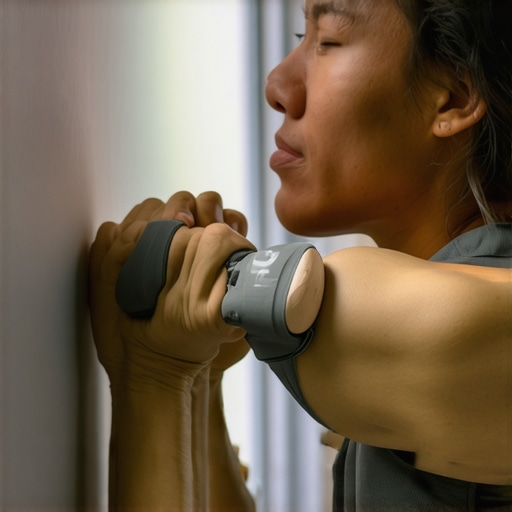
I’ve tested dozens of high-end gadgets, but I always come back to a $5 lacrosse ball. Specifically, I recommend the ‘peanut’—two lacrosse balls taped together—to target the muscles on either side of the spine without hitting the bones themselves. It’s the ultimate tool for thoracic extension. When you use it correctly, you can feel the individual segments of your mid-back begin to move again. This is a game-changer if you’ve felt like your rib cage is frozen. If you’re wondering why chiropractic care is your secret weapon for better posture, it’s because it addresses these mechanical blocks that tools alone sometimes can’t reach, but the peanut is your best friend for maintenance between visits.
The future of posture involves biofeedback and AI sensors
Looking ahead, I predict we are going to see a massive shift toward wearable biofeedback that does more than just count steps. We are already seeing the emergence of sensors that track the actual tilt of your pelvis and the curve of your neck in real-time, sending a gentle haptic vibration to your phone when you’ve been ‘turtling’ for too long. This technology will take the guesswork out of how to manage a flare-up of lower back pain at work by identifying the exact moment your form breaks down. Instead of waiting for pain to tell us something is wrong, we’ll have data-driven insights to prevent the injury before it happens. My best advice for right now? Grab a lacrosse ball today and spend just two minutes on each side of your spine before bed. You’ll be shocked at how much lighter your shoulders feel tomorrow morning.
The Hard Lessons I Learned About Chasing That Instant Pop
Reflecting on my own journey, the biggest shift came when I stopped treating my neck like a mechanical toy and started treating it like a living system. Here is the raw truth that changed everything for me:
- The pop is a lie. It’s a neurological trick that makes you think you’ve solved a problem when you’ve really just distracted your brain. If the reason your neck clicks when you look over your-shoulder is always the same spot, you aren’t fixing it—you’re reinforcing a weakness.
- Stability is silent. When I finally got my spine stable, the clicking stopped. I realized that a healthy neck doesn’t need to make noise to feel ‘right.’
- Motion is the only lotion. Relying on one big adjustment a day is useless if you stay frozen for the other eight hours. Real progress happens in the micro-breaks between emails.
The Tools That Actually Saved My Neck From Itself
I don’t believe in expensive gadgets that promise a quick fix. Instead, I’ve curated a small ‘spine survival kit’ that I keep within arm’s reach of my desk. These are the resources that stood the test of time when I was improving posture through mobility using practical chiropractor strategies.
First, the Lacrosse Ball Peanut. It’s the single most effective tool for breaking up the tension in your mid-back that forces your neck to overwork. Second, the ‘Big Three’ spine exercises by Dr. Stuart McGill. These focus on endurance rather than just strength, which is vital for long-term health. Third, a separate keyboard and mouse. You cannot have good posture while typing on a laptop keyboard; it’s physically impossible. Elevating your screen and letting your shoulders drop is the only way to win. If you’re looking for a structured path, I always recommend the ultimate guide to improving mobility and posture in 2025 for a deep dive into these concepts.
Your Journey Toward a Quiet Spine Starts Now
Breaking the habit of self-cracking is about more than just willpower; it’s about giving your body a better alternative. You don’t have to be perfect, and you don’t have to spend hours in the gym. By choosing small, intentional movements and focusing on mobility and posture, you are reclaiming your comfort one day at a time. I’ve seen hundreds of people—including myself—go from chronic stiffness to effortless movement just by making these tiny adjustments. Don’t wait for another flare-up to take action. Start with one chin tuck today and see how your body responds. Have you ever tried a ‘movement snack’ during your workday, or are you still relying on that deep neck crack for relief? Let me know in the comments below!