
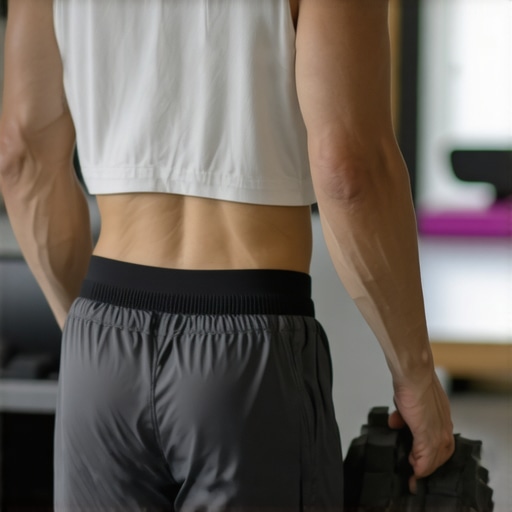
I remember the exact moment I realized I was doing it all wrong. I was face-up on my living room rug, grimacing as I dragged a rigid foam roller directly across the small of my back. I thought I was fixing the stiffness from a long day at the desk. Instead, I woke up the next morning feeling like I had been tackled by a linebacker. It is a classic trap we all fall into: thinking that if it hurts, it must be working. But when it comes to your lumbar spine, that no-pain-no-gain mentality is a fast track to inflammation. Today, I am going to share exactly why that traditional rolling approach failed me and show you the safer, more effective ways to actually find relief without the bruises.
Why I Stopped Torturing My Lumbar Spine with a Foam Roller
For years, I treated my foam roller like a magic wand for why your lower back hurts when you try to stand up straight. I figured if my upper back felt great after a few passes, the lower back would surely follow suit. I was wrong. The lumbar spine is a different beast entirely. Unlike your thoracic spine which is protected by a sturdy rib cage, your lower back is relatively exposed. When you put the full weight of your torso on a plastic cylinder, you are not just hitting muscle; you are putting immense pressure on your kidneys and the delicate bony processes of your vertebrae. One of my biggest early mistakes was mistaking nerve irritation for muscle knots. I would roll aggressively, trying to iron out a spot that was actually a flared-up nerve. If you have ever wondered about the difference between a sore muscle and a slipped disc, you know that physical pressure on a disc issue is a recipe for disaster. According to the National Academy of Sports Medicine (NASM), the lumbar spine lacks the structural support to handle direct, heavy compression from a roller without the risk of causing the spinal muscles to go into a protective spasm.
Does that rolling actually help or are you just bruising yourself?
It is a fair question to ask: is the truth about foam rolling your lower back simply that we should not do it? Not necessarily, but the how matters more than the how hard. Most people use a foam roller as a blunt instrument. They roll until they are red in the face, hoping to force the tissue to submit. But the body does not work that way. If you have ever tried to fix the feeling of a locked si joint by rolling over it, you have likely noticed the relief is fleeting at best. Have you ever felt more restricted the day after a recovery session? Let me know in the comments if you have ever ended up more sore after trying to roll away the pain. We are going to pivot away from the brute-force method and look at how to target the muscles that actually support the lower back instead.
Shift the Pressure to the Areas That Can Actually Handle It
To actually fix the stiffness in your lower back, you have to stop treating the symptoms and start looking at the neighbors. Your lumbar spine is often the victim of its surroundings. Think of your spine like a suspension bridge; if the cables at either end—your hips and your mid-back—are too tight, the middle is going to sag or snap under the tension. Instead of attacking the lumbar with a roller, we need to address the hip flexors and the thoracic spine. When I first made this shift, I was skeptical. I felt like I was ignoring the ‘fire’ to go look for the ‘smoke.’ But within a week of focusing on my hips, that nagging pull in my lower back simply vanished.
Unlock Your Hips to Stop the Tug-of-War on Your Spine
Most of our lower back issues stem from the fact that we sit for hours, which shortens our hip flexors. These muscles are literally bolted to your lumbar vertebrae. When they get tight, they pull your pelvis forward, creating a constant, low-grade strain on your back. You can find massive relief by performing a half-kneeling hip flexor stretch instead of rolling. I remember a time in 2019 when I tried to ‘roll out’ a stiff lower back before a heavy deadlift session. I thought I was being proactive, but I ended up walking like a wooden puppet for three days because my muscles clamped down in a protective spasm. It wasn’t until I focused on how to fix knee pain caused by tight hip flexors that I realized how much my hips were sabotaging my back. If you want a more comprehensive approach, I highly recommend a 15-minute flow to open up sticky hips which can reset your pelvic alignment without putting any direct pressure on your spine. 
Focus on the Thoracic Spine for Better Overall Mobility
Your thoracic spine (the part with the ribs) is designed for rotation and movement. Your lumbar spine is designed for stability. When your mid-back gets stuck from hunching over a screen, your lower back tries to compensate by moving in ways it shouldn’t. To fix this, use your foam roller ONLY on your upper and mid-back. Lean back over the roller, keeping your butt on the floor, to create extension in the thoracic segments. This takes the load off the lumbar. You might also find that the real reason your hamstrings stay tight despite stretching is actually tied to this lack of spinal mobility. When the mid-back is locked, everything down the chain suffers.
Learn to Breathe and Brace for Internal Support
Finally, we have to talk about internal pressure. Instead of using an external tool like a foam roller to mash your muscles, you can use your own breath to create space from the inside out. Learning how to breathe into your back to relieve rib tension is a game-changer. This creates a natural ‘air cushion’ for your spine. Combine this with the bracing technique that protects your spine during heavy yard work, and you’ll have a built-in defense mechanism against pain. If you can master the core move that prevents lumbar disc bulges, you won’t feel the need to reach for the foam roller every time you stand up from your desk.We have been sold a lie about what ‘good’ posture looks like. Most of us imagine a military-style stance with shoulders pinned back and chest out. But here is the contrarian truth: trying to maintain that rigid position is actually exhausting your nervous system. This is the biggest ‘oops’ factor I see in the fitness world. When you force a static, ‘perfect’ pose, you are essentially asking your muscles to perform a long-duration isometric hold that they aren’t designed for. This is why your perfect posture is actually causing muscle fatigue rather than preventing it. True mobility isn’t about the ability to reach a specific point and stay there; it’s about having the freedom to move through various positions without pain. Have you ever fallen into this trap? Let me know in the comments. 
Why does sitting perfectly straight still make my back ache?
It happens because your body craves variability. If you spend eight hours in a ‘perfect’ ergonomic chair, you’re still subjecting your tissues to static loading. Research published in the Journal of Physical Therapy Science suggests that postural sway and frequent movement are more effective at reducing discomfort than holding a single ‘correct’ position. This is also why most standing desks are set at the wrong height; we often focus on the furniture instead of the movement itself. If you are just standing perfectly still, you are likely just trading lower back pain for foot and hip fatigue. The secret to the ultimate guide to improving mobility and posture in 2025 is to embrace what experts call the ‘next posture’—the idea that no single position is healthy for a long time. Shift your weight, change your leg position, and move your spine every 20 minutes to keep your tissues hydrated and happy.
The real reason your adjustments don’t seem to stick
Many people view a chiropractic visit as a simple mechanical fix, like tightening a bolt. This is a common misunderstanding of how the body works. In reality, what a chiropractor actually looks for during your first exam is how your brain and nervous system are communicating with your joints. If your brain perceives a certain area as unstable or under threat, it will tighten the surrounding muscles to protect it. Why chiropractic care is your secret weapon for better posture is that the adjustment provides a necessary neurological ‘reset’ to that protective loop. However, if you don’t follow up that reset with active movement—like the hip and thoracic drills we discussed earlier—your brain will simply go back to its old, protective patterns. You can’t just ‘crack’ your way to better health; you have to train the body to feel safe in its new, expanded range of motion through consistent, low-level mobility work.I’ve learned that specificity beats brute force every single time. While the foam roller is a great general tool for the upper back, using it on the lumbar spine is like trying to perform surgery with a sledgehammer. These days, my secret weapon is a simple lacrosse ball. I use it to target the ‘anchor points’ of the lower back—specifically the Glute Medius and the TFL. By applying precise pressure to these areas, I can release the tension that is actually pulling on my spine without ever touching a vertebrae. This is essentially the daily move that prevents hip impingement for me, and it has saved me from dozens of potential flare-ups. I find that if I can spend just ninety seconds on each hip, the relief is more profound than any amount of lumbar rolling. If you’re feeling extra ‘stuck’ in the front of your body, combining this targeted ball work with the 15-minute flow to open up sticky hips creates a synergistic effect that resets your entire pelvic floor and lower back alignment. 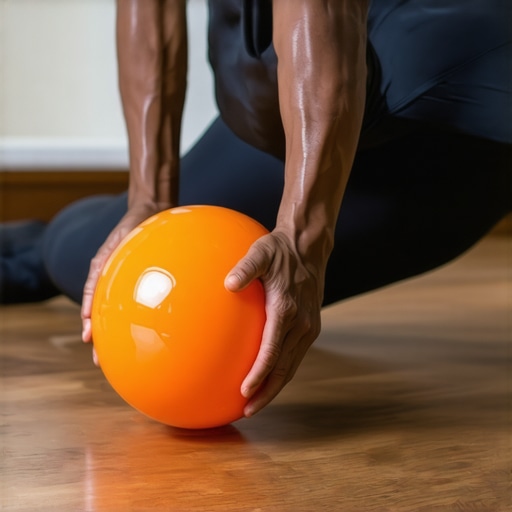
How do I maintain my mobility progress over time?
The most common question I get is how to make these changes permanent. The reality is that your body is a dynamic system, not a set-it-and-forget-it machine. Maintenance isn’t about doing a grueling hour-long session once a week; it’s about ‘micro-dosing’ your movement. I’ve integrated improving posture through mobility via practical chiropractor strategies into my daily workflow. This means every time I finish a meeting, I perform a quick set of desk-based movements. Dr. Stuart McGill, a world-renowned expert in spine biomechanics at the University of Waterloo, argues that ‘proximal stiffness’ (a stable core) is what actually allows for ‘distal mobility’ (free movement of the limbs). This means if you want your hips to stay loose, you have to keep your core strong. I highly recommend mastering the hip hinge fix for chronic lower back aches as your primary way of moving throughout the day. When you stop bending from your spine and start moving from your hips, you give your lumbar discs a chance to heal.
Stop Guessing and Start Testing Your Range
If you aren’t testing, you are just guessing. I used to spend twenty minutes stretching my hamstrings without realizing my back pain was actually a rotation issue. Now, I use how to test your own spinal rotation at home to see where my sticking points are before I even start my workout. If my rotation is limited, I immediately jump into the 2-minute drill for better spinal rotation to open things up. This proactive approach ensures that I am never forcing a joint into a range of motion it isn’t ready for. Remember, chiropractic adjustments unlock a pain-free lifestyle today by clearing the path, but your daily habits are what keep that path open. Looking ahead, I suspect we will see a massive shift toward wearable technology that tracks ‘postural variety’ rather than just ‘good posture,’ reminding us to move before we even feel the first twinge of stiffness. My challenge for you today: don’t wait for your back to click. Go try that 2-minute rotation drill right now and see if one side feels tighter than the other—it’s the fastest way to learn what your body actually needs.
The Quiet Mistakes I Stopped Making to Finally Find Relief
Over the years, my approach to spinal health has shifted from aggressive ‘fixing’ to gentle ‘listening.’ One of the biggest breakthroughs was finally learning the difference between a sore muscle and a slipped disc; I realized that pushing through sharp pain was a signal to stop, not to roll harder. I also discovered that obsessing over a rigid, military-style stance was a dead end. In fact, I learned why your perfect posture is actually causing muscle fatigue by creating unnecessary tension. Now, I focus on the ‘neighbors’—the hips and the mid-back—which are almost always the real culprits behind lower back tightness. By choosing targeted movements over blunt pressure, I’ve been able to stay active without the constant fear of a flare-up.
The Essential Tools That Keep My Spine Happy
You don’t need a gym full of equipment to maintain a healthy back, but you do need the right strategy. My personal toolkit starts with a simple lacrosse ball; using the daily move that prevents hip impingement by releasing the glutes has been more effective than any expensive foam roller ever was. I also rely on diagnostic drills rather than guesswork. I recommend learning how to test your own spinal rotation at home to identify exactly where your body is restricted before you start your day. For those who want a structured path, the ultimate guide to improving mobility and posture in 2025 provides a roadmap that combines these tools with professional insights. I’ve also found that why chiropractic care is your secret weapon for better posture lies in the neurological reset it provides, making my daily mobility work significantly more effective. #IMAGE_PLACEHOLDER_E#
Take Back Control of Your Daily Comfort
Your journey to a resilient spine doesn’t have to be a painful one. By moving away from the ‘no-pain-no-gain’ mentality and embracing improving posture through mobility via practical chiropractor strategies, you are giving your body the permission it needs to heal. Start small, perhaps with the morning routine that stops your back from clicking, and watch how these tiny shifts compound over time. The goal isn’t just to be pain-free for today, but to build a foundation of movement that supports your lifestyle for years to come. Your body is incredibly adaptive; once you stop fighting against it with brute force, you’ll be amazed at how quickly it finds its natural balance. Which part of your back feels the tightest right now—is it the base of your spine or up between your shoulder blades? Let me know below and let’s troubleshoot it together.