
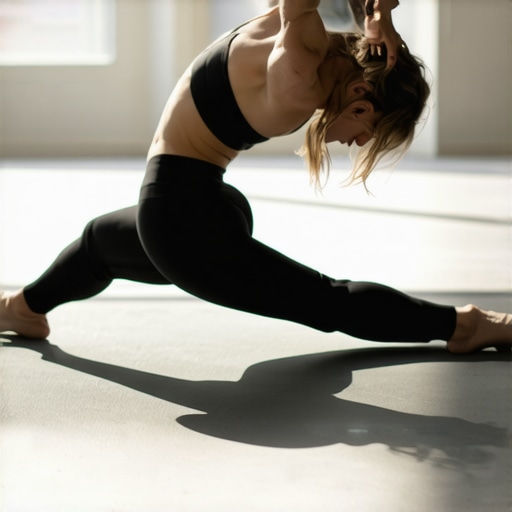
I remember it vividly: I was trying to hop out of my truck after a two-hour drive to visit family, and my right hip simply refused to cooperate. It felt like someone had shoved a rusty bolt into my pelvic socket and tightened it with a wrench. I stood there, half-stuck, grimacing like I’d just aged forty years in a single afternoon. It was embarrassing, sure, but more than that, it was a wake-up call. I’d spent years ignoring that dull ache, thinking it was just the cost of doing business as an adult who sits at a desk. I was wrong. I had fallen into the trap of thinking I could just ‘walk it off,’ but my body was screaming for a real intervention.
Why My Morning Coffee Routine Turned Into a Mobility Crisis
For a long time, I made a classic mistake. I thought that if I just did some gentle stretching for five minutes a day, I’d be golden. I spent months doing those long, passive holds that you see in every generic fitness magazine. I even tried a 15-minute flow to open up sticky hips, which helped for an hour but never really ‘stuck.’ I was treating the symptoms, not the underlying mechanical restriction. My hips weren’t just tight; they were practically glued shut because I hadn’t addressed how my mobility and posture were actually feeding into each other. According to experts at the Mayo Clinic, sitting for extended periods can lead to the actual shortening of the hip flexor muscles, which creates a ripple effect of pain through the lower back and knees. This is why you might notice knee pain caused by tight hip flexors even when you haven’t been running or jumping. Today, I’m going to share the exact 30-second drill that changed everything for me. We are going to stop the cycle of temporary relief and actually reset the way your pelvis interacts with your spine.
Is this 30-second fix actually worth the hype?
I know what you’re thinking because I thought the same thing: ‘There is no way a half-minute move can undo years of sitting.’ It sounds like clickbait, right? I was incredibly skeptical until I realized that mobility isn’t about the duration of the stretch; it’s about the neurological input you give your brain. When I first started, I would obsess over why my left hip always felt tighter than my right, and I’d spend way too much time forcing it into positions it wasn’t ready for. That was a huge mistake. By focusing on a high-intensity, short-duration move, we can actually ‘reset’ the tension levels in the psoas and iliacus without triggering the body’s natural protective tightening response. Have you ever felt like your hips were so locked up that even a basic lunge felt impossible? Drop a comment or reach out if you’ve been there, because I honestly thought I was the only one until I started digging into the mechanics of preventing hip impingement. This move is designed to create space where there is currently none, and it works faster than any foam roller session you’ve ever endured.
Think of your nervous system like a circuit breaker. When your hip flexors are constantly under tension from sitting, the breaker flips to ‘safe mode.’ This is why gentle stretching often fails; you’re trying to pull on a locked cable. To get those muscles to actually let go, we need to send a high-voltage signal that tells the brain the muscle is safe to lengthen. This isn’t just about flexibility; it’s about the chiropractic adjustments that happen at a neurological level every time we move correctly.
Flip the Switch with a High-Intensity Isometric Hold
The first time I tried this, I was skeptical. I set my timer for exactly 30 seconds and got into a half-kneeling position on my kitchen floor. Instead of leaning forward like a traditional runner’s stretch, I stayed vertical. The ‘secret’ is to squeeze your trailing glute as hard as possible while trying to drag your back knee forward against the friction of the floor. You aren’t actually moving; you’re creating a massive amount of internal tension. This is one of those mobility hacks that feels like a workout in itself. About 15 seconds in, my leg started shaking like a leaf. That vibration is exactly what you want—it’s your nervous system recalibrating the ‘length’ of the psoas.
The Perfect Setup for Immediate Relief
To get this right, you need to master the pelvic tuck. Imagine your pelvis is a bucket of water. Most of us walk around with the bucket tilted forward, spilling water out the front. You need to pull the front of the bucket up toward your belly button. When you do this while squeezing the glute, you’ll feel a sharp, intense stretch in the very front of your hip. If you’ve ever wondered why your glutes fail to activate during lunges, it’s usually because this anterior tilt is keeping them in a weakened, overstretched state. By locking the pelvis into a neutral position, you force the hip flexor to bear the load, which eventually leads to a profound release once you relax.
Stop Spilling the Water and Fix Your Alignment
When I finally stood up after that first 30-second hold, the difference was jarring. My right leg—the one I’d just worked on—felt three inches longer than the left. I felt like I could actually stand up straight without that nagging tug in my lower back. This is why how your wallet in your back pocket destroys your hips is such a common topic; even tiny misalignments can wreck your mechanics over time. By incorporating this isometric hold, you’re effectively performing a self-directed version of what a pro might do to unlock a pain-free lifestyle. You are teaching your body that it is safe to access its full range of motion again.
Small Details That Save Your Lower Back
Precision matters here. If you arch your back during this move, you’re cheating. You’re simply dumping the tension into your lumbar spine instead of the hip. This is why many people find the hip hinge fix so difficult; they haven’t cleared the ‘junk’ out of the front of their hips first. Keep your ribs down and your core braced. When I started being strict about my form, those weird ‘clunking’ sounds I used to get when walking up stairs totally vanished. It wasn’t about the hours I spent in the gym; it was about those 30 seconds of pure, focused intent on my living room floor.
The biggest mistake I see—and I’ve been guilty of it too—is the obsession with ‘length’ over ‘control.’ We’ve been told for decades that if a muscle feels tight, we should pull on it until it yields. But here’s the contrarian truth: your hamstrings probably aren’t actually short. In many cases, they are under constant tension because your pelvis is tilted forward, effectively pulling them taut like a guitar string from both ends. When you perform a standard stretch in this state, your hamstring stretch is actually irritating your sciatic nerve rather than releasing the muscle tissue. This is the ‘tightness trap’ where the sensation of tension is a symptom of instability, not a lack of flexibility.
Your Body Uses Stiffness as a Protective Shield
I often talk to people who spend hours on a foam roller, yet their ‘knots’ return within twenty minutes. This happens because your nervous system is using that stiffness to protect a joint it perceives as unstable. If you have a weak core or poor pelvic alignment, your brain will ‘lock down’ your hip flexors and lower back to prevent you from injuring your spine. This is why the truth about foam rolling your lower back is so complicated; you might be rolling away the very tension that is currently keeping your lumbar spine from shifting. Instead of mindlessly smashing the tissue, we need to address the link between mobility and posture to show the brain that the ‘shield’ is no longer necessary. Have you ever fallen into this trap of over-stretching only to feel tighter the next day? Let me know in the comments, because that cycle is a clear sign your body is fighting back against the wrong stimulus.
Can you actually be too flexible for your own good?
It sounds like a high-quality problem to have, but for many, excessive mobility without strength is a recipe for chronic pain. This is the ‘Oops’ factor most beginners miss. When you have ‘floppy’ joints but no muscular control, your ligaments take the brunt of the force. This is where how chiropractic adjustments enhance posture and mobility becomes a game changer. It isn’t just about ‘cracking’ a joint; it’s about restoring proper sensory input so your muscles know when to fire. According to the Journal of Strength and Conditioning Research, static stretching for prolonged periods can actually decrease joint stability and muscle output if not paired with activation exercises. This is exactly the real reason your hamstrings stay tight despite stretching—they are working overtime to do the job your glutes and core are ignoring.
The Hidden Nuance of Spinal Neutrality
We’ve all heard about ‘perfect’ posture, but the reality is that the truth about perfect posture is that it doesn’t exist as a static position. The healthiest spine is the one that moves the most. If you are sitting at a desk and trying to maintain a rigid, upright ‘military’ posture, you are likely creating massive amounts of ischemic tension in your mid-back. This is a common mistake that leads people to wonder why your traps are always tight even after a massage. Real mobility is about ‘postural variability’—the ability to shift positions frequently while maintaining a stable base. By using mobility hacks like the 30-second drill we discussed earlier, you aren’t just stretching; you are teaching your pelvis how to find its home base so you can move through your day without your body constantly going into ‘panic mode.’
I used to think that more gear meant better results. I bought the fancy vibrating rollers and the $300 massage guns, but the reality is that my most used tool cost five dollars at a local sporting goods store. A standard lacrosse ball is my secret weapon for pinpointing the exact spot where my hip flexors meet my pelvis. While foam rollers are great for general blood flow, they often lack the specificity needed to tackle a deep psoas restriction. I’ve found that using these targeted tools is the best way to revolutionize your posture with targeted mobility exercises without needing a full home gym. I also made a drastic change to my footwear that felt like a total reset for my gait. Switching to a flatter sole was intimidating at first, but learning the best way to transition to zero-drop shoes safely allowed my ankles to actually function, which took the pressure off my knees and hips almost instantly.
How can I maintain these mobility gains over the long haul?
For years, I looked at mobility as a destination—something I would ‘finish’ once I could touch my toes easily. I was wrong. Maintenance is about ‘spinal hygiene,’ a term popularized by Dr. Stuart McGill, a leading expert in spine biomechanics. He argues that the small, repetitive movements we do throughout the day—like how we pick up a pencil or sit in a chair—dictate our long-term health more than a single hour-long workout. Consistency beats intensity every single time. You don’t need to do that 30-second drill for an hour; you just need to do the daily move that prevents hip impingement once or twice during your workday to keep the neural pathways open. I’ve started setting a timer to remind me of the best standing desk interval for maximum back health, which prevents that ‘protective stiffness’ from ever setting in. If you feel a flare-up coming on, don’t wait for the pain to become debilitating. Getting ahead of the curve with chiropractic adjustments to unlock a pain-free lifestyle can stop a minor mechanical tweak from becoming a month-long setback.
The end of static sitting as we know it
Looking ahead to 2025 and beyond, I see a major shift away from ‘forcing’ posture with rigid braces and toward real-time biofeedback. We are moving toward a world where wearables won’t just tell us to stand up; they will nudge us to shift our weight and activate our core before we even realize we’re slouching. This is how we’ll truly enhance our posture with expert chiropractic techniques in 2025. By integrating these small mobility hacks into our tech-driven lives, we can stop fighting our environments and start moving with them. Try this today: Next time you’re sitting for more than 30 minutes, perform three deep ‘back breaths’ as described in our guide on how to breathe into your back to relieve rib tension. It’s the fastest way to reset your diaphragm and unlock your mid-back without even leaving your chair.
The Subtle Signs Your Body Is Finally Trusting You
Over the years, I’ve had a few ‘lightbulb moments’ that completely changed how I approach my physical health. First, I stopped chasing the feeling of a ‘deep stretch’ and started looking for ‘control.’ If you can’t breathe normally during a move, your nervous system is likely in a state of high alert, which defeats the purpose of the drill. I also learned that the shaking you feel during a high-intensity isometric hold isn’t a sign of weakness; it’s actually your motor neurons recalibrating and finding a new set point. Another major shift was accepting that the truth about perfect posture and why it doesn’t exist as a static goal. We aren’t trying to be statues; we are trying to be fluid and adaptable. When I finally embraced practical chiropractor strategies, I realized that the best posture is your next posture, and your hips are the engine that allows those shifts to happen smoothly.
The Shortlist of Gear That Actually Works
I am a minimalist at heart, so I only recommend things that I use at least three times a week. My first essential is a simple, high-density lacrosse ball for pinpointing psoas tension that a standard foam roller just can’t reach. Secondly, I swear by making the switch to shoes that allow your toes to splay and your heel to sit flat; checking out the best way to transition to minimalist footwear was a turning point for my chronic hip stability. Finally, I always suggest finding a professional who looks at the whole picture rather than just the localized pain. I truly believe chiropractic care is your secret weapon for better posture because it clears the ‘neural static’ that prevents these drills from working long-term. These aren’t just gadgets; they are tools that help you listen to what your body is trying to say.
#IMAGE_PLACEHOLDER_E#
Start Reclaiming Your Freedom One Joint at a Time
You don’t have to live with that ‘rusty bolt’ feeling in your hips forever. It’s easy to feel like you’ve missed the window to fix things, but your body is incredibly resilient when you give it the right stimulus and stop forcing it into submission. By following the ultimate guide to improving mobility and posture in 2025, you can build a foundation that lasts decades, not just until your next workout. Take those 30 seconds for yourself today—not because you ‘should,’ but because you deserve to move without restriction. You’ll be surprised at how quickly the brain rewards you with a sense of lightness and ease. What’s the one movement—like getting out of the car or tying your shoes—that always makes your hips feel ‘stuck’? Let’s troubleshoot it in the comments below!